
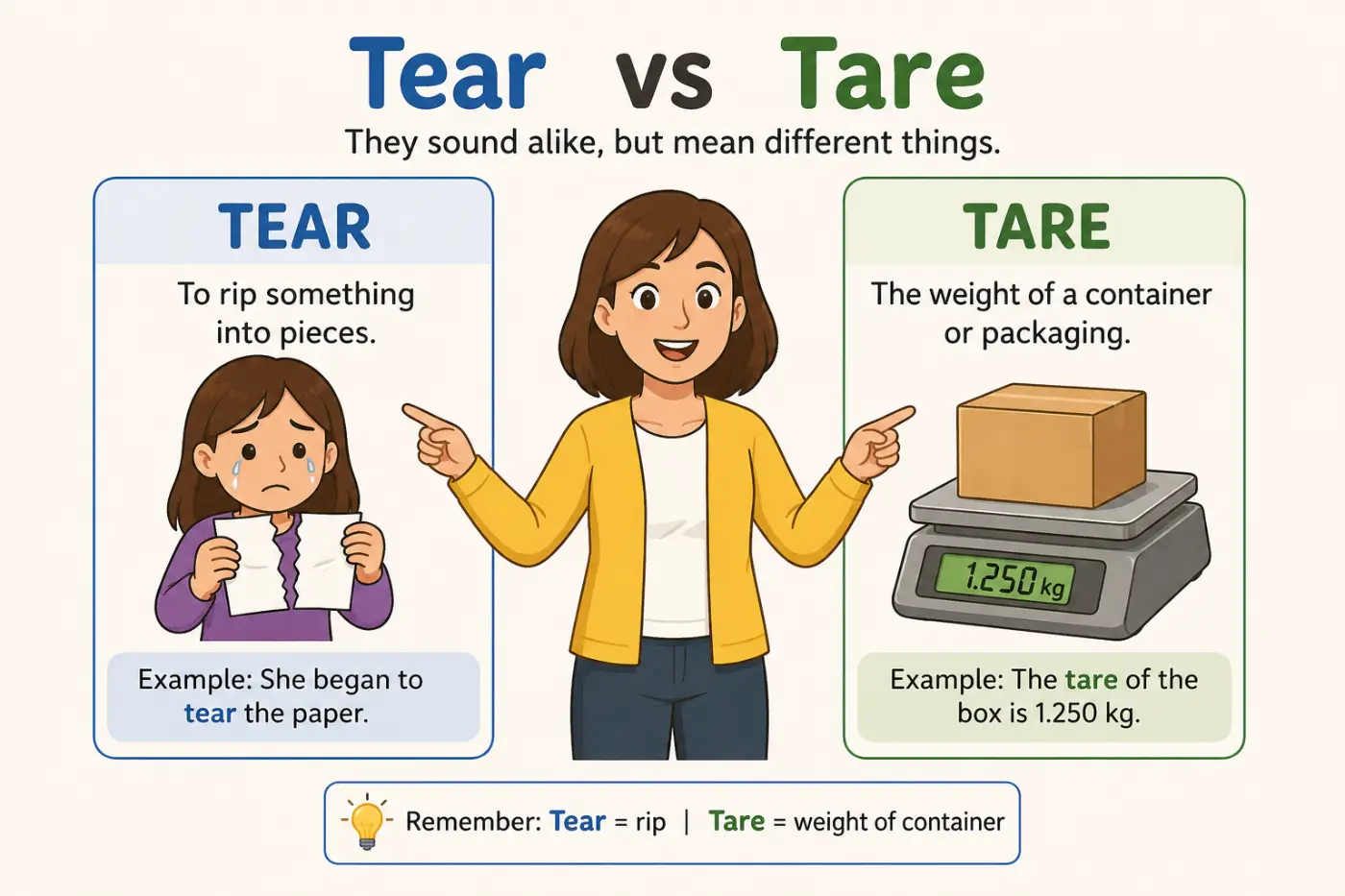
Many English learners get confused about tear vs tare because the two words look almost the same. They sound similar in some situations, but they have very different meanings. If you use the wrong one, your sentence can become confusing. That is why learning the difference between both words are helpful for speaking and writing correct English.
The good news is that the difference is easy to understand. One word is about ripping something or drops that come from your eyes. The other word is mostly used when weighing items on a scale. Once you know this simple rule, you will remember it for a long time.
In this guide, you will learn the meaning of each word, why people mix them up, how to use them in real life, and simple tricks that make remembering much easier.
You may also want to read Deep Seated vs Deep Seeded: What Does It Mean(2026)?.
Simple Answer in One Look
The difference between is simple.
- Tear means to rip something apart or a drop of water from your eye.
- Tare means the weight of an empty container that is removed when weighing something.
Most people need tear, while tare is mainly used in stores, shipping, factories, kitchens, and science.
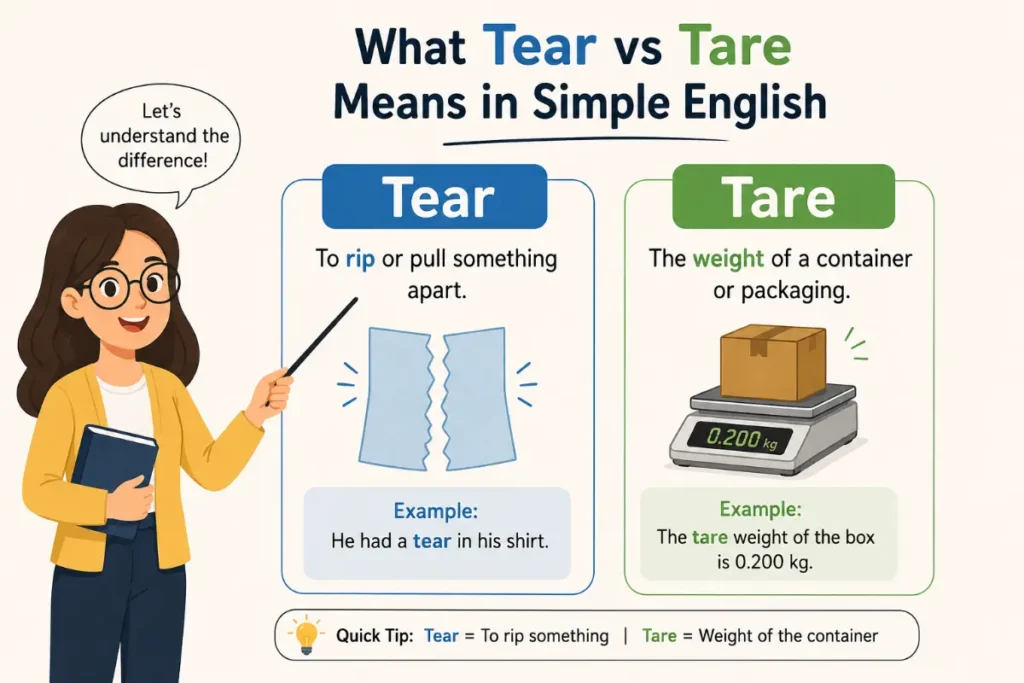
What Tear vs Tare Means in Simple English
Understanding of both words becomes easy when you learn each word one at a time.
What Does Tear Mean?
The word tear has two common meanings. The first meaning is to rip or pull something apart. Examples:
- Please do not tear the paper.
- He accidentally tore his shirt.
- The child tried to tear the wrapping paper.
The second meaning is the small drop of water that comes from your eyes when you cry. Examples:
- A tear rolled down her face.
- His happy story brought tears to my eyes.
- She wiped away a tear.
Notice something interesting.
The word tear has different pronunciations depending on its meaning.
When it means to rip something, it usually sounds like “tair.”
When it means water from your eyes, it usually sounds like “teer.”
Even though the spelling stays the same, the pronunciation changes with the meaning.
What Does Tare Mean?
The word tare has one main meaning. It is the weight of an empty container that should not be counted when weighing what is inside. Imagine putting an empty bowl on a kitchen scale. The bowl has weight. If you only want to measure the flour inside, you press the tare button. The scale ignores the bowl’s weight and starts from zero. Examples:
- Press the tare button before adding sugar.
- The worker recorded the tare weight.
- The box weight was removed using the tare setting.
This word is common in:
- Grocery stores
- Shipping companies
- Factories
- Laboratories
- Home kitchens with digital scales
Most people do not use tare in daily conversations unless they work with weighing equipment.
Why People Mix These Words
Many students wonder why words causes confusion. There are several simple reasons.
They Look Almost the Same
Only one letter is different.
- Tear
- Tare
When reading quickly, people may not notice the difference.
Their Pronunciation Can Be Similar
When tear means ripping something, it sounds close to tare in many English accents.
This makes listening more difficult.
Spell Check May Not Help
Both words are real English words.
A computer may not show an error because each spelling is correct by itself.
For example:
- Please tare the paper.
The spelling is correct, but the sentence is wrong because paper is not weighed here.
Many People Never Learn Tare
Most schools teach tear very early.
The word tare is much less common.
People may assume it is simply another spelling of tear, but it is not.
Fast Typing Creates Mistakes
When typing quickly, one extra or missing letter can change the word.
That small mistake changes the meaning completely.
Clear Difference Explained Simply
Here is an easy comparison.
| Tear | Tare |
|---|---|
| Means to rip something | Means the weight of an empty container |
| Can also mean water from your eyes | Used with scales and weighing |
| Very common in daily English | Mostly used in technical jobs |
| Used in stories and conversations | Used in kitchens, stores, shipping, and science |
| Everyone uses this word | Only certain jobs use this word often |
Here is another easy way to remember them.
Tear = Rip or Cry
Tare = Weight on a Scale
That simple rule will solve most confusion.
Which Form Should You Use Tear vs Tare?
Choosing between words depends on what you want to say.
Use tear when talking about:
- Ripping paper.
- Damaging clothing.
- Crying.
- Eye drops caused by emotion.
- Injuries such as a muscle tear.
Examples:
- Do not tear the page.
- My jacket has a small tear.
- She had tears in her eyes.
- The doctor found a muscle tear.
- He tried not to tear the photo.
Use tare when talking about:
- Kitchen scales.
- Grocery weighing.
- Shipping boxes.
- Laboratory equipment.
- Factory weighing systems.
Examples:
- Tare the scale first.
- The machine removed the tare weight.
- Always check the tare before shipping.
- Press tare before adding the flour.
- The worker entered the tare value.
A simple question can help.
Ask yourself:
“Am I talking about ripping or crying?”
If yes, choose tear.
If not, ask:
“Am I talking about weighing something?”
If yes, choose tare.
Easy Real Life Sentences You Can Use
These everyday examples show the correct use.
Sentences with Tear
- Please do not tear the book.
- I saw a tear on her cheek.
- My little brother tore the newspaper.
- Try not to tear the gift bag.
- His joke made everyone laugh until tears came.
- My shirt has a small tear.
- She wiped away every tear.
Sentences with Tare
- Press the tare button before cooking.
- The cashier checked the tare weight.
- The worker reset the scale using the tare function.
- Always tare the container first.
- The digital scale has an easy tare button.
- We removed the tare before recording the final weight.
Where Tear vs Tare Word Expression Comes From Simple History
The history behind words are interesting but easy to understand.
The History of Tear
The word tear has been part of English for hundreds of years. The meaning of ripping something comes from very old Germanic languages. The meaning connected with crying also comes from old English words used many centuries ago. Over time, both meanings kept the same spelling, even though they developed different pronunciations.
The History of Tare
The word tare came into English through older European trading languages. Merchants needed a word for the weight of empty bags, boxes, barrels, and containers. Instead of charging customers for the container, they removed that weight. That removed amount became known as the tare. Today, the same idea is still used in digital scales around the world. Whether you are baking cookies, shipping packages, or working in a science lab, the tare function helps measure only what really matters.
As you can see, both words are more than just a spelling difference. Each word has its own job in English. Now that you know the basic meanings, the next step is understanding how these words appear in culture, common expressions, everyday communication, and the mistakes people often make. Those deeper examples will make the difference even easier to remember.
How Is Understood in Culture and Stories
People use both words in very different ways because each word brings a different idea. The word tear appears in many books, songs, poems, movies, and stories. A tear often shows a person’s feelings. It can mean sadness, joy, love, fear, or even relief. Someone may cry after hearing good news or after saying goodbye to a loved one. Because everyone understands these feelings, the word tear is easy to connect with.
A tear can also mean damage. When someone tears a letter, a shirt, or a picture, the action shows that something has been broken or changed. The word tare is different. It is not usually found in stories or poems. Instead, it appears in places where people measure weight.
You may hear it in a bakery, a grocery store, a shipping company, or a science lab. In everyday culture, most people know tear much better than tare. That is why many learners confuse when they first see these words.
Still confused? Compare Nosey or Nosy: Which Spelling Is Correct (2026 Guide)?.
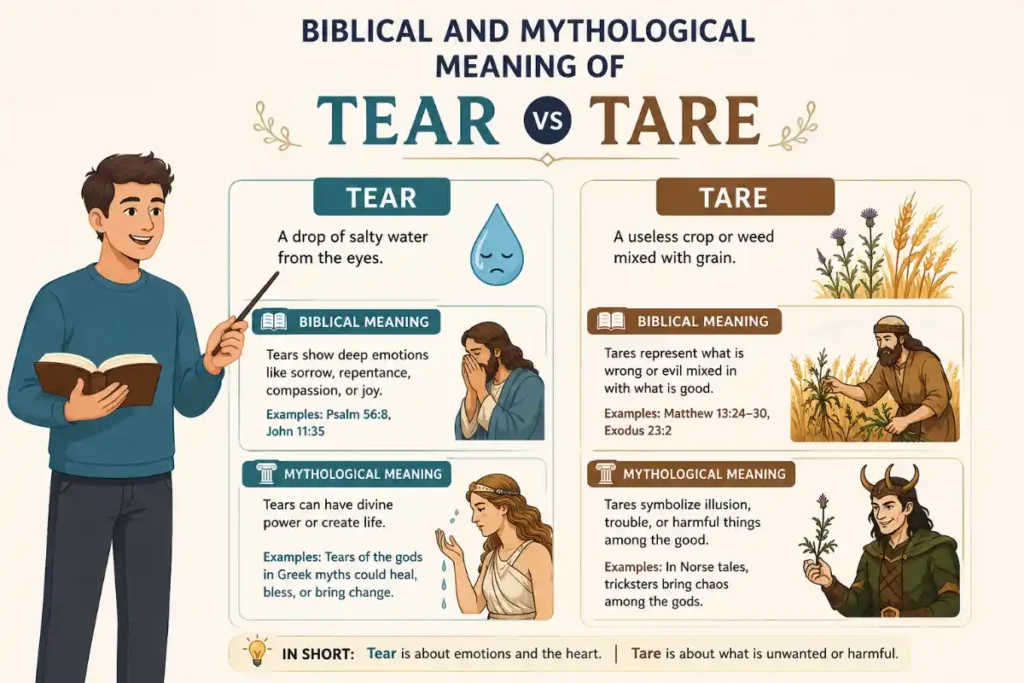
Biblical and Mythological Meaning of Tear vs Tare
The word tear appears many times in the Bible because people cry during happy and difficult moments. Tears often show sorrow, hope, prayer, comfort, or joy. They remind readers that showing emotion is part of being human. The Bible does not use tare to mean the weight of a container. In older Bible translations, the word “tares” with an s is a completely different word. It refers to weeds that grow among wheat. This word is not connected to tare used with weighing scales.
In mythology, tears sometimes have special meaning. Stories from different cultures describe tears as symbols of love, loss, healing, or new beginnings. Gods, heroes, and ordinary people all cry in famous stories. The weighing word tare has no common mythological meaning because it is mainly a practical word used for measuring.
Symbolism Explained in Simple Words
What Tear Represents
The word tear usually represents feelings and change.
A tear can stand for:
- Love.
- Sadness.
- Happiness.
- Relief.
- Kindness.
- Healing.
- Loss.
- Hope.
Sometimes a tear reminds us that strong people also have emotions. Crying does not always mean weakness. It can also show honesty and care.
When tear means ripping something, it can represent damage, mistakes, or something that needs repair.
What Tare Represents
The word tare represents fairness and accuracy. When people use a scale, they remove the container’s weight before measuring the real item. This simple action helps everyone get the correct result. Because of this, tare can symbolize:
- Accuracy.
- Honesty.
- Fair measurement.
- Careful work.
- Precision.
- Balance.
Unlike tear, tare usually does not carry emotional meaning. It is connected with correct measurements and careful work.
Related Words You Should Know About Tear vs Tare
Learning related words makes easier to remember.
Tears
More than one tear. Example:
Her happy story brought tears to everyone’s eyes.
Tore
The past tense of tear. Example:
He tore the old newspaper.
Torn
The past participle of tear. Example:
My backpack is torn.
Tearing
The action of ripping something. Example:
She is tearing the wrapping paper.
Tearful
Full of tears or close to crying. Example:
He gave a tearful goodbye.
Rip
A common word with almost the same meaning as tear when talking about breaking paper or cloth. Example:
Do not rip the book.
Split
To break into parts. Example:
The wood split in half.
Scale
A tool used to measure weight. Example:
Place the bowl on the scale.
Weigh
To measure how heavy something is. Example:
Please weigh the fruit.
Tare Weight
The weight of an empty container before anything is added. Example:
The worker entered the tare weight first.
How People Actually Use It in Daily English
These examples show how people naturally use in real conversations.
- Please do not tear my notebook.
- I had tears in my eyes after watching that movie.
- My jacket has a small tear on the sleeve.
- She accidentally tore the gift wrapping.
- Press the tare button before adding the rice.
- The baker always tares the bowl before weighing flour.
- The shipping company recorded the tare weight.
- I could not stop the tears after hearing the good news.
- This page is easy to tear.
- Always check the tare before printing the weight label.
Notice that most everyday conversations use tear, while tare is mainly used when measuring weight.
Common Mistakes People Make
Many English learners make the same mistakes. Here are the most common ones.
Mistake 1
Wrong:
Please tare the paper.
Correct:
Please tear the paper.
Reason:
You are talking about ripping paper, not weighing it.
Mistake 2
Wrong:
She had a tare in her eye.
Correct:
She had a tear in her eye.
Reason:
Water from the eye is called a tear.
Mistake 3
Wrong:
Press the tear button.
Correct:
Press the tare button.
Reason:
Digital scales have a tare button.
Mistake 4
Wrong:
The tare in my shirt needs sewing.
Correct:
The tear in my shirt needs sewing.
Reason:
A hole or rip in clothing is called a tear.
Mistake 5
Wrong:
The store removed the tear weight.
Correct:
The store removed the tare weight.
Reason:
The weight of an empty container is called the tare weight.
A simple memory trick can help.
Think of tear when something rips or someone cries.
Think of tare when using a scale.
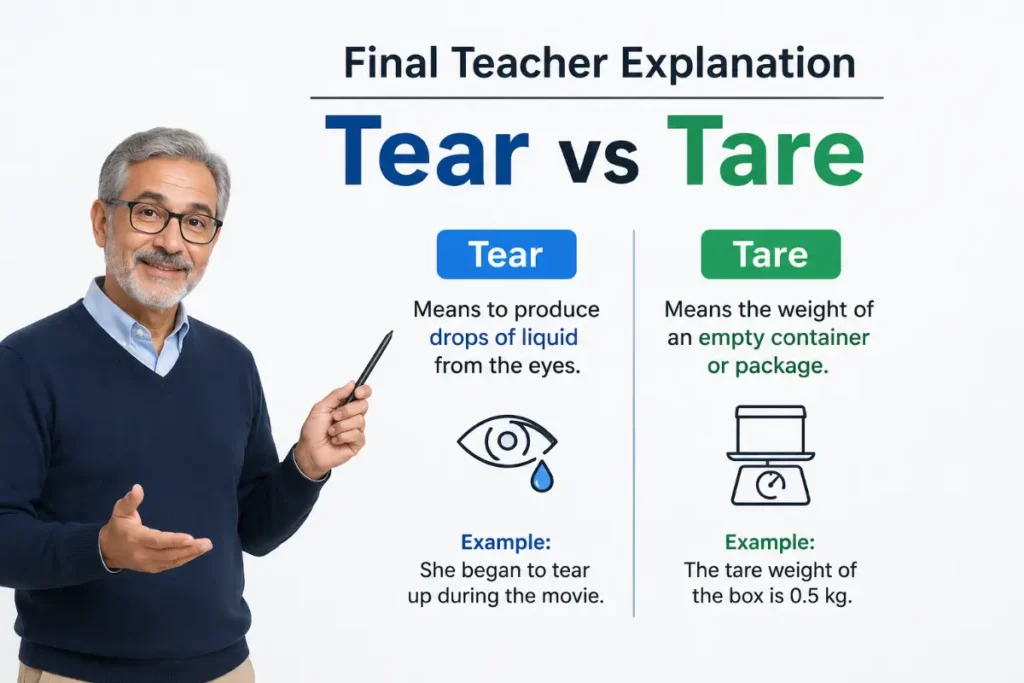
Final Teacher Explanation of Tear vs Tare
Imagine you are sitting in an English classroom. I write two words on the board.
Tear
Tare
I ask one question. Are we talking about feelings or ripping something?
If the answer is yes, choose tear.
Then I ask another question. Are we talking about weighing something on a scale?
If the answer is yes, choose tare.
That is the easiest way to remember. Do not worry if you forget at first. Even native English speakers rarely use tare unless their work involves weighing products. The more you read and practice, the more natural the difference will become.
Final Answer
The difference between tear vs tare is simple once you know the meaning of each word. Tear is the correct word when you mean to rip something or when you talk about the drops that come from your eyes. It is one of the most common words in everyday English.
Tare is a special word used for weighing. It means the weight of an empty container or the action of removing that weight from a scale. Most people only use it in kitchens, stores, shipping, factories, or laboratories. The easiest way to remember is this. If you are talking about crying or ripping, choose tear. If you are talking about weighing, choose tare.
Still confused? Compare Passtime or Pastime Which Word Is Correct and Why.
Conclusion
Learning is easier than it first appears. These words may look alike, but they have completely different meanings. Once you connect tear with crying or ripping and tare with weighing, choosing the correct word becomes simple.
Keep practicing with short sentences and real-life examples. Every time you read a book, write an email, cook in the kitchen, or use a digital scale, you have another chance to remember the correct meaning.
The best takeaway is easy to remember. Tear is for ripping or crying. Tare is for weighing.
Frequently Asked Questions
What does tear mean in simple words?
Tear means to rip something apart or a drop of water that comes from your eye when you cry.
What does tare mean in simple words?
Tare means the weight of an empty container or the function that removes that weight from a scale.
Is tear or tare correct for crying?
Tear is always correct when talking about crying.
When should I use tare?
Use tare when weighing something on a kitchen scale, shipping scale, or another measuring device.
Why do people confuse?
They look very similar, and the ripping meaning of tear sounds close to tare in many accents.
Can I use both words in everyday writing?
Yes, but tear is much more common. Tare is mainly used when talking about weighing.
Is tare the same as tares in the Bible?
No. Tare means the weight of a container. Tares in older Bible translations refers to weeds growing among wheat.
Which word is more common in English?
Tear is far more common than tare because people often talk about emotions, ripping objects, and everyday situations.
