
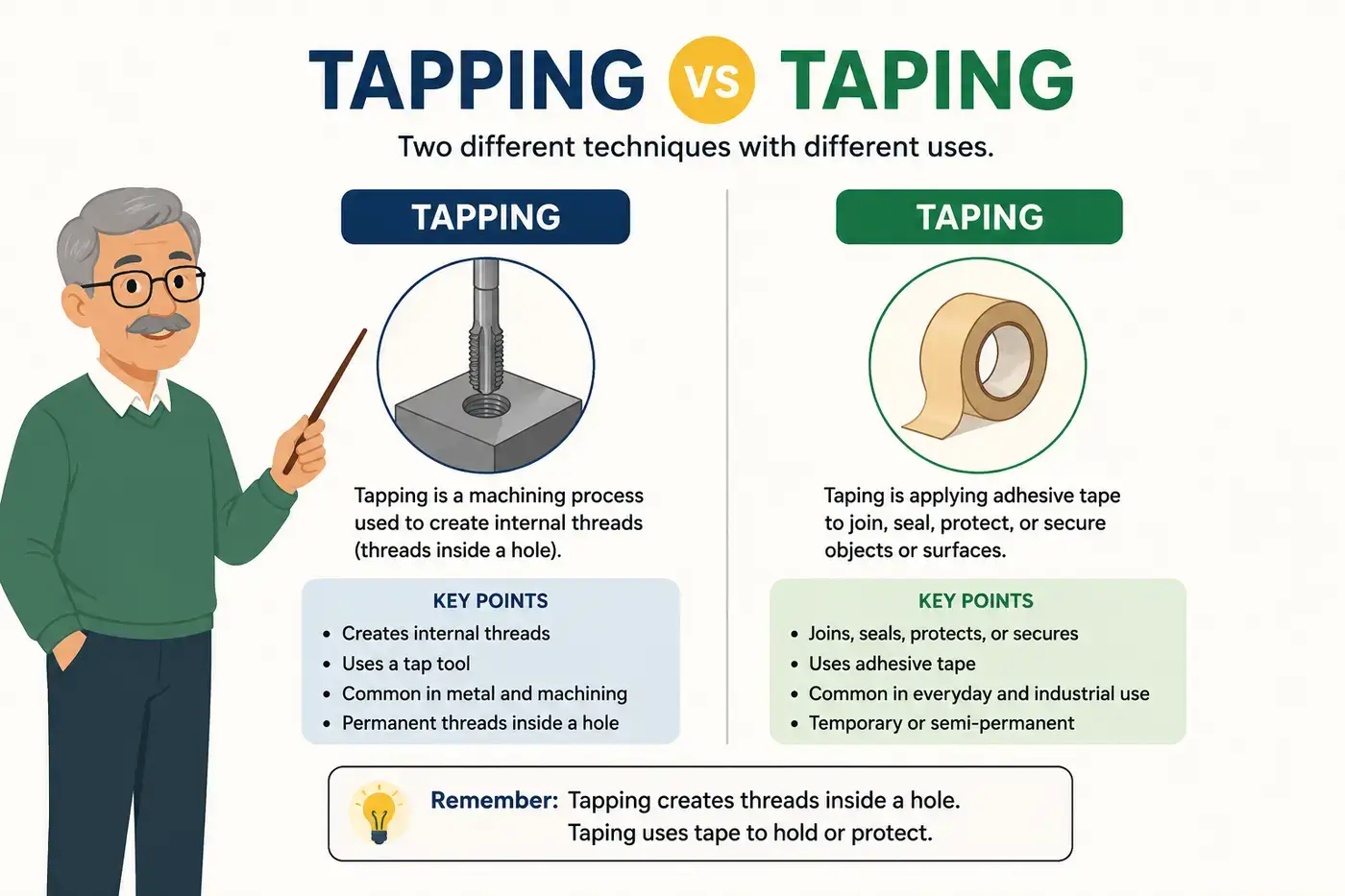
Many English learners get confused about tapping vs taping because the two words look very similar. They differ by just one letter, but they have very different meanings. This small spelling change can completely change what you want to say.
If you are wondering about tapping vs taping, the short answer is simple. Tapping usually means lightly touching, hitting, or selecting something. Taping usually means using tape to attach, cover, or hold something in place.
Understanding the difference between tapping vs taping can help you avoid mistakes in school, work, texting, and everyday conversations. Once you learn the meanings, choosing the right word becomes easy.
You may also want to read At Least vs Atleast: Which One Is Correct Simple Guide (2026).
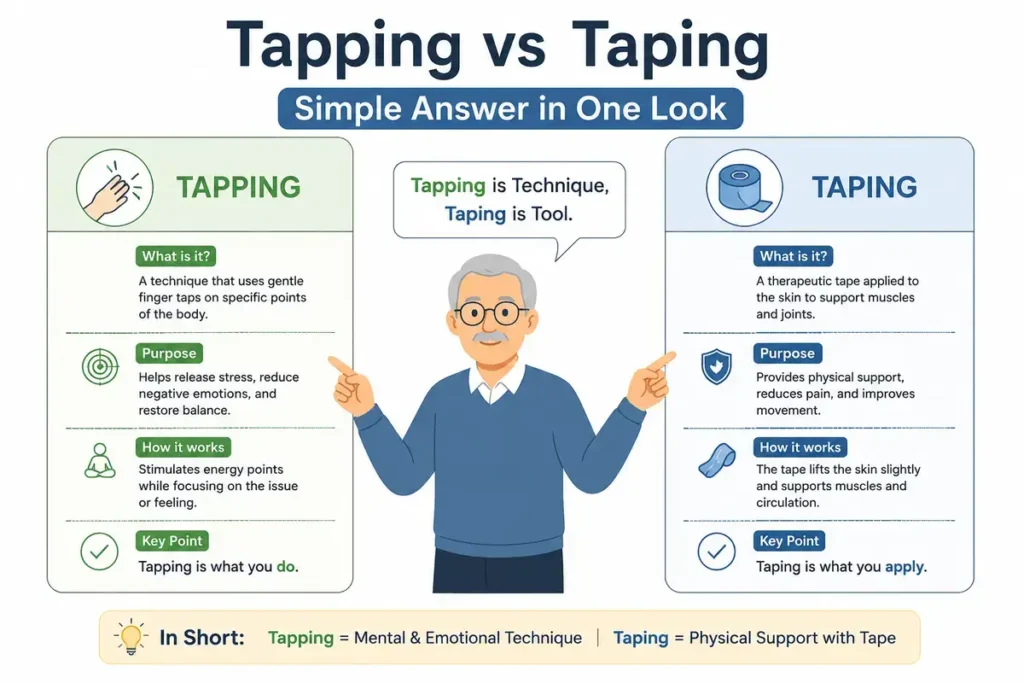
Tapping vs Taping: Simple Answer in One Look
Tapping means lightly touching, hitting, or selecting something.
Taping means using tape to stick, attach, cover, or secure something.
What Does Tapping vs Taping Mean in Simple English?
The easiest way to understand these words is to learn them one at a time.
What Does Tapping Mean?
Tapping comes from the verb “tap.”
A tap is usually a light touch or a light hit. Examples:
- Tapping a screen on your phone.
- Tapping your fingers on a desk.
- Tapping someone on the shoulder.
- Tapping a button on a website.
The action is usually quick and gentle. Think about using a smartphone. You tap the screen to open an app. You simply touch it lightly. That is tapping.
What Does Taping Mean?
Taping comes from the verb “tape.”
Tape is a material used to stick things together or hold them in place. Examples:
- Taping a poster to a wall.
- Taping a box closed.
- Taping a broken page.
- Taping wires together.
The action involves using tape. If someone says they are taping a package, they mean they are putting tape on it.
A Simple Way to Remember
Tapping = touch.
Taping = tape.
One involves your hand touching something. The other involves using tape.
Why Do People Mix These Words Tapping vs Taping?
Many people confuse these words because they look almost identical. Compare them:
- Tapping
- Taping
The difference is only one letter. When reading quickly, people may not notice the extra “p.”
The Pronunciation Is Similar
Another reason for confusion is pronunciation. The words sound somewhat alike, especially during fast conversations. Because they are similar in sound, listeners may misunderstand what was said. For example:
“I was tapping the wall.”
“I was taping the wall.”
These sentences describe completely different actions. The first means lightly hitting the wall. The second means putting tape on the wall.
Autocorrect Can Cause Problems
Phones and computers sometimes change words automatically. A person may type “tapping” and accidentally end up with “taping.” This happens often in text messages and emails.
Fast Reading Creates Mistakes
Many readers focus on the beginning and end of words. Since both words start with “tap” and end with “ing,” they can look the same at first glance. That is why proofreading is helpful.
Tapping vs Taping: Clear Difference Explained Simply
Here is an easy comparison.
| Feature | Tapping | Taping |
|---|---|---|
| Comes from | Tap | Tape |
| Main meaning | Light touch or hit | Using tape |
| Common use | Phones, screens, fingers | Boxes, walls, papers |
| Physical tape needed | No | Yes |
| Action type | Touching | Attaching |
Quick Visual Examples
Tapping:
- Tapping a keyboard.
- Tapping a shoulder.
- Tapping a phone screen.
- Tapping your foot.
Taping:
- Taping a gift box.
- Taping a photo to a wall.
- Taping a torn page.
- Taping a sign to a door.
One Easy Question
Ask yourself:
“Am I using tape?”
If the answer is yes, use taping. If the answer is no and you are lightly touching something, use tapping.
Tapping vs Taping: Which Form Should You Use?
The correct form depends on the action you want to describe.
Use Tapping When Talking About Touching
Choose tapping when someone:
- Touches something lightly.
- Hits something gently.
- Presses a button.
- Selects something on a screen.
Examples:
- She was tapping her pencil.
- He was tapping the screen.
- The child was tapping the window.
Use Taping When Talking About Tape
Choose taping when someone:
- Uses adhesive tape.
- Holds objects together.
- Covers something with tape.
- Attaches an item to another surface.
Examples:
- She was taping the package.
- He was taping the poster to the wall.
- They were taping the wires together.
Which Word Is Correct?
Both words are correct. The question is not which spelling is right. The question is which meaning matches your sentence. That is the key difference in tapping vs taping.
Tapping vs Taping in Everyday Life
These words appear in many daily situations.
Using a Smartphone
Most people tap their phones many times each day. Examples:
- Tapping an app.
- Tapping a message.
In these situations, tapping is always the correct choice.
Wrapping a Package
When preparing a package for shipping, people often use tape. Examples:
- Taping the box closed.
- Taping the corners.
These situations require taping.
At School
Students may use both actions. Examples:
- Tapping a desk during class.
- Taping a project onto a display board.
Notice how the meaning changes completely.
At Home
Examples:
- Dad was taping a broken book cover.
- My brother was tapping on the bedroom door.
- Mom was taping a note to the refrigerator.
- I was tapping my foot while waiting.
These examples show how common both words are.
Common Mistakes People Make
Mistake 1: Using Taping for Touching
Incorrect:
“He was taping the phone screen.”
Correct:
“He was tapping the phone screen.”
No tape is being used.
Mistake 2: Using Tapping for Tape
Incorrect:
“She was tapping the package shut.”
Correct:
“She was taping the package shut.”
Tape is being used.
Mistake 3: Guessing Based on Sound
Some people choose the word that sounds right instead of thinking about the action. A better approach is to ask:
“Is tape involved?”
This simple question usually gives the correct answer.
Easy Real-Life Sentences You Can Use for Tapping vs Taping
Here are some everyday examples with tapping.
- She was tapping her fingers on the table.
- I kept tapping the screen to refresh the page.
- He tapped me on the shoulder.
- The child was tapping the glass.
- We heard someone tapping at the door.
- She was tapping her foot during the song.
- He spent hours tapping on his phone.
- The student was tapping a pencil on the desk.
Now look at examples with taping.
- She was taping a picture to the wall.
- He was taping the box shut.
- They were taping decorations around the room.
- I was taping a torn page back together.
- We were taping labels onto folders.
- She finished taping the package.
- The worker was taping the cables neatly.
- He was taping a sign to the door.
Where Does Tapping vs Taping Come From? (Simple History)
Understanding the history can make the difference easier to remember.
The History of Tap
The word “tap” has been part of English for many centuries. It was used to describe a light hit, knock, or touch. Over time, people began using it for many actions. Examples include:
- Tapping a drum.
- Tapping a shoulder.
Later, technology added new uses.
Today people tap:
- Phones.
- Tablets.
- Computer screens.
- Smartwatches.
The basic idea stayed the same. A light touch creates an action.
The History of Tape
The word “tape” originally referred to a narrow strip of material. As adhesive products became popular, tape became something people used to stick objects together. Soon people started using “tape” as a verb. Examples:
- Tape the package.
- Tape the paper.
That is how the word taping developed.
Why the Meanings Stayed Separate
Even though the words look similar, they grew from different base words.
Tap became tapping.
Tape became taping.
Because the root words are different, the meanings are different too. This is why understanding the base word helps you choose correctly.
Quick Memory Trick for Tapping vs Taping
Try this simple trick.
Tapping has two Ps.
Think of the extra P as standing for “press.” You often press or touch something when tapping. Taping contains the word “tape.” If you can see the word tape, you probably need tape. This trick helps many students remember the difference quickly.
Still confused? Compare Indulgent vs Sober: Easy English Lesson With Examples.
Final Check Before You Write
Before choosing between tapping and taping, ask yourself one question:
“Am I touching something lightly, or am I using tape?”
If you are touching, choose tapping.
If you are using tape, choose taping.
That simple check can prevent most mistakes.
Transition to the Next Section
Now that you understand the basic difference between tapping vs taping, the next section will look at deeper meanings, common expressions, symbolism, cultural uses, and real-world examples that help these words feel even more natural in everyday English.
How Tapping vs Taping Is Understood in Culture and Stories
When people hear the word tapping, they often think about communication, attention, or trying to get someone’s notice. For example, in stories, a character may tap on a door before entering. This small action shows politeness and respect. A tapping sound can also create suspense in books and movies. Examples:
- Tapping on a window at night.
- Tapping fingers while waiting for news.
These actions help tell a story without many words. Taping has a different feeling. In stories, taping often represents fixing, repairing, organizing, or preparing something. Examples:
- Taping a broken photograph.
- Taping decorations for a celebration.
These actions often show care, effort, or preparation. That is why tapping and taping can create very different images in a reader’s mind.
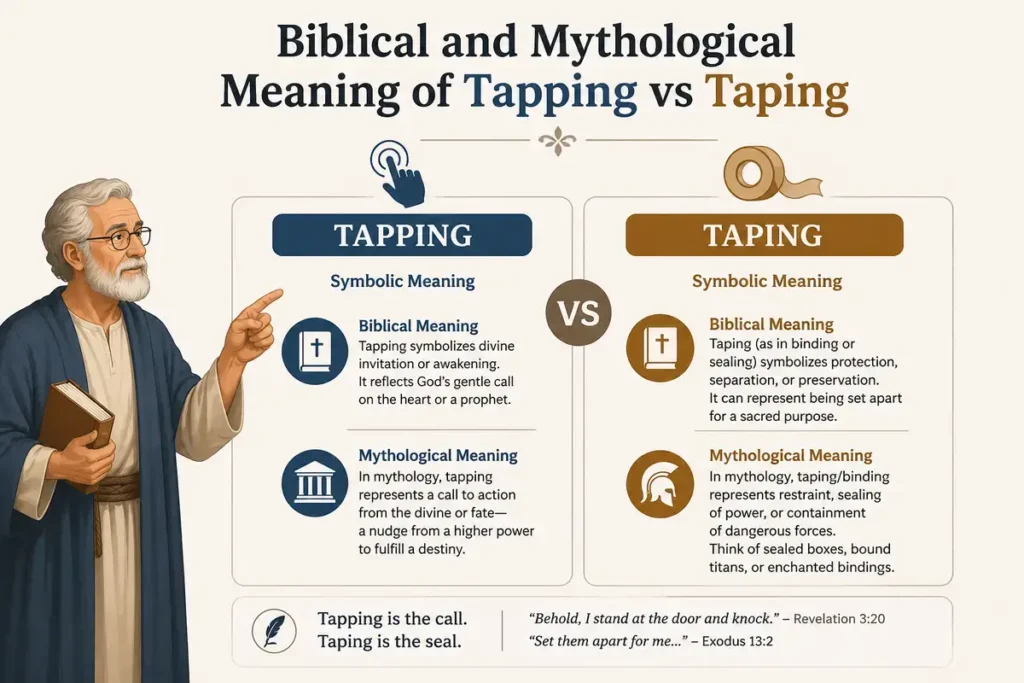
Biblical and Mythological Meaning of Tapping vs Taping
There is no direct biblical meaning for tapping or taping. The Bible does not specifically discuss these words as we use them today. However, some actions connected to tapping can appear in symbolic ways. For example, knocking on a door appears in several biblical passages. A gentle knock is similar to tapping because both involve seeking attention or asking for entry. In a symbolic sense, tapping may suggest:
- Seeking an answer.
- Asking for help.
- Waiting for a response.
- Getting someone’s attention.
Taping does not have a direct biblical connection because modern adhesive tape did not exist during biblical times. Still, the idea of repairing or holding things together can remind people of unity, care, and restoration. These are symbolic ideas rather than official religious meanings.
Symbolism Tapping vs Taping Explained in Simple Words
Words often carry feelings beyond their dictionary definitions. This is true for tapping and taping as well.
What Tapping vs Taping Represents: The Meaning of Tapping
Tapping often represents movement and communication. People may connect tapping with:
- Curiosity.
- Patience.
- Waiting.
- Attention.
- Connection.
Imagine someone tapping on a table while thinking. The tapping may show:
- Excitement.
- Nervousness.
- Deep thought.
- Anticipation.
A gentle tap can also symbolize friendliness. For example, a tap on the shoulder often means:
“Hello, I am here.”
In technology, tapping represents action. One simple tap can:
- Open an app.
- Send a message.
- Start a video.
- Make a purchase.
Because of this, tapping is often linked with modern communication.
What Tapping vs Taping Represents: The Meaning of Taping
Taping often represents support and repair. People may connect taping with:
- Fixing problems.
- Holding things together.
- Protection.
- Preparation.
- Organization.
When someone tapes a broken page, they are trying to preserve it.
When someone tapes decorations, they are preparing for an event.
Because of this, taping often carries a feeling of care and effort.
Tapping vs Taping Symbolism Comparison
| Tapping | Taping |
|---|---|
| Communication | Repair |
| Attention | Protection |
| Action | Support |
| Curiosity | Organization |
| Connection | Stability |
| Movement | Preparation |
This simple comparison helps show why the two words create different feelings.
Related Words You Should Know About Tapping vs Taping
Learning related words can make your vocabulary stronger.
Tap
A light touch or hit. Example:
“Give the screen a tap.”
Tapped
The past form of tap. Example:
“She tapped the window.”
Tappable
Able to be tapped. Example:
“The button is easily tappable.”
Tape
A strip of material used to stick things together. Example:
“I need more tape.”
Taped
The past form of tape. Example:
“He taped the box.”
Adhesive
A material that sticks to surfaces Example:
“Tape uses adhesive.”
Attach
To connect one thing to another. Example:
“Attach the paper with tape.”
Secure
To keep something firmly in place. Example:
“Secure the package with tape.”
Knock
A stronger version of a tap. Example:
“He knocked on the door.”
Touch
A gentle contact. Example:
“Touch the screen once.”
How People Actually Use Tapping vs Taping in Daily English
People use these words every day. Here are some common real-life examples.
Tapping Examples
- “I’m tapping the app, but it won’t open.”
- “She kept tapping her foot during the meeting.”
- “Someone was tapping at the window.”
- “He tapped me on the shoulder.”
- “Try tapping the screen again.”
Taping Examples
- “I’m taping the box before shipping it.”
- “She is taping the poster to the wall.”
- “We’re taping the decorations for the party.”
- “He is taping the torn page.”
- “They finished taping the cables together.”
These examples show how common both words are in everyday English.
Common Mistakes People Make With Tapping vs Taping
Many learners make the same mistakes. The good news is that they are easy to fix.
Mistake 1: Using Taping for Phone Screens
Incorrect:
“I was taping the screen.”
Correct:
“I was tapping the screen.”
Why?
No tape is involved.
Mistake 2: Using Tapping for Boxes
Incorrect:
“She was tapping the package shut.”
Correct:
“She was taping the package shut.”
Why?
Tape is being used.
Mistake 3: Looking Only at the Sound
The words sound somewhat alike. Many people choose based on sound instead of meaning. Always think about the action first.
Mistake 4: Forgetting the Root Word
Remember:
- Tap → tapping.
- Tape → taping.
Looking at the root word usually solves the problem.
Mistake 5: Rushing While Writing
Many spelling mistakes happen because people type quickly. Reading your sentence one more time can help you catch errors.
Final Teacher Explanation of Tapping vs Taping
Imagine you are sitting in a classroom. I write two words on the board:
Tapping
Taping
At first, they look almost identical. But they tell completely different stories.
If you lightly touch something, press a screen, tap a shoulder, or tap your fingers on a desk, use tapping.
If you use adhesive tape to hold, fix, attach, cover, or secure something, use taping.
That is the easiest rule to remember. Ask yourself one simple question:
“Am I using tape?”
If the answer is yes, choose taping.
If the answer is no and you are touching something lightly, choose tapping.
This small habit will help you choose correctly almost every time. The difference is not difficult once you focus on the action being described.
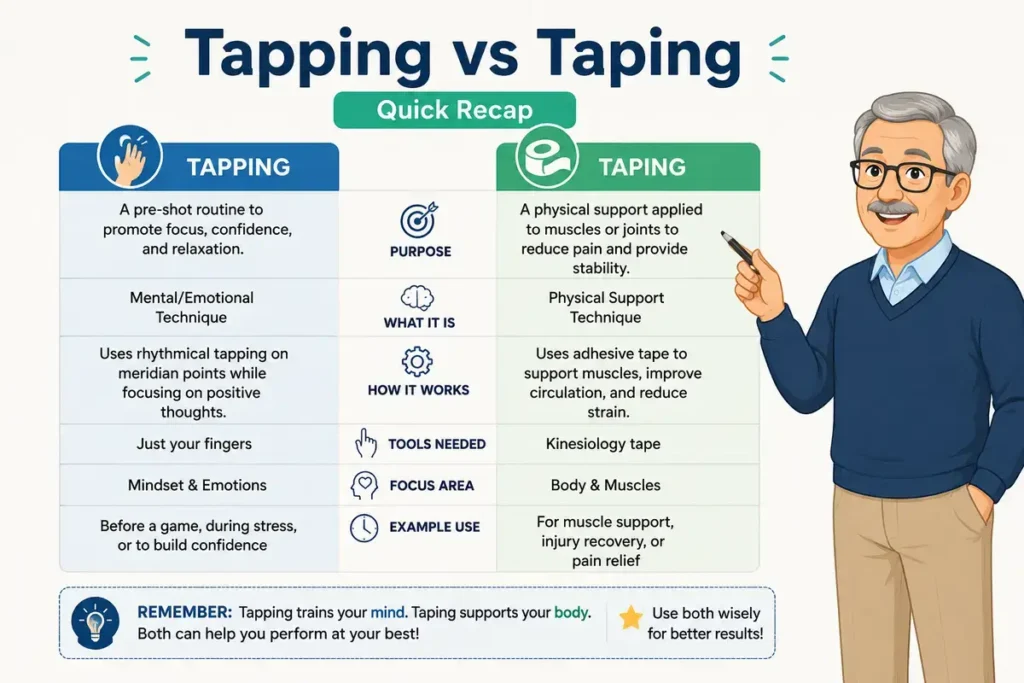
Final Answer: Tapping vs Taping Quick Recap
Tapping means lightly touching, pressing, or hitting something.
Taping means using tape to attach, repair, cover, or secure something.
Both words are correct, but they have different meanings. If tape is involved, use taping. If it is a light touch or press, use tapping.
You may also want to read Placque vs Plaque: Correct Meaning and Common Mistakes.
Conclusion
Understanding tapping vs taping is easier than many people think. The confusion happens because the words look very similar, but their meanings are completely different. Tapping is connected to touching, pressing, or lightly hitting something. Taping is connected to using tape to hold, fix, or attach something.
The easiest way to remember the difference is to focus on the action. If you are using tape, choose taping. If you are lightly touching something, choose tapping. Once you remember this simple rule, you can use both words correctly in everyday English, school assignments, business writing, and daily conversations.
Frequently Asked Questions About Tapping vs Taping
What is the difference?
Tapping means lightly touching or pressing something. Taping means using tape to attach or secure something.
Is tapping a correct word?
Yes. Tapping is the correct form of the verb “tap.”
Is taping a correct word?
Yes. Taping is the correct form of the verb “tape.”
When should I use tapping?
Use tapping when talking about light touches, presses, knocks, or screen actions.
When should I use taping?
Use taping when tape is used to hold, repair, cover, or attach something.
Why do people confuse?
The words look and sound similar, so many people mix them up while reading or writing.
Can both words be used in formal writing?
Yes. Both are correct words when used with the proper meaning.
How can I remember the difference quickly?
Ask yourself, “Am I using tape?” If yes, use taping. If not, use tapping.
