
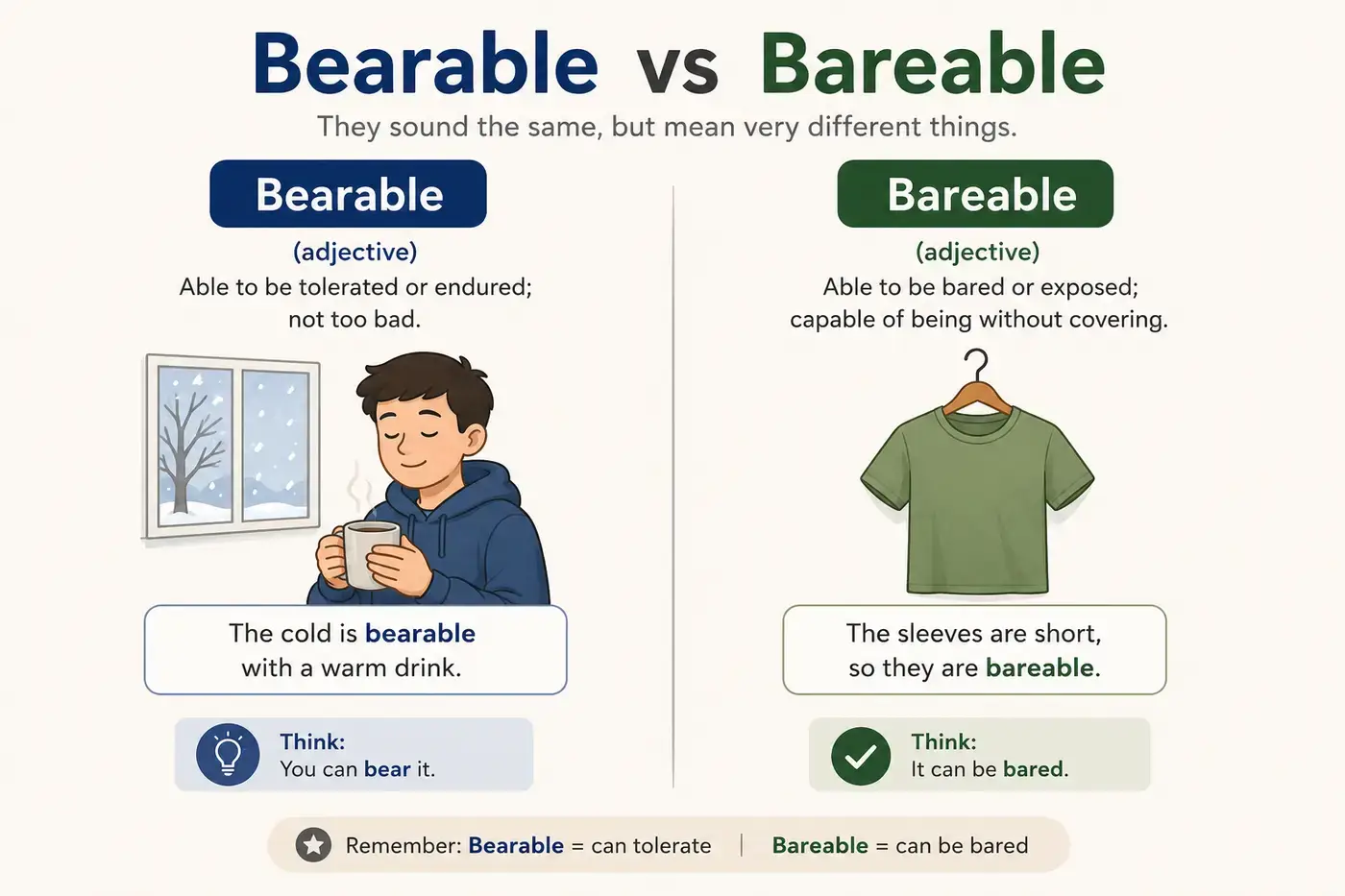
Many English learners get confused about bearable vs bareable because both words sound almost the same. When you hear them in conversation, they are impossible to tell apart. That makes many people think both spellings are correct. The truth is much simpler.
If you have searched you probably want to know which spelling is correct, what each word means, and how to remember the right one. The good news is that only one spelling is accepted in standard English.
This guide explains everything in very simple words. You will learn the difference, see easy examples, discover why people make this mistake, and learn a simple trick so you never confuse these words again.
Many readers also check Specialty or Speciality: Meaning, Difference, and Guide.
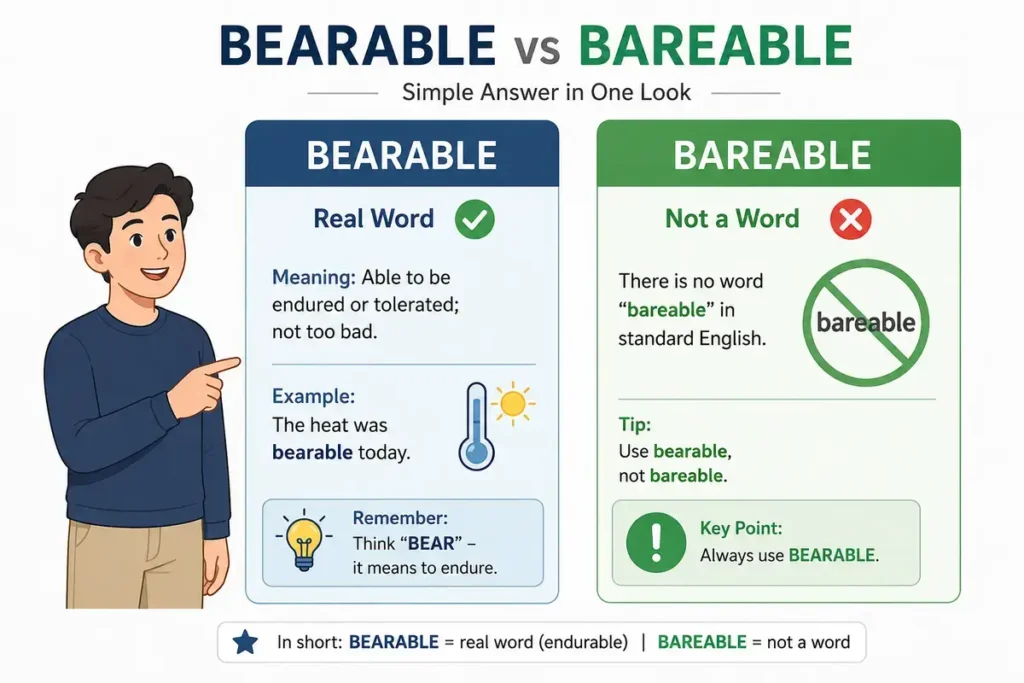
Simple Answer in One Look about Bearable vs Bareable
Bearable is the correct English word.
Bareable is a spelling mistake and is not accepted in standard English.
Quick answer:
- ✅ Bearable = something you can tolerate or live with.
- ❌ Bareable = incorrect spelling.
What Bearable vs Bareable Means in Simple English
The word bearable describes something that is hard but still possible to handle. Think about a hot day. It may feel uncomfortable, but you can still stay outside for a short time. You can say the heat is bearable. If pain is strong but you can still manage it, the pain is bearable.
If a loud sound bothers you but you can continue working, the noise is bearable. The word does not mean something is easy. It simply means it is not so bad that you cannot handle it. Here are some easy examples.
- The weather is hot but still bearable.
- The pain became more bearable after I rested.
- The long meeting was bearable because everyone stayed friendly.
- The traffic was slow but bearable.
- The smell was unpleasant but bearable.
Now look at bareable. Although many people write it, English dictionaries do not recognize it as a correct word. Whenever you want to say something can be tolerated, always choose bearable.
Why People Mix These Words
Many spelling mistakes happen because English has many words that sound alike.
This is exactly what happens with both words.
Here are the main reasons people get confused.
They Sound Exactly the Same
When people speak, bearable and bareable have the same pronunciation.
If someone only hears the word, they may guess the spelling incorrectly.
The Word Bare Is Real
The word bare is a real English word. It means uncovered or without clothing. For example:
- He walked with bare feet.
- The tree has bare branches.
- The walls were bare.
Since bare is a real word, some writers mistakenly think bareable must also be correct.
It is not.
The Word Bear Has More Than One Meaning
Many people know bear as the large animal.
But bear is also a verb.
As a verb, bear means:
- carry
- support
- tolerate
- endure
The adjective bearable comes from this verb, not from the animal. That is why the spelling begins with bear, not bare.
Fast Typing Causes Mistakes
Many spelling errors happen because people type quickly. Autocorrect may miss the mistake because bare is already a correct English word. That is another reason this confusion is so common online.
Clear Difference Explained Simply
The easiest way to remember and compare them side by side.
| Word | Correct? | Meaning |
|---|---|---|
| Bearable | ✅ Yes | Able to be tolerated or endured. |
| Bareable | ❌ No | Incorrect spelling. |
Another simple comparison looks like this.
- Bearable means you can live with it.
- Bearable means it is difficult but not impossible.
- Bareable should not be used in standard English writing.
- Dictionaries only recognize bearable.
Picture It This Way
Imagine carrying a heavy backpack. You can still walk. The weight is bearable. Now imagine someone writes bareable. That spelling is simply wrong, even if the meaning they wanted was correct.
Which Form Should You Use for Bearable vs Bareable?
The answer is always simple. Use bearable every time you want to describe something that can be tolerated. Never use bareable in school papers, emails, books, articles, or professional writing. Here is a simple rule. If you mean:
- able to handle
- able to endure
- not too painful
- not too difficult
- possible to tolerate
Choose bearable. Remember this easy sentence. If you can bear it, it is bearable. That one sentence helps many students remember the correct spelling forever.
Easy Real Life Sentences You Can Use
Here are simple examples you can use in everyday English.
- The weather is cold but still bearable.
- My headache is bearable now.
- The noise became more bearable after the windows were closed.
- Waiting thirty minutes was bearable.
- The movie was long but bearable.
- The backpack felt heavy but still bearable.
- The classroom became bearable after the fan was turned on.
- The stress was bearable because my friends helped me.
Notice that every sentence uses bearable. None of them use bareable because that spelling is incorrect.
Where Bearable vs Bareable Expression Comes From Simple History
The word bearable comes from the old English verb bear. Long ago, bear meant to carry something, support something, or continue through something difficult. Over time, English speakers added the ending able, which means “can be.” So bearable literally means able to be borne or able to be endured.
Even though the verb bear has existed for hundreds of years, the spelling has stayed the same. That is why modern English still uses bearable. The spelling bareable never became part of standard English because it does not come from the word bare.
As you can see, understanding the history makes the spelling much easier to remember. In the next section, we will go beyond the basic difference and look at how bearable is used in stories, culture, emotions, daily conversations, common mistakes, memory tricks, and expert writing tips so you can use the word naturally and confidently.
How Bearable vs Bareable Is Understood in Culture and Stories
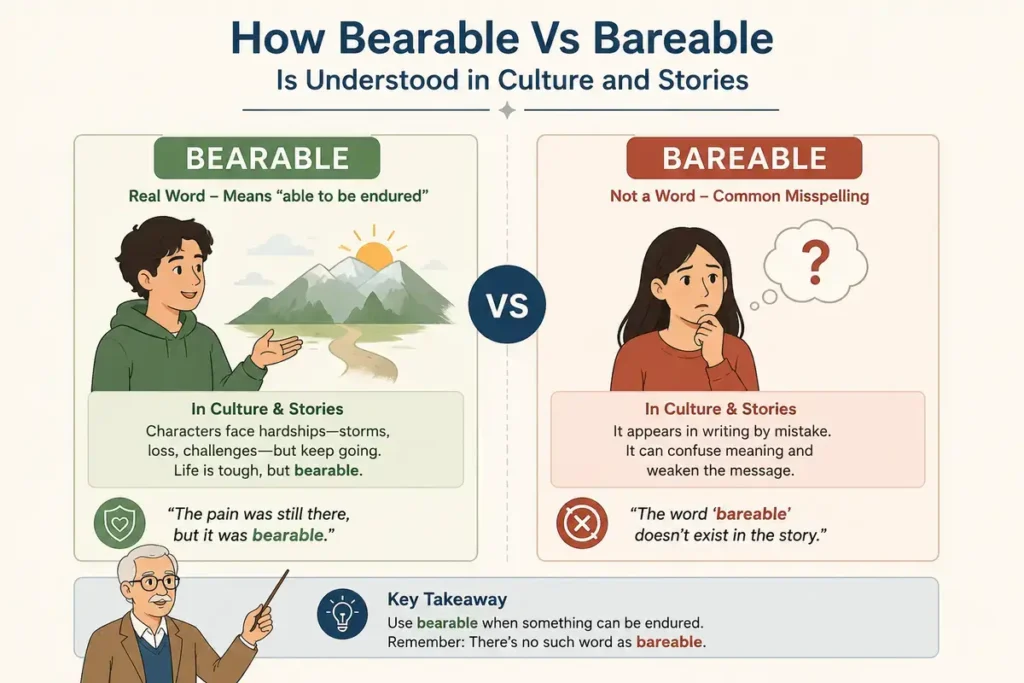
The word bearable often appears in stories where a person faces a hard time but keeps going. It reminds us that life is not always easy. Still, people can find strength, hope, and patience. For example, a story may describe a long winter as bearable because a family stays together and helps each other. The cold does not disappear, but love makes it easier to handle.
A student may have a difficult school year. It feels stressful, but support from teachers and friends makes it bearable. A worker may have a busy week. The work is tiring, but kind coworkers make every day more bearable. Movies and books also use bearable when characters deal with sadness, fear, or pain. The word shows that something is difficult but not impossible.
You will not find bareable used in good books, newspapers, or trusted websites because it is not a correct English word. So in everyday culture, bearable often represents hope during difficult times.
You may also want to read Carrer or Career: Meaning, Difference, and Examples.
Biblical and Mythological Meaning of Bearable or Bareable
The word bearable is not a special Bible word, but the idea behind it appears many times. The Bible teaches people to stay strong during difficult times. It encourages patience, faith, and helping one another. These ideas match the meaning of something becoming more bearable. For example, when people support each other, hard situations often feel easier to endure.
In mythology, heroes often face dangerous journeys, battles, or long challenges. They continue even when life becomes difficult. Their courage makes those hardships seem bearable. The spelling bareable has no biblical or mythological meaning because it is not a recognized English word.
Symbolism Explained in Simple Words
What Bearable Represents
The word bearable symbolizes strength and hope. It reminds us that people can face problems without giving up. It can also represent:
- Patience.
- Endurance.
- Inner strength.
- Calm thinking.
- Emotional balance.
- Hope during hard times.
When someone says, “The pain is bearable,” they are saying the situation is difficult but still manageable.
What Bareable Represents
The word bareable does not represent any special idea because it is not a correct English word. People usually write it by mistake because they confuse bear with bare. So the comparison is simple.
- Bearable represents something you can endure.
- Bareable represents a spelling mistake.
Related Words You Should Know About Bearable and Bareable
Learning related words makes English easier.
Tolerable
Something that is not pleasant but can still be accepted. Example:
The heat became tolerable after sunset.
Endurable
Something you can survive or continue through. Example:
The long walk was endurable with enough water.
Manageable
Something that is not too difficult to control. Example:
The homework was manageable.
Acceptable
Something that is good enough. Example:
His answer was acceptable.
Comfortable
Something that feels pleasant and easy. Example:
This chair is comfortable.
Unbearable
The opposite of bearable.
It means something is too difficult, painful, or unpleasant to tolerate. Example:
The noise became unbearable.
Bare
A real English word that means uncovered. Example:
The child walked on bare feet.
Notice that bare is correct, but bareable is not.
How People Actually Use Bearable vs Bareable in Daily English
People use bearable in many everyday situations. Here are some natural examples.
- The weather is hot, but it is still bearable.
- My back feels much better today. The pain is bearable now.
- The traffic was slow, but it was bearable.
- This chair is not perfect, but it is bearable for a short meeting.
- The classroom became bearable after the air conditioner started working.
- Waiting ten minutes is bearable.
- The movie was too long, but it was still bearable.
- The cold became more bearable after I put on a jacket.
- The homework looked difficult, but it was bearable once I started.
- The long flight became bearable because I watched movies.
In each example, bearable describes something that is difficult but still possible to handle.
Common Mistakes People Make With Bearable or Bareable
Many English learners make the same mistakes. Here are the most common ones.
Mistake 1
❌ The weather is bareable.
✅ The weather is bearable.
Only bearable is correct.
Mistake 2
Thinking bareable comes from bare.
This is incorrect.
Bearable comes from the verb bear, which means to endure or tolerate.
Mistake 3
Using bearable when something is actually pleasant. If something feels easy and enjoyable, you usually choose words like comfortable, pleasant, or enjoyable instead.Example: The hotel room was comfortable.
Not:
The hotel room was bearable.
Mistake 4
Confusing bear the animal with bear the verb.
The spelling comes from the verb meaning “to endure.”
It has nothing to do with the animal.
Easy Memory Trick
Remember this sentence.
If you can bear it, it is bearable.
That simple sentence helps most learners remember the correct spelling forever.
Final Teacher Explanation of Bearable and Bareable
Imagine you are sitting in my classroom. A student asks, “Teacher, which spelling should I use, bearable or bareable?” My answer would be very short. Always write bearable. The word means something is difficult but still possible to handle. The spelling bareable is simply a common mistake. Whenever you hear the word, think about the verb bear, which means to carry, endure, or tolerate something.
Then remember our classroom rule. If you can bear it, it is bearable. That one sentence is enough to solve this spelling problem every time. English has many words that sound the same but have different spellings. This is one of them. Once you understand where bearable comes from, choosing the correct spelling becomes much easier.
Final Answer About Bearable vs Bareable (Quick Recap)
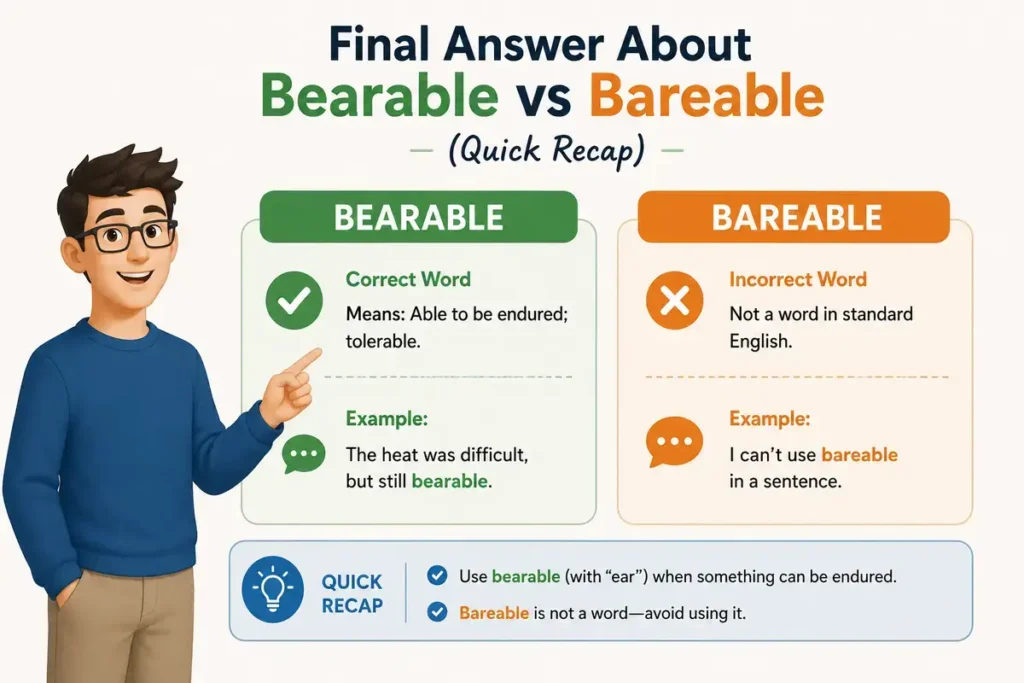
The correct spelling is bearable.
Use bearable when something is difficult but still possible to endure or tolerate.
Do not use bareable because it is not a correct English word.
Remember this simple rule. If you can bear it, it is bearable.
Many readers also check Leafs or Leaves: Simple Guide With Easy Examples (2026).
Conclusion
The confusion between bearable vs bareable is easy to understand because both spellings sound the same when spoken. However, standard English accepts only one correct form. Bearable is the right spelling, and it means something can be endured, tolerated, or managed even if it is uncomfortable or difficult. The spelling bareable is simply a common mistake that comes from confusing the verb bear with the word bare. The easiest way to remember the difference is with one simple sentence: If you can bear it, it is bearable. Keep this rule in mind whenever you write, and you will choose the correct spelling with confidence. With regular reading and practice, this mistake will soon disappear, making your English clearer, stronger, and more accurate.
Frequently Asked Questions
What does bearable mean in simple words?
It means something is difficult or unpleasant but still possible to handle.
Is bearable or bareable correct?
Bearable is correct. Bareable is an incorrect spelling.
Why do people confuse?
Both words sound exactly the same, so many people guess the spelling incorrectly.
Can I use bareable in formal writing?
No. Always use bearable in school, work, emails, and professional writing.
Is bareable in the dictionary?
No. Standard English dictionaries list bearable, not bareable.
What is the opposite of bearable?
The opposite is unbearable, which means something is too painful, difficult, or unpleasant to endure.
How can I remember the correct spelling?
Think of the verb bear, which means to endure. If you can bear it, it is bearable.
