
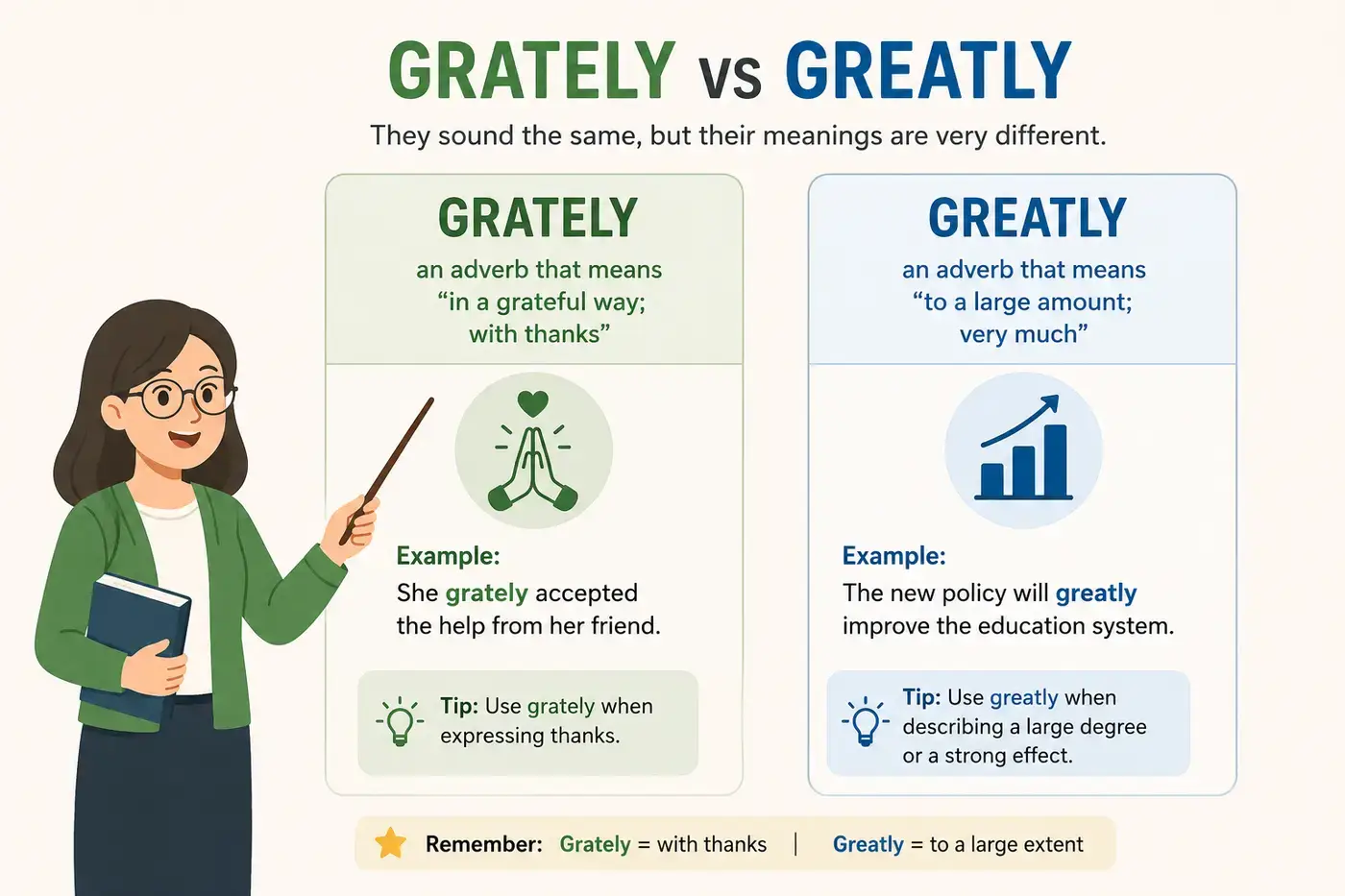
Many people get confused about grately vs greatly because the two words look very similar. When writing quickly, it is easy to type one instead of the other. That leads many writers to wonder which spelling is actually correct.
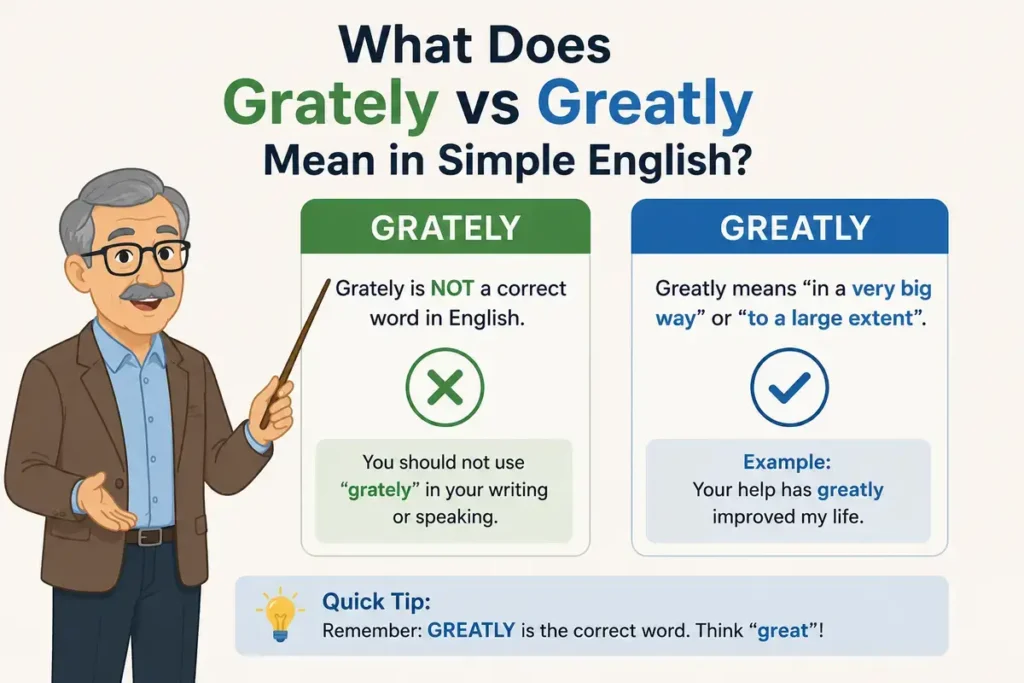
If you are comparing grately vs greatly, the simple answer is that greatly is the correct English word. The spelling grately is considered a misspelling and does not appear as a standard word in modern English dictionaries.
Knowing the difference can help you avoid common writing mistakes. Once you learn a simple rule, it becomes easy to remember which form to use every time.
Still confused? Compare Leafs or Leaves: Simple Guide With Easy Examples (2026).
Grately vs Greatly: Simple Answer in One Look
Greatly is correct.
Grately is a spelling mistake and should not be used in standard English writing.
What Does Grately vs Greatly Mean in Simple English?
To understand above words you first need to know what greatly means. Greatly is an adverb. It means:
- Very much
- To a large degree
- A lot
- In a big way
People use greatly when they want to show that something has a strong effect or happens to a high level. For example:
“I greatly appreciate your help.”
This means:
“I appreciate your help very much.”
Here is another example:
“The weather greatly improved.”
This means the weather became much better. The word greatly helps add strength to a sentence. It shows that something is important, noticeable, or significant.
Common Meanings of Greatly
Greatly can mean:
- Very much
- A lot
- To a high degree
- Strongly
- Significantly
Examples:
- She greatly enjoyed the movie.
- We were greatly surprised.
- The new system greatly helped the team.
- He was greatly respected by his friends.
In each sentence, greatly means “very much” or “to a large extent.”
What About Grately?
Grately is not a standard English word. Most of the time, people write grately when they mean greatly. For example:
❌ I grately appreciate your support.
✅ I greatly appreciate your support.
The second sentence is correct.
Why People Mix These Words Grately vs Greatly
The confusion around happens for several simple reasons.
The Words Look Similar
The spellings differ by only one letter. Compare them:
- Grately
- Greatly
When typing quickly, people may accidentally leave out the letter “e.” That small mistake changes the spelling.
Pronunciation Can Cause Confusion
When people speak, the word greatly often sounds fast. Some listeners may not clearly hear every letter. As a result, they may guess the spelling and write grately.
Auto-Correct Does Not Catch Every Error
Sometimes spelling tools miss mistakes. A writer may type quickly and overlook the error during proofreading. That allows grately to remain in the text.
The Word “Great” Creates Confusion
People know the adjective great. Examples:
- A great teacher
- A great movie
- A great day
When changing great into greatly, some writers accidentally remove the wrong letter and end up with grately.
Similar English Words
English contains many words that change when endings are added. For example:
- Happy → happily
- Easy → easily
- Quiet → quietly
Because English spelling has many patterns, learners sometimes guess incorrectly and create spellings like grately.
Grately vs Greatly: Clear Difference Explained Simply
When looking the difference is actually very simple.
Grately vs Greatly:Quick Comparison Table
| Feature | Grately | Greatly |
|---|---|---|
| Correct English word | No | Yes |
| Found in dictionaries | No | Yes |
| Used in formal writing | No | Yes |
| Means very much | No | Yes |
| Recommended spelling | No | Yes |
Easy Visual Trick
Look at the word:
Greatly
You can clearly see the word:
Great + ly
The word comes from great. That is why the letter “e” stays in the spelling.
Simple Rule
Remember this: If the word comes from great, keep the full word great before adding ly.
Great + ly = greatly
Not:
Grat + ly = grately
Side-by-Side Examples
Wrong:
- I grately appreciate your kindness.
- We were grately excited.
- The project was grately improved.
Correct:
- I greatly appreciate your kindness.
- We were greatly excited.
- The project was greatly improved.
The meaning is clear only when greatly is used.
Grately vs Greatly: Which Form Should You Use?
The answer is easy. Always use greatly. There is no situation in standard English where grately is the preferred spelling.
Use Greatly in School Writing
Examples:
- I greatly enjoyed reading the book.
- The lesson greatly improved my understanding.
Use Greatly in Business Writing
Examples:
- We greatly appreciate your cooperation.
- Your feedback greatly helps our team.
Use Greatly in Emails
Examples:
- I greatly appreciate your quick response.
- We greatly value your support.
Use Greatly in Everyday Writing
Examples:
- I greatly enjoyed the trip.
- She greatly improved her skills.
No matter where you write, greatly is the correct choice.
A Teacher’s Memory Trick Grately vs Greatly
Think about the word great. If something affects you greatly, it affects you in a great way. Because the word comes from great, keep the full spelling. This trick helps many students remember the correct form.
Grately vs Greatly in Common Expressions
The word greatly appears in many common English expressions. Learning these phrases helps you sound more natural.
Greatly Appreciate
This is one of the most common combinations. Examples:
- I greatly appreciate your help.
- We greatly appreciate your patience.
- She greatly appreciates your support.
Meaning: You are very thankful.
Greatly Improved
Examples:
- His grades greatly improved.
- The situation greatly improved.
Meaning: Something became much better.
Greatly Reduced
Examples:
- Costs were greatly reduced.
- Waste was greatly reduced.
Meaning:
Something became much smaller or lower.
Greatly Respected
Examples:
- She is greatly respected.
- The teacher was greatly respected.
Meaning:
Many people admire that person.
Greatly Influenced
Examples:
- He was greatly influenced by his parents.
- The artist was greatly influenced by nature.
Meaning: Something had a strong effect.
Easy Real-Life Sentences You Can Use for Grately vs Greatly
Here are some simple sentences using greatly correctly.
- I greatly appreciate your help.
- She greatly enjoyed the concert.
- The new teacher greatly helped the students.
- We greatly improved our results.
- The rain greatly slowed traffic.
- He was greatly surprised by the news.
- They greatly reduced their expenses.
- Your advice greatly helped me.
- The team greatly benefited from practice.
- I greatly value our friendship.
These examples sound natural in everyday English.
Common Mistakes People Make Grately vs Greatly
Many learners make the same mistake when writing greatly.
Mistake 1: Dropping the Letter E
Wrong:
- Grately
Correct:
- Greatly
Always keep the full word great.
Mistake 2: Using Grately in Formal Writing
Some people accidentally write:
“I grately appreciate your assistance.”
This can make writing look less professional. Use:
“I greatly appreciate your assistance.”
Mistake 3: Confusing Meaning
Sometimes learners think grately may have a different meaning. It does not. It is simply a misspelling of greatly.
Where Does Grately vs Greatly Come From? (Simple History)
The word greatly comes from the word great. The word great has been used in English for many hundreds of years. Originally, great described something large, important, powerful, or impressive. Examples:
- A great king
- A great city
- A great achievement
Over time, English speakers added the ending ly. This created greatly. The new word meant:
- In a great manner
- To a great degree
- Very much
That meaning continues today.
Why the Spelling Stays the Same
The spelling keeps the full word great. Then the ending ly is added.
Great + ly = greatly
This is why removing the letter “e” creates a spelling mistake.
Why Greatly Survived for So Long
The word is useful because it adds emphasis. Instead of saying:
“I appreciate your help.”
You can say:
“I greatly appreciate your help.”
The second sentence sounds stronger and shows deeper gratitude. Because people often need this meaning, greatly remains common in modern English.
Is Greatly Still Used Today?
Yes. Greatly is widely used in modern English. You can find it in:
- Books
- Newspapers
- Websites
- Emails
- Business reports
- School assignments
- Everyday conversations
Although some words change over time, greatly remains a standard and trusted part of English vocabulary. Many native speakers use it regularly.
Quick Review of Grately vs Greatly
Before moving on, remember these key points:
- Greatly is correct.
- Grately is incorrect.
- Greatly means very much or to a large degree.
- Greatly comes from the word great.
- Always keep the letter “e” when writing greatly.
- Greatly is accepted in all types of English writing.
If you remember these six points, you will rarely make this mistake again.
A related grammar guide is Wholey vs Wholly: Simple Grammar Guide for Writing.
Transition to Deeper Meaning and Usage
Now that you understand the basic difference between grately vs greatly, the next section will look at deeper meanings, symbolism, cultural use, common expressions, and how this word adds emphasis in everyday English. That will help you understand not just the spelling, but also why greatly is such a useful word in communication.
How Grately vs Greatly Is Understood in Culture and Stories
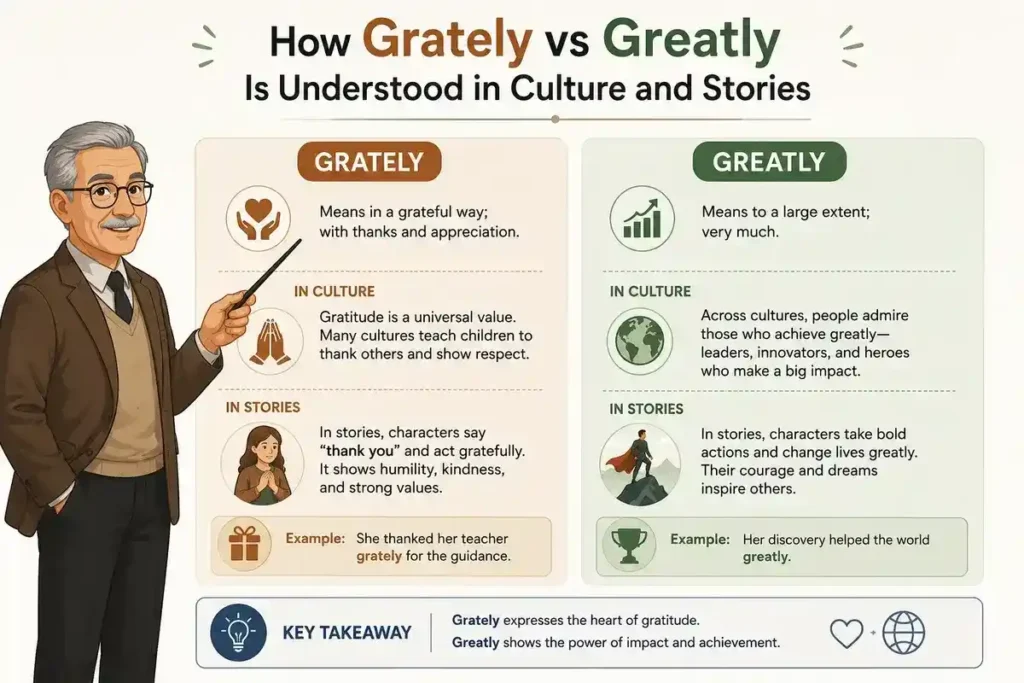
When people use the word greatly, they often want to show that something matters a lot. The word adds strength to a sentence. It helps people express strong feelings, big changes, or deep appreciation.
For example, in stories, characters may be greatly affected by an event. A hero may be greatly admired. A family may be greatly helped by a friend. In each case, the word shows that the effect is strong rather than small. Writers often use greatly when they want readers to understand the importance of something. Examples:
- The king was greatly respected by his people.
- She was greatly saddened by the news.
- The village was greatly changed after the storm.
These sentences help readers feel the size or importance of the situation. The misspelling grately has no special cultural meaning because it is not an accepted English word. It usually appears only when someone accidentally misspells greatly.
Because greatly is connected to the word great, it often carries positive feelings. It can suggest admiration, respect, gratitude, improvement, or success. That is why you will often see it in books, speeches, letters, and stories.
Biblical and Mythological Meaning of Grately vs Greatly
The word greatly appears many times in religious writing because it helps express strong emotions and important events. In Bible translations, greatly is often used to describe feelings such as:
- Great joy
- Great gratitude
Examples include phrases like:
- Greatly rejoiced
- Greatly blessed
In these cases, greatly means “very much” or “to a high degree.” The word helps show the strength of a person’s feelings. In myths and legends, greatly is also used when describing heroes, kings, gods, or important events. Examples:
- A hero was greatly honored.
- A warrior was greatly respected.
Again, the word simply makes the meaning stronger. There is no biblical or mythological meaning connected to grately because it is not a recognized English word.
Grately vs Greatly: Symbolism Explained in Simple Words
What Greatly Represents in Grately vs Greatly
In symbolic terms, greatly often represents:
- Strong feelings
- Big changes
- Deep appreciation
- High respect
- Major importance
When someone says:
“I greatly appreciate your help,”
the word shows sincere gratitude. When a story says:
“The town was greatly changed,”
it suggests a large and meaningful change. Because the word comes from great, it naturally carries ideas of size, strength, and significance.
What Grately Represents in Grately vs Greatly
Grately does not carry its own meaning because it is a spelling mistake. However, when teachers or editors see grately, it often represents:
- A typing error
- A spelling mistake
- Confusion between similar words
That is why learning the correct spelling is helpful.
Grately vs Greatly Symbolism Comparison
| Word | Symbolic Meaning |
|---|---|
| Greatly | Importance, strength, appreciation, large impact |
| Grately | A spelling error with no separate meaning |
This makes the difference very easy to remember.
Related Words You Should Know About Grately vs Greatly
Learning related words can make your vocabulary stronger.
Great
Means very good, important, large, or impressive. Example:
- She is a great teacher.
Greatness
Means the quality of being great. Example:
- People admired his greatness.
Highly
Means to a high level. Example:
- She is highly respected.
Strongly
Means with strength or strong feeling. Example:
- I strongly agree.
Deeply
Means very strongly on an emotional level. Example:
- He was deeply moved.
Significantly
Means in an important or noticeable way. Example:
- Sales increased significantly.
Extremely
Means to a very high degree. Example:
- The weather was extremely hot.
Very
A common word that means to a high degree. Example:
- I am very happy.
These words can sometimes be used in places where greatly is used.
How People Actually Use Grately vs Greatly in Daily English
Native English speakers use greatly in many everyday situations. Here are some common examples.
Expressing Thanks
- I greatly appreciate your help.
- We greatly appreciate your support.
Talking About Improvement
- My English has greatly improved.
- The service has greatly improved.
Showing Respect
- She is greatly respected.
- The coach is greatly admired.
Describing Big Changes
- The city has greatly changed.
- Technology has greatly changed our lives.
Talking About Benefits
- This tool greatly helps students.
- Exercise greatly benefits your health.
Talking About Feelings
- I was greatly surprised.
- He was greatly disappointed.
Workplace Examples
- The new system greatly increased productivity.
- Your suggestions greatly helped the project.
School Examples
- Reading greatly improved her vocabulary.
- Practice greatly improved his scores.
These are the kinds of sentences you will hear and read every day.
Common Mistakes People Make With Grately vs Greatly
Many learners make the same mistakes when using these words.
Mistake 1: Writing Grately Instead of Greatly
Wrong:
- I grately appreciate your help.
Correct:
- I greatly appreciate your help.
This is the most common mistake.
Mistake 2: Forgetting the Word Comes From Great
Some people remove the letter “e.” Remember:
Great + ly = greatly
Keeping the full word helps you spell it correctly.
Mistake 3: Thinking Grately Is an Alternative Spelling
Unlike some English words that have two accepted spellings, grately is not a standard alternative.
Use greatly every time.
Mistake 4: Using Greatly Too Often
Because greatly adds emphasis, using it in every sentence can sound unnatural. Natural:
- I greatly appreciate your help.
Less natural:
- I greatly ate breakfast.
- I greatly walked to school.
Use greatly when you want to show strong impact or strong feeling.
Mistake 5: Confusing Greatly With Great
Compare:
- She is a great teacher.
- She greatly helped her students.
The first describes the teacher. The second describes the action.
Final Teacher Explanation of Grately vs Greatly
Imagine you are sitting in a classroom and asking me which word to use. My answer would be simple. Use greatly. That is the correct English word. It means:
- Very much
- A lot
- To a large degree
The spelling grately is a mistake that happens when people accidentally remove the letter “e.” A good memory trick is to focus on the word great. If something affects you greatly, it affects you in a great way. Because the word comes from great, keep the full spelling when adding ly.
henever you write:
- greatly appreciate
- greatly admire
you are using standard English correctly. If you remember that one rule, you will avoid this mistake in school, work, emails, and everyday writing.
Final Answer: Grately vs Greatly
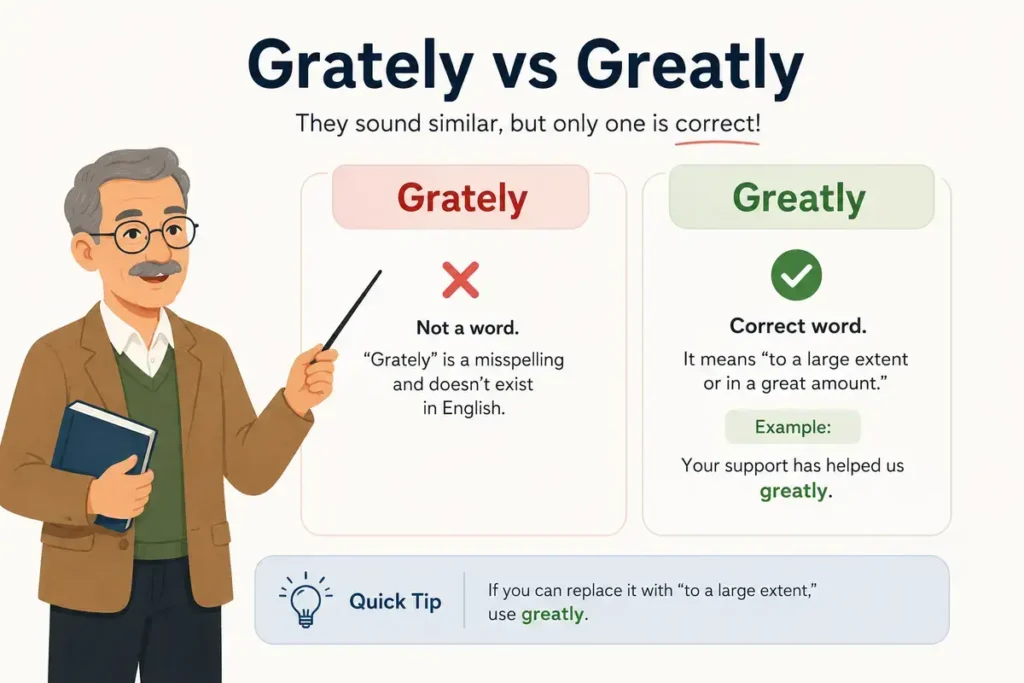
If you are choosing the correct word is greatly. Grately is a misspelling and should be avoided. Remember this simple rule:
Great + ly = greatly.
Keep the letter “e” every time.
Conclusion
The difference between grately vs greatly is simple once you know the rule. Greatly is the correct spelling and means very much or to a large degree. Grately is not a standard English word and is treated as a spelling mistake.
The easiest way to remember the correct form is to look at the word great. Since greatly comes from great, the letter “e” stays in the spelling. Whenever you write about strong appreciation, major improvement, deep respect, or a significant change, greatly is the word you should choose. Learning this small spelling difference can make your writing clearer, more professional, and easier to understand.
Need another quick comparison? Read Finaly or Finally: Which Spelling Is Correct?.
Frequently Asked Questions (FAQs)
Is greatly a real English word?
Yes. Greatly is a standard English word that means very much or to a large degree.
Is grately correct?
No. Grately is considered a spelling mistake in modern English.
Why do people confuse?
The words look very similar, and people sometimes accidentally leave out the letter “e.”
What does greatly mean in simple words?
It means very much, a lot, or to a high degree.
Can I use grately in formal writing?
No. Formal writing should always use greatly.
How can I remember the correct spelling?
Think of the word great. Add ly and keep the letter “e.”
Is greatly common in everyday English?
Yes. Native speakers use it often in conversations, emails, books, and business writing.
What are common phrases with greatly?
Examples include greatly appreciate, greatly improve, greatly respect, greatly admire, and greatly benefit.
