
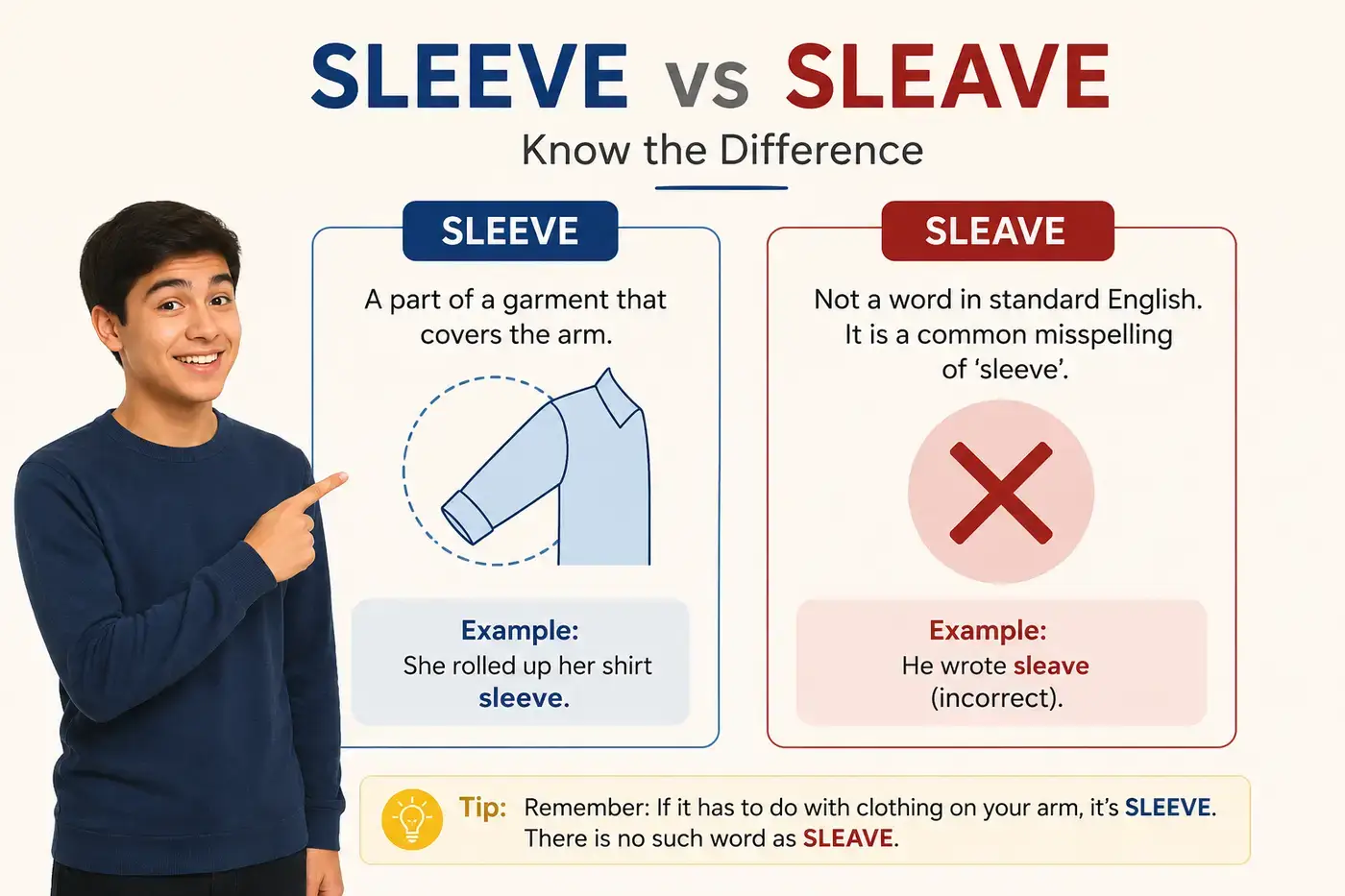
Many people search for sleave or sleeve because the two words look almost the same. One is a common English word that people use every day. The other is a rare word that most English learners never see. This small spelling difference can make writing confusing.
If you have ever wondered which word is correct, you are in the right place. This guide explains in very simple English. You will learn what each word means, when to use it, and how to avoid common mistakes.
By the end of this article, you will know the difference, remember the correct spelling, and feel confident using the right word in your own writing.
Still confused? Compare Soo vs So: The Simple Difference You Need to Know (2026).
Simple Answer in One Look about Sleave or Sleeve
When choosing between words, sleeve is correct in almost every situation. It means the part of a shirt, jacket, or dress that covers your arm.
Sleave is a very old and uncommon English word. Most people never use it in normal conversation or writing.
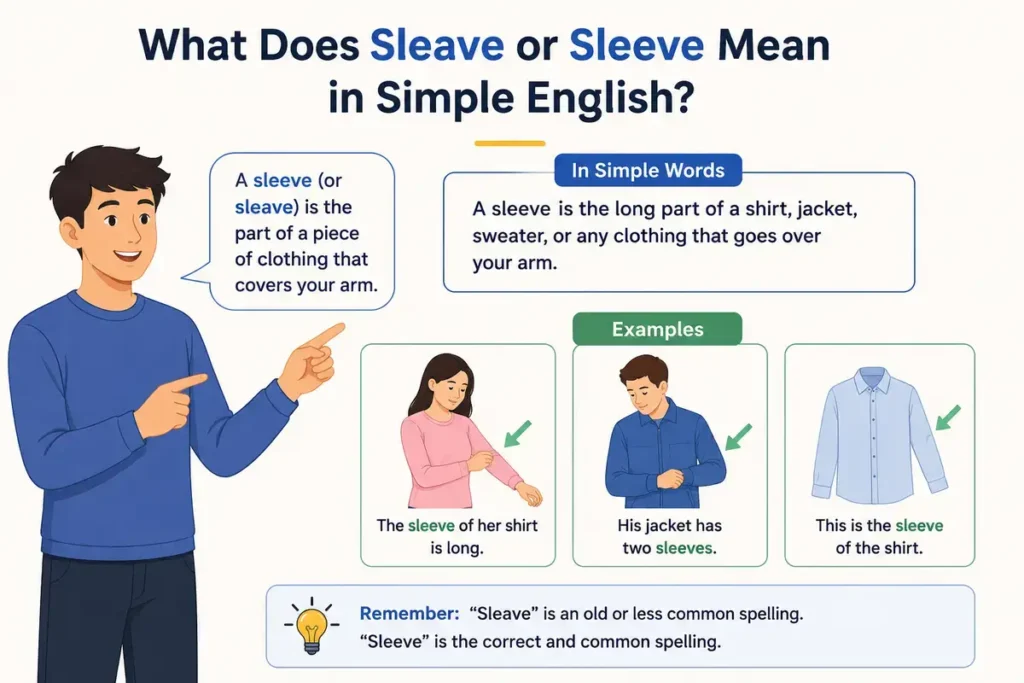
What Does Sleave or Sleeve Mean in Simple English?
The easiest way to understand is to learn each word by itself.
What Is a Sleeve?
A sleeve is the part of clothing that covers all or part of your arm. Examples include:
- A shirt sleeve
- A jacket sleeve
- A sweater sleeve
- A dress sleeve
People also use sleeve in many everyday expressions. For example:
- Roll up your sleeves.
- Keep something up your sleeve.
- Wear your heart on your sleeve.
Because it is used so often, sleeve is a word every English learner should know.
What Is a Sleave?
A sleave is an old English word. Long ago, it meant soft silk fibers or untwisted silk thread. Today, almost nobody uses it except when reading very old books, poetry, or famous literature.
Most native English speakers have never needed to use sleave in everyday life. So if you are writing about clothing, fashion, or daily activities, you almost certainly need.
Why Do People Mix Up Sleave or Sleeve?
Many learners confuse for several simple reasons.
They Look Nearly the Same
Only one letter changes.
- sleave
- sleeve
When reading quickly, they almost look identical.
Spell Check May Not Help
Since sleave is a real English word, some dictionaries recognize it.
That means your computer may not mark it as a mistake even if you meant sleeve.
Typing Errors
People sometimes type too fast.
Instead of writing sleeve, they accidentally leave out one letter or mix the letters.
Old Books Cause Confusion
Someone may find the word sleave while reading an old poem or play.
Later, they may think it is another spelling of sleeve, even though the meanings are different.
Similar Pronunciation
Depending on the speaker, the words can sound somewhat alike.
This makes learners think they are simply two accepted spellings of the same word.
They are not.
Clear Difference Explained Simply
The difference becomes easy once you compare them side by side.
| Word | Meaning | Common Today? | Use It? |
|---|---|---|---|
| Sleeve | Part of clothing that covers the arm | Yes | Yes |
| Sleave | Old word for silk fiber or thread | No | Only in old literature |
Another simple way to remember it:
- Sleeve belongs in everyday English.
- Sleave belongs in historical writing and classic literature.
Think about these examples.
Correct:
- My shirt has long sleeves.
- She fixed the torn sleeve.
- He rolled up his sleeves.
Not correct for modern English:
- My shirt has long sleaves.
- I washed my jacket sleave.
Those sentences should always use sleeve.
Sleave or Sleeve in Everyday Writing
If you are writing:
- homework
- emails
- blog posts
- stories
- text messages
- business documents
choose sleeve.
Sleave or Sleeve in Old Literature
You may see sleave when reading very old English works. There, it keeps its historical meaning instead of referring to clothing. That is why dictionaries still include it even though people rarely use it today.
Which Form Should You Use?
The answer is very simple.
Use sleeve almost every time.
Choose sleeve if you are talking about:
- shirts
- jackets
- sweaters
- dresses
- coats
- clothing
- fashion
- sewing
Use sleave only if you are discussing old English language, historical writing, or classic literature. Here is an easy rule to remember. If the word covers your arm, it is sleeve. If the word appears in an old poem or historical text about silk fibers, it may be sleave. For everyday English, you can safely choose sleeve every time.
Easy Real-Life Sentences Using
These examples show how people naturally use the correct word.
- My sweater has very long sleeves.
- She rolled up her sleeves before washing the dishes.
- There is a hole in my jacket sleeve.
- His shirt sleeve got wet in the rain.
- The little girl pulled on her mother’s sleeve.
- I like dresses with short sleeves.
- The tailor fixed the torn sleeve.
These examples show that sleeve appears in normal conversation every day.
Where Does Sleave or Sleeve Come From? Simple History
The history of both words helps explain why the words look alike.
Sleeve comes from very old English. For hundreds of years, people have used it to describe the part of clothing that covers the arm. The meaning has stayed almost the same through time.
Sleave also comes from old English language history, but it followed a different path. It referred to soft silk fibers or fine strands of silk before they were twisted into thread.
Because modern English changed over many years, sleeve stayed common while sleave slowly disappeared from everyday speech. Today, nearly everyone knows survives mostly in old books and historical dictionaries.
Why Did Sleeve Stay Common?
People wear clothes every day.
So the word sleeve continued to be useful.
Children learn it early because they hear it at home, in school, and while shopping for clothes.
Why Did Sleave Become Rare?
The special meaning of sleave became less useful over time.
Other words replaced it.
As a result, most people no longer use it in daily English.
You are much more likely to hear thread, silk, or fiber instead.
Transition to the Next Section
Now you understand the basic difference between, when each word is used, and why people confuse them. In the next section, we will look at deeper meanings, famous expressions, cultural use, common mistakes, memory tips, and answers to the questions people ask most often about keywords.
You may also want to read Any Time vs Anytime: Which Is Correct and How to Use (2026).
How Is Sleave or Sleeve Understood in Culture and Stories?
When people hear both words, they almost always think of sleeve because it appears in daily life, books, movies, and common sayings. A sleeve is more than just part of a shirt. In many stories, it can show a person’s feelings, work, or personality. For example, someone who rolls up their sleeves is ready to work hard. This image appears in stories about teamwork, farming, building, cooking, and helping others.
Another common saying is wear your heart on your sleeve. This means someone openly shows their feelings instead of hiding them. There is also the expression have something up your sleeve. It means someone has a surprise or a secret plan. These expressions make sleeve an important word in English culture.
The word sleave is different. Most people never hear it in everyday conversation. It mainly appears in very old English writing. One famous example is in Shakespeare’s Macbeth, where sleave means soft silk thread. Because of this, sleave feels old, poetic, and historical rather than modern. So in culture and stories:
- Sleeve represents everyday life.
- Sleave represents old literature and history.
Does Sleave or Sleeve Have a Biblical or Mythological Meaning?
There is no special Biblical meaning. The Bible uses many words about clothing, but sleeve itself does not carry a special symbolic meaning. People may read about robes, garments, coats, and clothing, but those symbols are different from the word sleeve. The word sleave also has no special Biblical meaning.
In mythology, neither word plays an important role. The only reason people sometimes ask this question is because sleave sounds old, and many old words appear in religious or historical books. The simple answer is this:
- Sleeve has everyday meaning.
- Sleave has historical meaning.
- Neither word has a special Biblical or mythological definition.
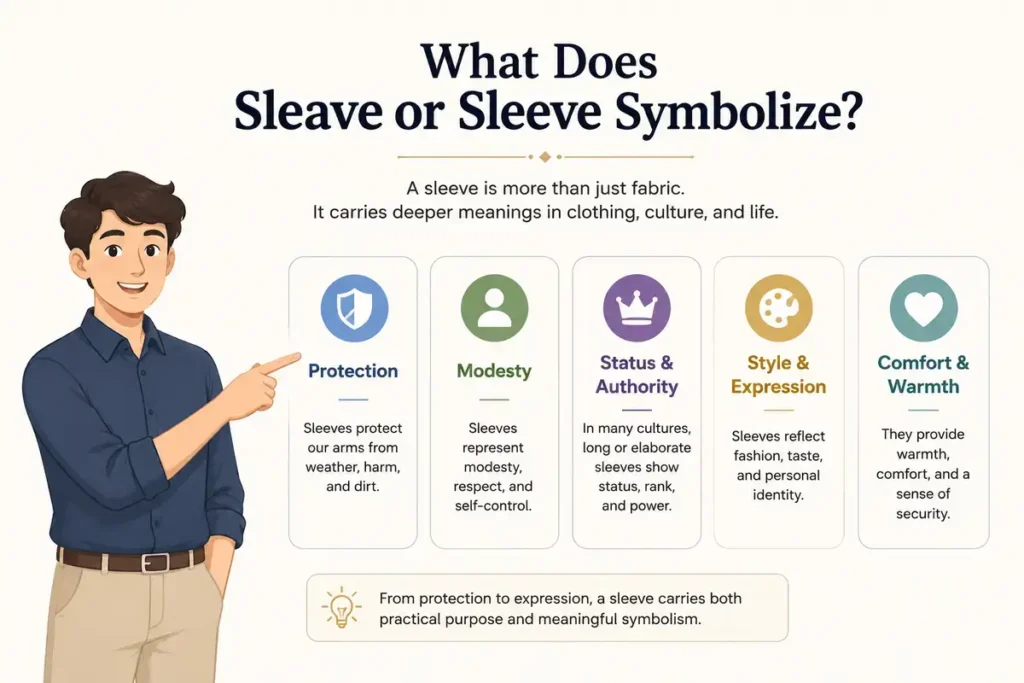
What Does Sleave or Sleeve Symbolize?
Words often carry ideas beyond their basic meanings.
What Does Sleeve Represent?
A sleeve often represents action, honesty, protection, and preparation.
Think about these examples.
Rolling up your sleeves
This shows someone is ready to begin hard work.
Wearing your heart on your sleeve
This shows honesty and open emotions.
Having something up your sleeve
This shows planning, surprise, or hidden ideas.
A sleeve also protects the arm, so it can represent comfort and care.
What Does Sleave Represent?
A sleave represents something very different.
Because it means soft silk fiber, it often suggests:
- delicate things
- fine threads
- old craftsmanship
- classic poetry
- historical language
Today, these meanings appear almost only in literature.
Symbolism Compared Sleave or Sleeve
| Word | Simple Symbol |
|---|---|
| Sleeve | Work, honesty, protection, readiness |
| Sleave | Silk, history, old writing, delicate threads |
This makes it easy to remember.
Sleeve belongs to modern life.
Sleave belongs to old literature.
Related Words to Sleave or Sleeve You Should Know
Learning related words makes your vocabulary stronger.
Sleeve
The part of clothing that covers your arm.
Shirt
A piece of clothing that usually has sleeves.
Jacket
Outer clothing that often has long sleeves.
Cuff
The end of a sleeve near the wrist.
Coat
A warm outer piece of clothing with sleeves.
Garment
Another word for clothing.
Fabric
The material used to make clothes.
Silk
A smooth natural material.
It is closely connected to the old meaning of sleave.
Thread
A thin strand used for sewing.
This is much more common today than sleave.
Fiber
Very small strands used to make cloth or thread.
Modern English usually says fiber instead of sleave.
How Do People Actually Use Sleave or Sleeve in Daily English?
In normal conversation, people almost always use sleeve. Here are some natural examples.
- Your sleeve is inside out.
- My shirt sleeve is too short.
- Please roll up your sleeves.
- She pulled my sleeve to get my attention.
- I spilled coffee on my sleeve.
- His jacket sleeves are too long.
- The tailor shortened the sleeves.
- I like sweaters with long sleeves.
- She wears her heart on her sleeve.
- I think he has something up his sleeve.
Notice something important. Every one of these uses. You are very unlikely to hear someone naturally say sleave unless they are discussing old English books.
What Common Mistakes Do People Make With Sleave or Sleeve?
Many learners make the same mistakes. Here are the most common ones.
Mistake 1: Thinking Both Mean Clothing
Incorrect:
My sleave is dirty.
Correct:
My sleeve is dirty.
Remember, clothing uses sleeve.
Mistake 2: Assuming Sleave Is Another Spelling
Some people believe British English uses sleave.
That is not true.
Both American English and British English use sleeve.
Mistake 3: Copying Old Literature
Someone may read sleave in an old book and begin using it everywhere.
Modern English does not work that way.
Keep sleave in historical writing only.
Mistake 4: Forgetting Common Idioms
People sometimes understand the words but forget the expressions. For example:
Correct:
- Roll up your sleeves.
- Wear your heart on your sleeve.
- Have something up your sleeve.
Never replace sleeve with sleave in these expressions.
Mistake 5: Trusting Spell Check Too Much
Since sleave is a real word, your computer might not mark it as wrong.
Always ask yourself one question.
Am I talking about clothing?
If the answer is yes, write sleeve.
Final Teacher Explanation About Sleave or Sleeve
Imagine we are sitting together in an English class. A student asks, “Teacher, should I write?” My answer would be very simple.
If you are talking about a shirt, coat, sweater, jacket, dress, or any piece of clothing, always write sleeve.
If you are reading Shakespeare or another very old English book, you might see sleave. There, it means fine silk fiber instead of clothing.
That is the only difference you need to remember. Do not worry if you have never seen sleave before. Even many native English speakers never use it. The word you will use almost every day is sleeve. Whenever you see clothing, think sleeve. Whenever you see old poetry about silk thread, think sleave. That one simple rule will help you avoid mistakes every time.
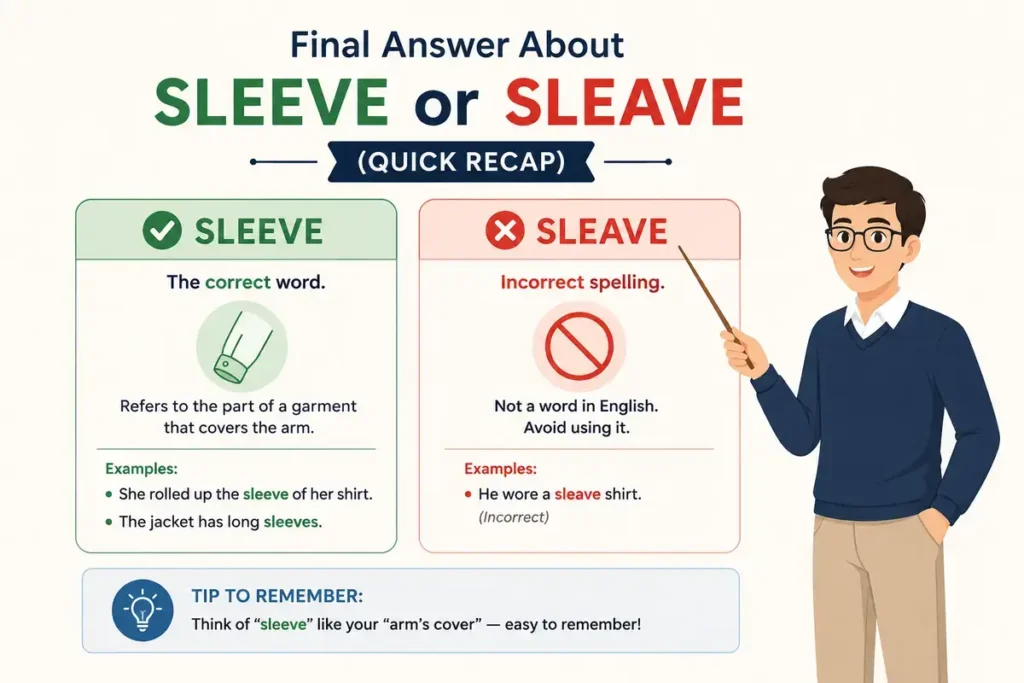
Final Answer About Sleave or Sleeve (Quick Recap)
When choosing between words, sleeve is the correct word for everyday English. It means the part of clothing that covers your arm and appears in many common expressions.
Sleave is a rare historical word that means fine silk fiber. Unless you are reading old literature, you almost never need to use it.
For another common grammar confusion, see Nonresponsive vs Unresponsive: Easy Examples and Rules.
Conclusion
The difference between both words are easy once you know their meanings. Sleeve is the modern word for the part of clothing that covers your arm, and it appears in everyday conversations, writing, and many popular English expressions. Sleave is a rare historical word that means fine silk fiber and is mostly found in classic literature. If you remember that clothing always uses sleeve, you will choose the correct spelling with confidence every time.
Frequently Asked Questions (FAQs)
What does mean in simple words?
Sleeve means the arm part of clothing. Sleave is an old word that means fine silk fiber.
Is it correct?
For almost all modern writing, sleeve is correct. Sleave is used only in rare historical or literary contexts.
Why do people confuse?
The words look almost the same, and sleave is still listed in some dictionaries even though it is very uncommon.
Can I use sleave in everyday writing?
No. Use sleeve for normal English. Save sleave for discussions about old literature.
Is sleave a spelling mistake?
Not exactly. It is a real but very old English word. It is simply not the right word when talking about clothing.
Is sleeve used in common English expressions?
Yes. English speakers often say roll up your sleeves, wear your heart on your sleeve, and have something up your sleeve.
Which word should English learners remember?
Remember sleeve. It is the word used in everyday speaking, writing, school, and work.
