
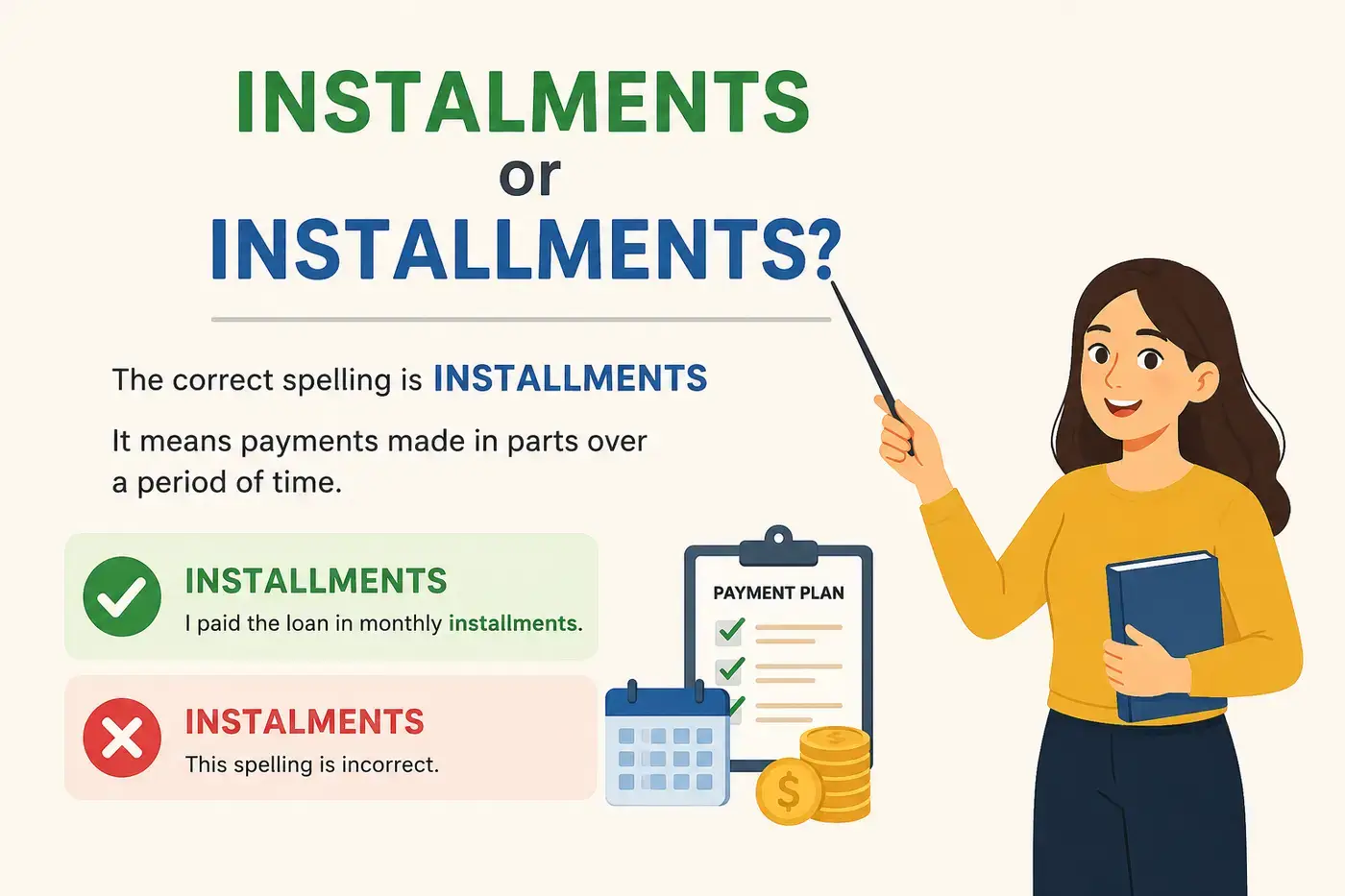
Many English learners get confused about instalments or installments because both spellings look correct. You may see one version in a British book and another in an American website. That makes many people wonder which one they should use.
The good news is that boht words have the same meaning. The difference is not about right or wrong. It is simply a spelling difference between British English and American English. Once you know that rule, choosing the correct form becomes easy.
In this guide, you will learn the difference and why people mix them up, where each spelling is used, and how to use both correctly in everyday English. Everything is explained in simple words with clear examples.
You may also want to read Whiny vs Whiney: Which Spelling Is Correct and How to Use It?.
Simple Answer in One Look
Installments is the standard American English spelling.
Instalments is the standard British English spelling.
Both words mean the same thing. Choose the spelling that matches the type of English you are writing.
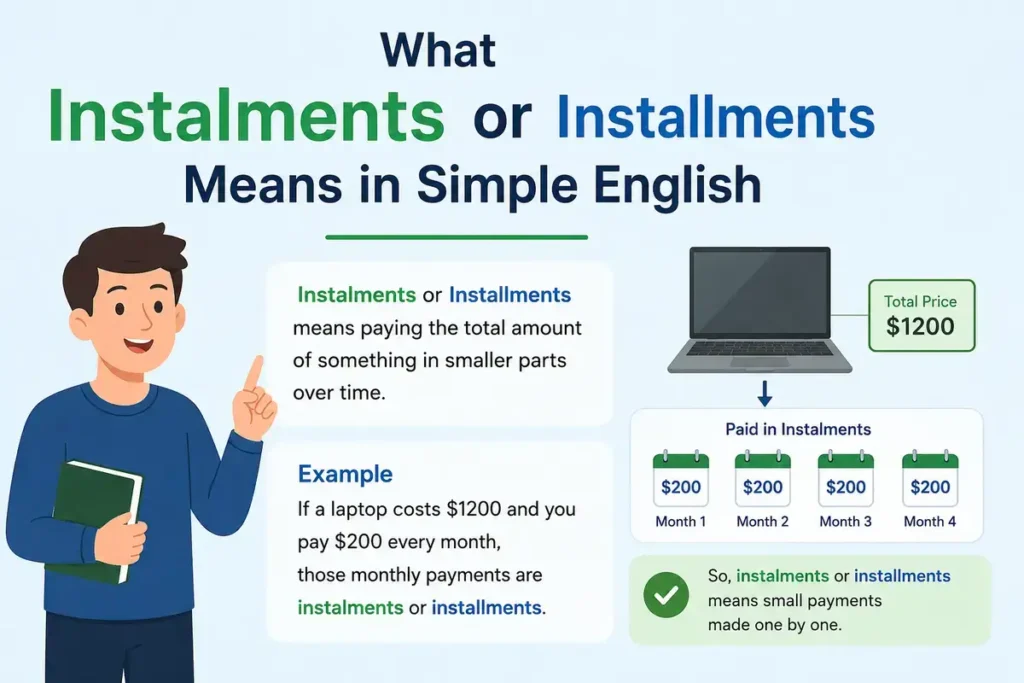
What Instalments or Installments Means in Simple English
An installment or instalment is one part of a larger payment. Instead of paying the full amount at one time, you pay smaller amounts over a period of time. For example, imagine you buy a laptop that costs one thousand dollars. You do not pay all the money today.
Instead, you pay one hundred dollars every month for ten months. Each monthly payment is called an installment in American English or an instalment in British English. The word is also used outside of money. A television series can have many installments. A book series can have several installments.
Each new part of the series is called an installment or an instalment. Think of it this way. A whole thing is divided into smaller parts. Each smaller part is an installment. Here are a few easy examples.
- I pay my phone bill in monthly installments.
- She bought the sofa in twelve installments.
- The next installment of the story comes out next week.
- We finished the first installment yesterday.
- The final installment will complete the series.
No matter which spelling you choose, the meaning stays exactly the same.
Why People Mix These Words
Many people become confused because both spellings are correct. Most spelling mistakes have one correct answer and one wrong answer. This pair is different. The correct spelling depends on the kind of English you are using. Another reason is that people read content from many countries.
Someone may read an American news article in the morning. Later they may read a British website. They notice different spellings and think one must be a mistake. It is not a mistake. It is simply a regional spelling difference. Computer spell checkers can also confuse people.
If your computer uses American English, it may mark instalments as incorrect.
If your computer uses British English, it may suggest instalments.
That makes people wonder which spelling is truly correct. The answer is simple. Both are correct. Just stay consistent in one piece of writing. Students also get confused because many English words change spelling between American and British English. Here are a few examples.
| American English | British English |
|---|---|
| color | colour |
| favorite | favourite |
| traveled | travelled |
| installment | instalment |
| canceled | cancelled |
Once you notice this pattern, the spelling difference becomes much easier to remember.
Clear Difference Explained Simply
The meaning does not change.
Only the spelling changes.
Here is the difference in a simple way.
Installments
- American English spelling.
- Used in the United States.
- Common in American companies.
- Seen in American schools and newspapers.
Instalments
- British English spelling.
- Used in the United Kingdom.
- Common in many countries that follow British English.
- Seen in British books and newspapers.
Quick Comparison
| Feature | Installments | Instalments |
|---|---|---|
| Meaning | Small parts of a payment or series | Small parts of a payment or series |
| Correct | Yes | Yes |
| American English | Yes | No |
| British English | No | Yes |
| Pronunciation | Same | Same |
The pronunciation stays exactly the same. Only the spelling changes. That is why many people do not notice the difference until they see the word written down.
Which Form Should You Use?
The answer depends on your audience.
If you are writing for American readers, use installments.
If you are writing for British readers, use instalments.
Your school, company, or website follows one style, stay with that style from beginning to end. Do not switch between spellings in the same article unless you are comparing them. Here is a simple guide. Use installments if you are writing for:
- The United States.
- American schools.
- American businesses.
- American websites.
Use instalments if you are writing for:
- The United Kingdom.
- British schools.
- British companies.
- British newspapers.
If you are unsure, look at the rest of the document. Does it use color or colour? Does it use favorite or favourite? Follow the same spelling style. That will keep your writing neat and professional.
Easy Real Life Sentences You Can Use
These examples show how both spellings work in everyday English.
American English
- I paid for my car in monthly installments.
- The final installment is due next Friday.
- We finished paying all the installments.
- She missed one installment last month.
- The next installment of the movie arrives this summer.
British English
- I paid for my car in monthly instalments.
- The last instalment is due next Friday.
- We finished paying all the instalments.
- She missed one instalment last month.
- The next instalment of the television series starts tomorrow.
Notice that only the spelling changes. The meaning stays exactly the same.
Where these Words Expression Comes From Simple History
The word comes from the verb install. Long ago, the word was connected with placing something into position or setting something up. Over time, English speakers began using it for payments that are completed little by little instead of all at once. As English spread to different countries, spelling rules slowly changed. American English kept the spelling installment with two letter Ls before the ending.
British English later accepted instalment with one letter L before the ending. Even though the spellings became different, the meaning never changed. Today, banks, stores, finance companies, schools, publishers, and streaming services all use the word when talking about payments or parts of a series. That is why you may see words in many different places. Once you know the audience you are writing for, choosing the correct spelling becomes simple.
In the next section, you will discover how these words are understood in everyday culture, how they appear in books, movies, business, and finance, common mistakes people make, useful memory tricks, and answers to the most common questions people ask about these two spellings.
How does Are Understood in Culture and Stories
The words are often connected with patience and progress. Many people cannot buy expensive things with one payment. Instead, they pay little by little over time. Because of this, the words remind people that big goals can be reached through small steps. You will also hear these words when people talk about stories.
A movie series has different installments.
A game series has different installments.
Each new part continues the story. Readers and viewers often wait with excitement for the next installment because they want to know what happens next. In everyday life, these words often carry a feeling of planning ahead. Someone who pays in installments is usually thinking about the future instead of trying to pay everything at once. Parents may buy furniture in installments. Students may pay school fees in installments.
Families may pay for vacations in installments. Because of this often represent smart planning, responsibility, and steady progress. The words themselves are not emotional. Still, the situations around them often are. A family may feel happy after paying the final installment on a house. A reader may feel excited about the next installment of a favorite novel. In both cases, the idea is simple. One step leads to another until the whole journey is complete.
Many readers also check Attornies or Attorneys: Which Spelling Is Correct?.
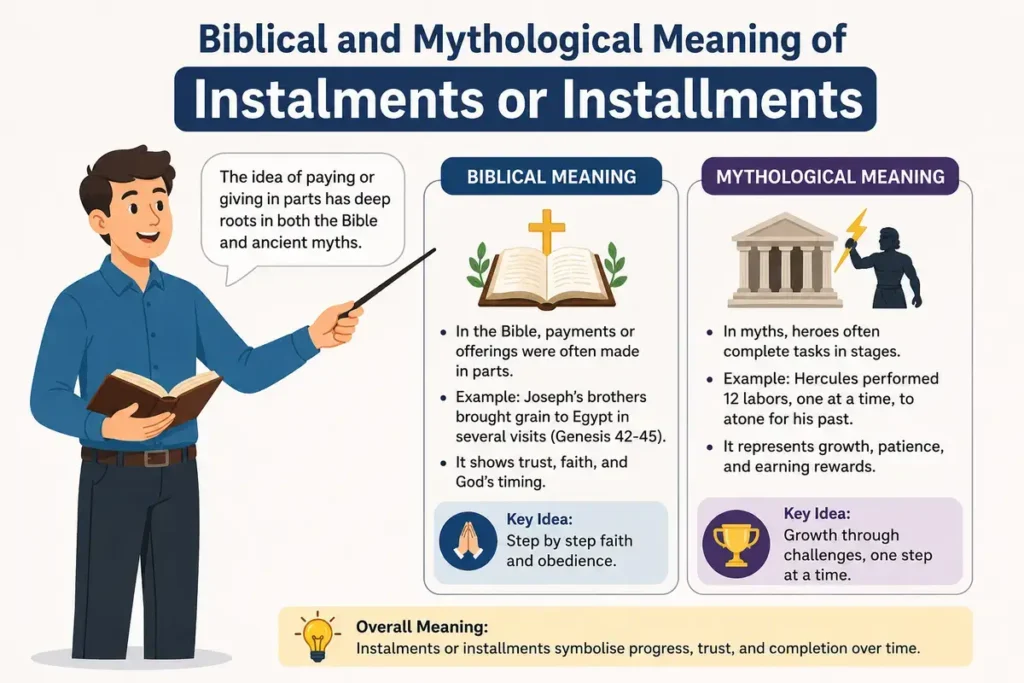
Biblical and Mythological Meaning of Instalments or Installments
There is no direct Biblical meaning. The Bible does not use these words as a special symbol. However, the idea of completing something little by little appears many times. People often grow in wisdom one step at a time. Faith becomes stronger over time. Many blessings come after patience and steady effort.
These ideas are similar to paying in installments because both involve gradual progress instead of instant results. There is also no special meaning in mythology. Ancient stories usually focus on journeys that happen over time. Heroes complete many tasks before reaching their goal. Each step moves them closer to success. So while both words are not mythological words, they fit the simple idea that great achievements often happen one stage at a time.
Symbolism Explained in Simple Words
What Instalments Represents
The British spelling instalments often represents steady progress. It reminds people that reaching a goal does not always happen in one day. Small actions can build something much bigger. For British readers, this spelling simply feels familiar and natural. It carries the same meaning as many other British spellings like colour and favourite.
What Installments Represents
The American spelling installments also represents gradual success.
It shows that large payments, long stories, and big projects can be completed piece by piece.
For American readers, this spelling feels normal because it matches other American spellings like color and favorite.
Simple Comparison
The symbolic meaning does not change. Only the spelling changes. Both spellings remind us that:
- Small steps matter.
- Patience brings results.
- Big goals can be reached over time.
- Progress is often gradual instead of instant.
Related Words You Should Know
Knowing similar words makes easier to understand.
Installment Plan
A payment plan where money is paid over time instead of all at once.
Monthly Payment
A payment made every month until everything is paid.
Deposit
Money paid first before the remaining balance.
Balance
The amount of money still left to pay.
Loan
Money borrowed from a bank or another person that must be paid back.
Mortgage
A long term loan used to buy a house.
Credit
The ability to buy now and pay later.
Debt
Money that someone still owes.
Payment Schedule
A list showing when each payment should be made.
Due Date
The day when a payment must be made.
Series
A group of books, movies, or shows connected together.
Episode
One part of a television or radio series.
Sequel
A new story that continues an earlier one.
These related words often appear especially in banking, shopping, entertainment, and daily conversations.
How People Actually Use it in Daily English
Here are some examples that sound natural in everyday conversation.
- I bought my phone in monthly installments.
- We only have two installments left to pay.
- The next installment of the show comes out on Friday.
- Can I pay in three installments instead of one payment?
- She never misses an installment.
- The final installment made everyone happy because the loan was finished.
- My parents paid for the furniture in monthly installments.
- I cannot wait for the next installment of this book series.
- The bank offers easy installment plans.
- We finished paying every installment last month.
These are the kinds of sentences you will hear in daily life.
Common Mistakes People Make
Many learners make the same mistakes. Here are the most common ones.
Mistake One
Using instalments in American writing.
Correct:
American English uses installments.
Mistake Two
Using installments in British writing.
Correct:
British English usually uses instalments.
Mistake Three
Changing spellings in the same article.
Wrong:
The first paragraph says installments.
The second paragraph says instalments.
Correct:
Choose one spelling style and keep using it.
Mistake Four
Thinking one spelling is wrong.
Correct:
Both spellings are correct.
The difference is regional.
Mistake Five
Thinking the pronunciation changes.
Correct:
Both spellings are pronounced the same way.
Easy Memory Trick
Remember this simple rule.
American English likes installments.
British English likes instalments.
The meaning never changes.
Final Teacher Explanation
Imagine you are sitting in my classroom. A student asks me, “Teacher, which one is correct?” My answer would be very simple. Both are correct. You only need to know who will read your writing.
If your readers are in America, write installments.
If your readers are in Britain, write instalments.
Do not worry if you see both spellings online. English is spoken in many countries. Different countries sometimes spell words differently. That does not change the meaning. Think about words like color and colour. Think about favorite and favourite. This pair follows the same idea. Once you understand that, you will never feel confused again.
The best writers stay consistent. Pick one spelling style and use it throughout your document. That simple habit will make your writing look clean, natural, and professional.
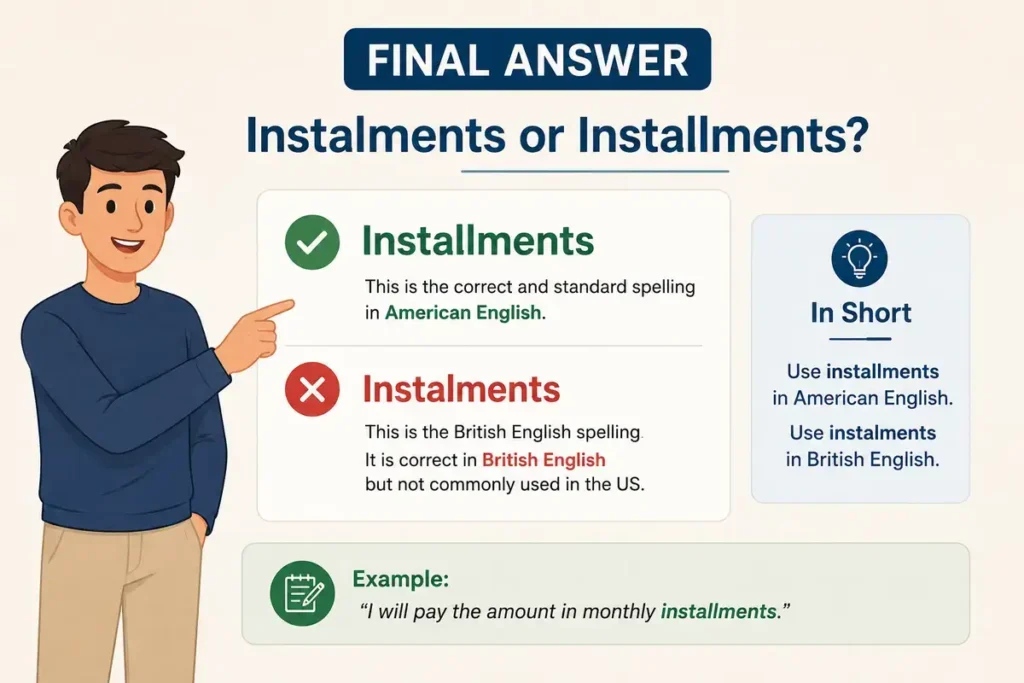
Final Answer About Instalments or Installments
Both are correct spellings.
Use installments in American English.
Use instalments in British English.
The meaning, pronunciation, and usage stay exactly the same. Only the spelling changes.
For another common grammar confusion, see Carrer or Career: Meaning, Difference, and Examples.
Conclusion
The choice between instalments or installments is much easier than it first appears. Both spellings are correct, both have the same pronunciation, and both carry the same meaning. The only real difference is the style of English you are using. If you write for an American audience, choose installments. If you write for a British audience, choose instalments. Once you follow that simple rule and stay consistent throughout your writing, you will use the correct spelling every time.
Frequently Asked Questions
What does mean in simple words?
They mean smaller payments or smaller parts of something that are completed over time.
Is installments correct?
Yes. Installments is the standard American English spelling.
Is instalments correct?
Yes. Instalments is the standard British English spelling.
Which spelling should I use?
Use the spelling that matches your audience. American readers expect installments. British readers expect instalments.
Why do people get confused?
Both spellings are correct, so people often think one of them is a mistake when it is really just a regional spelling difference.
Can I use both forms in one article?
It is better not to. Choose one spelling style and use it consistently.
Is there any difference in meaning?
No. Both words have exactly the same meaning.
Do both words sound the same?
Yes. The pronunciation is the same. Only the spelling is different.
