
Many English learners get confused about having vs having had because both forms look very similar. You may see them in books, hear them in conversations, or find them in writing. Even native speakers sometimes stop and think before using them. The good news is that the difference is much easier than it looks.
The main difference between is time. One form talks about something that is happening or exists. The other form points to something that already happened before another action. Once you understand this simple idea, choosing the right form becomes much easier.
This guide explains in very simple English. You will learn what each form means, why people confuse them, when to use each one, and how to avoid common mistakes. Every explanation uses easy examples that you can remember and use in daily life.
You may also want to read At Least vs Atleast: Which One Is Correct Simple Guide (2026).
Simple Answer In One Look
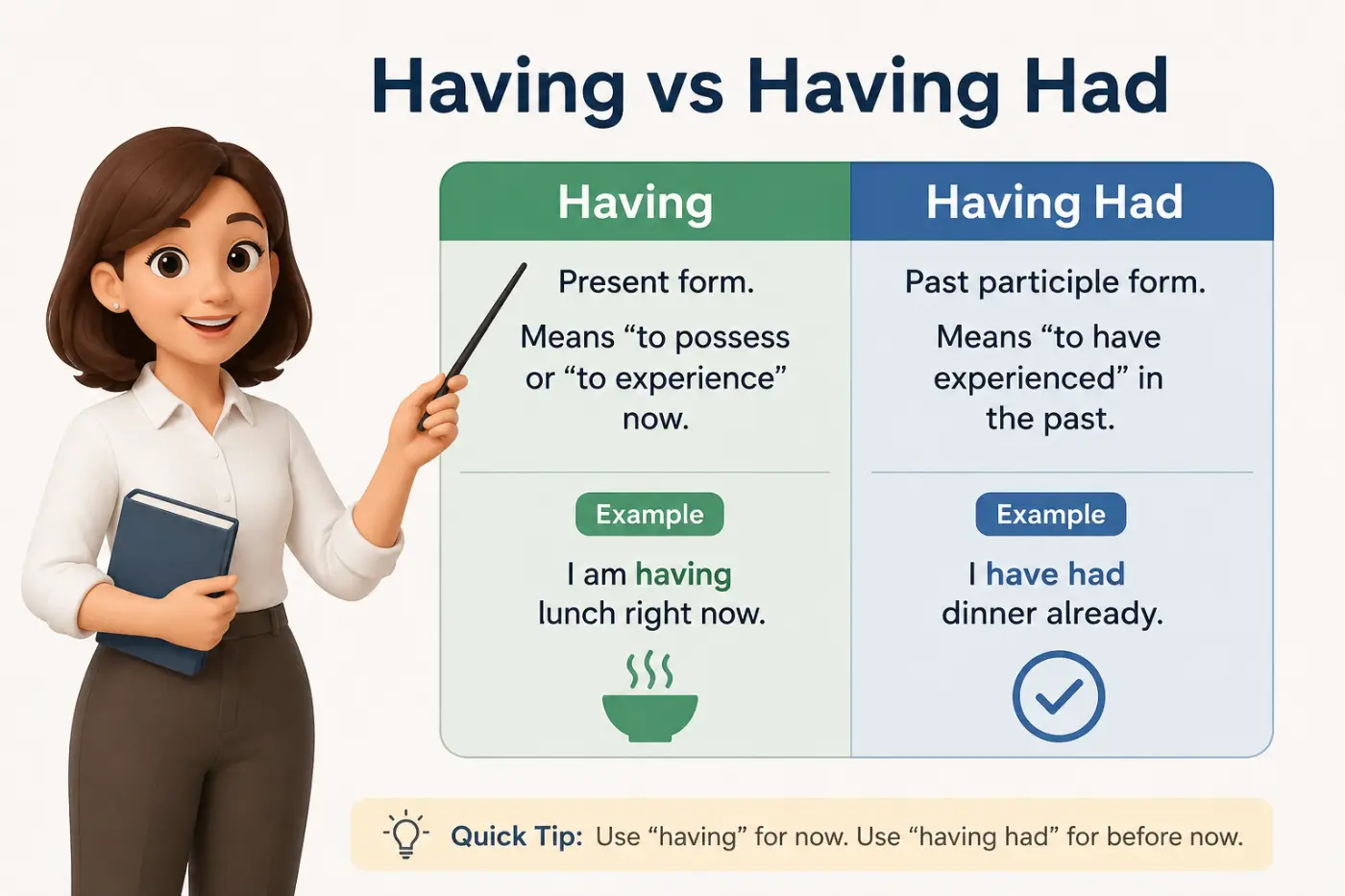
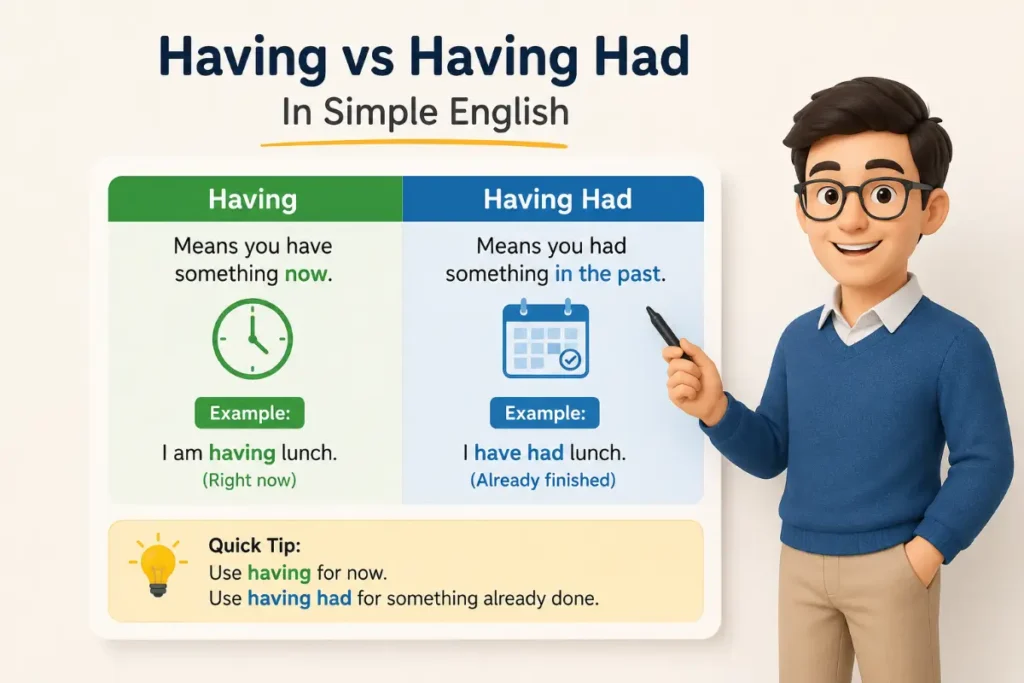
Having shows something you have or something happening.
Having had shows that you already had or already experienced something before another action.
What Having vs Having Had Means In Simple English
Think of having as talking about the present situation or an action without showing that it finished first.
Examples:
- I enjoy having free time.
- She is having lunch.
- They are having fun.
- We talked about having a dog.
Now think of having had as looking back. It tells us that an experience or action happened before something else.
Examples:
- Having had breakfast we left for school.
- Having had enough sleep she felt fresh.
- Having had many chances he knew what to do.
- Having had a long meeting they went home.
A simple way to remember it is this.
Having = now or general idea.
Having had = first this happened then something else happened.
That small time difference is the biggest answer.
Why People Mix These Words Having vs Having Had
Many learners see the word having inside both forms. Because of that they think both mean the same thing. Another reason is that both forms use the word had in different ways. English can look confusing when the same word appears more than once. Here are some common reasons people mix them.
- Both start with the word having.
- Both talk about actions or experiences.
- Both appear in spoken and written English.
- School grammar books often explain them with difficult words.
- Learners focus on the words instead of the order of events.
Look at these examples.
Incorrect:
I felt better having some rest.
Correct:
I felt better having had some rest.
Why?
The rest happened first. Feeling better happened later.
Another example.
Correct:
I like having coffee every morning.
Here you are talking about a daily habit. There is no earlier finished action, so having is the correct choice.
Clear Difference Explained Simply
Here is an easy comparison.
Having
- Talks about something you have or do.
- Can describe a present action.
- Can describe a habit.
- Does not show an earlier completed action.
Examples:
- She is having dinner.
- We enjoy having guests.
- He talked about having more time.
Having Had
- Talks about something already completed.
- Shows one action happened before another.
- Often explains the reason for a later result.
Examples:
- Having had dinner we watched a movie.
- Having had enough practice she passed the test.
- Having had little sleep he looked tired.
A quick picture in your mind can help.
Having
Action
Having had
Finished action → Next action
That picture makes having vs having had much easier to understand.
Which Form Should You Use Having vs Having Had
Ask yourself one simple question.
Did this happen before another action?
If the answer is no, use having.
Example:
She enjoys having friends over.
There is no earlier completed action.
If the answer is yes, use having had.
Example:
Having had a good night’s sleep she was full of energy.
The sleep came first.
Here are more simple rules.
Use having when you talk about:
- Possession.
- Daily habits.
- Activities.
- General situations.
Use having had when you talk about:
- Earlier experiences.
- Completed actions.
- Reasons for later results.
- One event happening before another.
These simple rules solve most questions.
Easy Real Life Sentences You Can Use
Here are simple examples that sound natural in everyday English.
Sentences With Having
- I enjoy having quiet mornings.
- She is having lunch with her family.
- We are having a great time.
- They talked about having a new car.
- He likes having fresh fruit for breakfast.
- My sister loves having long walks.
- We are having guests tonight.
- The children are having fun outside.
Sentences With Having Had
- Having had breakfast we left early.
- Having had enough practice she felt confident.
- Having had a busy day I wanted to rest.
- Having had the flu he stayed home.
- Having had a good teacher they learned quickly.
- Having had some coffee she felt awake.
- Having had plenty of time we finished the project.
- Having had several chances he knew the answer.
Read them aloud. You will start to hear the difference naturally.
Where Having vs Having Had Expression Comes From Simple History
The words have, had, and having have been part of English for hundreds of years. They come from very old forms of the English language that people spoke long before modern English. At first, have mostly meant to own or possess something.
Examples:
- I have a book.
- She has a bicycle.
Over time, English speakers started using have to help describe actions and experiences.
Examples:
- I have finished my homework.
- She has visited New York.
Later, writers also used having had to show that one completed action happened before another.
Example:
Having had enough food the travelers continued their journey.
Even today, this form is more common in careful writing than in everyday conversation. In normal speech, many people simply say:
- After I had breakfast I left.
instead of:
- Having had breakfast I left.
Both are correct. The second one is simply shorter and a little more formal.
Understanding this history helps explain why words exists. English slowly added new ways to show the order of events while keeping the same basic word have.
Now that you understand the basic meaning, the simple rules, and everyday examples, you are ready to learn more about how these forms are used in different situations, how they appear in stories and culture, the common mistakes learners make, and practical tips that will help you use them with confidence.
How Is Understood In Culture And Stories
People have always shared stories about things they did before something else happened. That is one reason the idea behind feels natural in English. Think about a story your teacher tells in class. “Having had a good map the travelers found the village.” The map came first. Finding the village happened after that. You can also hear this idea in family stories. “Having had many hard years my grandfather appreciated every small success.”
The hard years happened first. His appreciation came later. In movies and books, writers often use having had when they want readers to understand why a character feels a certain way.
For example:
“Having had a difficult childhood she became a kind teacher.”
The childhood explains the reason for her kindness.
On the other hand, having usually describes something that is happening or something people enjoy.
Examples include:
- Having dinner together.
- Having fun with friends.
- Having a quiet afternoon.
- Having a pet at home.
These expressions sound warm and friendly because they describe everyday life.
So, when you think about both words, remember this simple idea.
Having often describes life as it is.
Having had often explains why something happened later.
Still confused? Compare Partys vs Parties: Which One Is Correct (2026 Guide)?.
Biblical And Mythological Meaning of Having vs Having Had
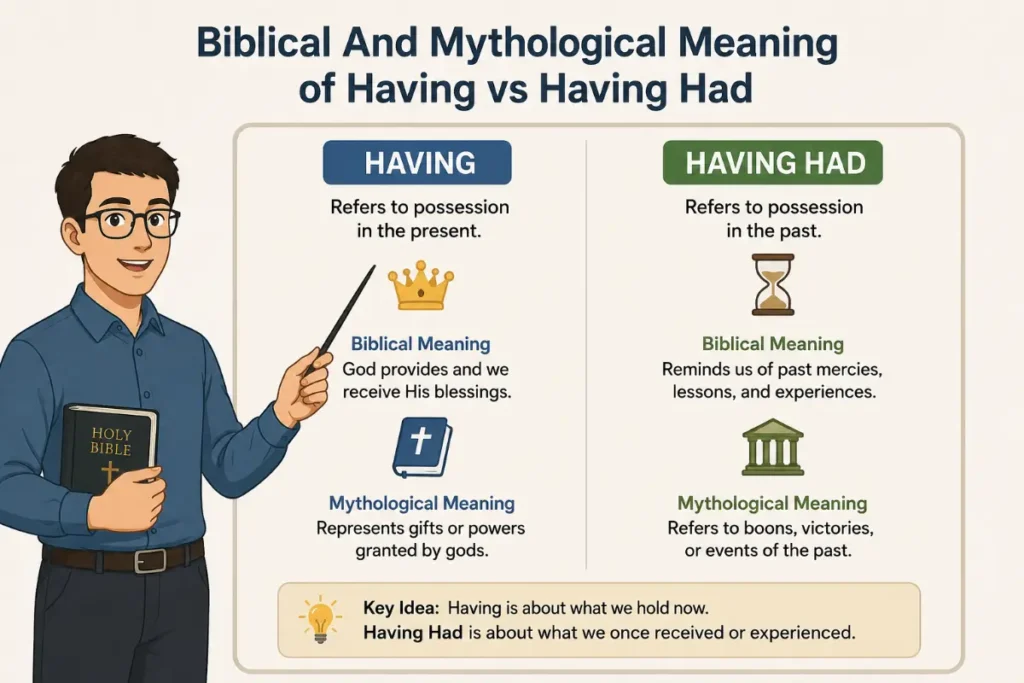
The words having and having had do not have special religious meanings by themselves. They are simply English language forms. However, many Bible translations and old religious writings use ideas that are similar to having had because they tell events in order.
For example, a story may say that a person prayed before receiving help.
In simple English, someone could say:
“Having had faith they continued their journey.”
This sentence simply tells us that faith came before the next action. The same pattern appears in many old stories and myths. Heroes often learn a lesson before becoming wiser. A simple example is:
“Having had many challenges the hero became stronger.”
The meaning is about the order of events, not about religion.
So there is no special biblical meaning behind words. The forms simply help tell a clear story.
Symbolism Explained In Simple Words
What Having Represents
In a simple emotional sense, having often represents the present.
It can show:
- Enjoying life.
- Sharing moments.
- Owning something.
- Living through an experience.
- Spending time with others.
When people say:
“We are having dinner.”
It creates a picture of people together at that moment.
When someone says:
“I love having good friends.”
It gives a feeling of happiness and connection.
What Having Had Represents
Having had often represents experience and learning.
It reminds us that the past can shape the present.
Examples include:
- Having had many failures she never gave up.
- Having had great teachers he became confident.
- Having had enough practice they played well.
These sentences show growth.
The earlier experience helped create the later result.
That is the biggest symbolic difference.
Having feels like the present.
Having had reminds us that the past helps build the future.
Related Words You Should Know
Have
The basic form. It means to own something or experience something. Example:
“I have a bike.”
Has
Used with he, she, or it. Example:
“She has a new backpack.”
Had
The past form of have. Example:
“We had pizza yesterday.”
Have Had
Shows that an experience happened before now. Example:
“I have had this phone for two years.”
Has Had
Used with he, she, or it when talking about past experience connected to now. Example:
“He has had many opportunities.”
Had Had
Looks unusual but it is correct. Example:
“They had had lunch before the meeting started.”
It means the lunch happened before another event in the past.
Have
Can also help make longer verb forms. Example:
“I have finished my homework.”
Experience
This word means something that happened to you.
Many sentences with having had talk about experiences.
How People Actually Use Having vs Having Had In Daily English
Most people use having much more often than having had in everyday conversations.
Here are natural examples.
- We are having pizza tonight.
- She enjoys having coffee every morning.
- I like having weekends off.
- They are having a great vacation.
- Are you having fun?
- Having had breakfast we started driving.
- Having had enough sleep I felt much better.
- Having had several interviews she felt more relaxed.
- Having had years of practice he played the song perfectly.
- Having had a busy morning we decided to rest.
In casual speech, many people replace having had with another sentence.
Instead of saying:
“Having had breakfast we left.”
They often say:
“After we had breakfast we left.”
Both are correct.
The second one sounds more natural in everyday conversation.
Common Mistakes People Make
Many learners make the same mistakes. The good news is that they are easy to fix.
Mistake One
Incorrect:
Having dinner we watched TV.
Correct:
Having had dinner we watched TV.
Dinner happened first.
Mistake Two
Incorrect:
I enjoy having had coffee every morning.
Correct:
I enjoy having coffee every morning.
This is a daily habit, not an earlier completed action.
Mistake Three
Incorrect:
Having had a new car is exciting.
Correct:
Having a new car is exciting.
The sentence talks about owning the car now.
Mistake Four
Incorrect:
Having had fun at the party now.
Correct:
We are having fun at the party now.
The action is happening now, so use having.
Mistake Five
Using having had every time because it sounds more advanced.
Simple English is often the best English.
If having clearly gives your meaning, use it.
Final Teacher Explanation About Having vs Having Had
Imagine you are sitting in a classroom.
I write two sentences on the board.
“I enjoy having music in my room.”
“Having had music lessons I can play the piano.”
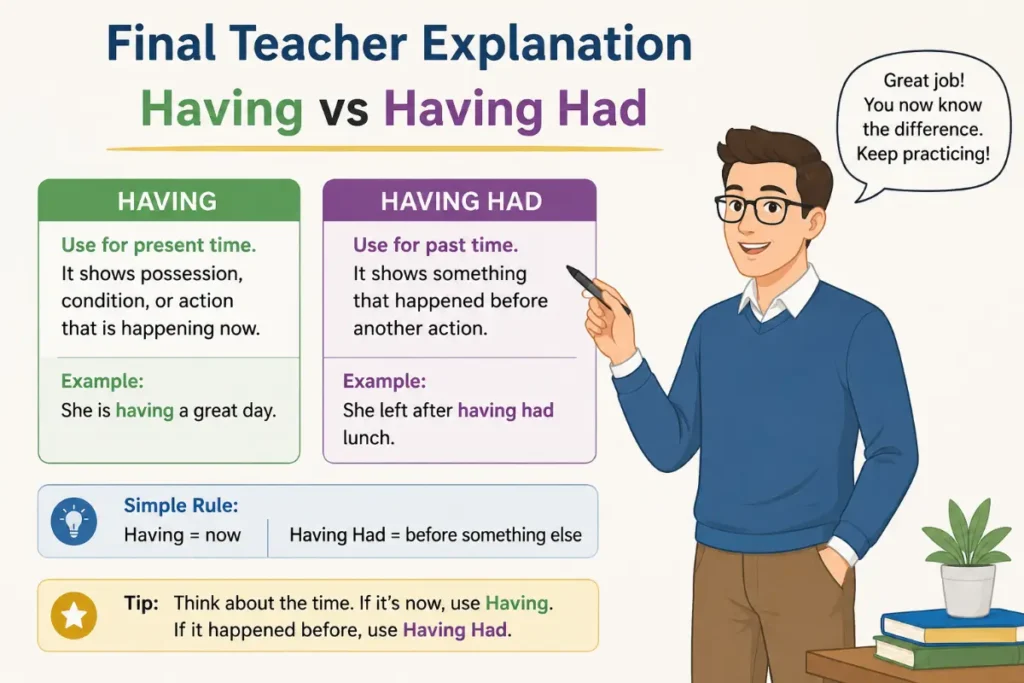
The first sentence talks about something in the present.
The second sentence tells us that music lessons happened first. Because of those lessons, the person can play the piano now.
That is the whole secret behind.
Do not worry about long grammar rules.
Just ask yourself one question.
Did this happen before another action?
If the answer is yes, having had is probably the right choice.
If the answer is no, having is usually the better choice.
The more you read and listen to English, the more natural this difference will become.
Final Answer About Having vs Having Had Quick Recap
The difference between is mainly about time.
Having talks about something you have, enjoy, or are doing. It usually describes the present or a general situation.
Having had shows that one action or experience happened before another action. It helps explain the order of events and often gives the reason for what happened later.
If you remember one simple rule, remember this.
Use having for the present or general ideas.
Use having had when one completed action comes before another.
Learn the difference in Implicit vs Complicit: Essential Meanings With Examples 2026.
Conclusion
Understanding becomes much easier when you focus on the order of events instead of trying to memorize difficult grammar rules. Most of the time, having talks about what you have or what is happening. Having had points to something that already happened before another action.
As you read books, watch movies, or speak English every day, you will start noticing these two forms naturally. Practice with simple sentences first, and your confidence will grow over time.
The easiest takeaway is this: if something happened first, use having had. If you are talking about the present or a general idea, use having.
Frequently Asked Questions
What does having vs having had mean in simple words?
Having talks about something you have or are doing. Having had shows that something happened before another action.
Is having had correct English?
Yes. It is completely correct and is often used to show that one event happened before another.
When should I use having instead of having had?
Use having when talking about the present, a habit, or a general situation.
Why do people get confused?
Both forms begin with the word having, so they look similar. The real difference is the time of the action.
Can I use both forms in formal writing?
Yes. Both are correct. Having had is more common in formal writing, while having is very common in both speaking and writing.
Is having had common in everyday conversation?
People use it, but many speakers simply say “after I had” because it sounds more natural in casual conversation.
Can having had begin a sentence?
Yes. For example, “Having had enough sleep, she felt ready for the day.”
