
Many people get confused about distress vs duress because the two words sound similar and are often connected to difficult situations. When you first see them, it is easy to think they mean the same thing. However, they have different meanings and are used in different ways.
Understanding distress vs duress can help you choose the right word when speaking, writing, or reading English. One word is usually connected to emotional suffering, while the other is often linked to pressure, force, or being made to do something against your will.
If you have ever wondered about the difference between distress vs duress, this guide will explain everything in very simple English. By the end, you will know which word to use and when to use it.
Learn the difference in Macaroon vs Macaron Explained: Meaning and Examples.
Distress vs Duress: Simple Answer in One Look
Distress means pain, worry, sadness, or suffering.
Duress means being forced or pressured to do something.
Both involve hardship, but they are not the same thing.
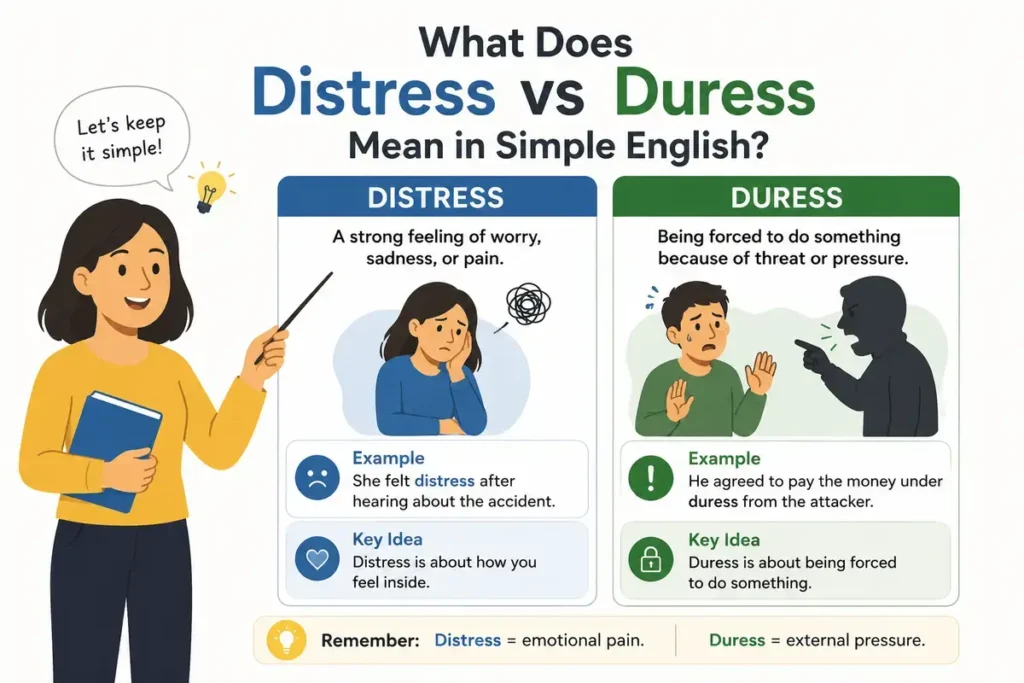
What Does Distress vs Duress Mean in Simple English?
To understand distress vs duress, think about feelings versus pressure.
Distress is usually about how a person feels.
Duress is usually about what is happening to a person.
What Is Distress?
Distress means emotional, mental, or physical suffering. A person in distress may feel:
- Sad
- Worried
- Scared
- Upset
- Hurt
Distress can happen after bad news, a loss, an accident, or a difficult situation. Example:
“She felt great distress after losing her dog.”
This means she felt very sad and worried. Another example:
“The family was in distress after the storm.”
The family was suffering because of what happened.
What Is Duress?
Duress means being forced, threatened, or pressured to do something. The person may not want to do the action. They do it because they feel they have no choice. Example:
“He signed the paper under duress.”
This means he signed it because someone pressured or forced him. Another example:
“The worker acted under duress.”
The worker felt forced to do something.
Easy Way to Remember
Distress = suffering.
Duress = pressure or force.
That simple rule helps most people remember the difference.
Why Do People Mix These Words Distress vs Duress?
Many learners confuse distress vs duress for a few simple reasons.
They Sound Similar
The endings sound almost the same. Listen to them:
- Distress
- Duress
Because the sounds are close, people sometimes think they are interchangeable. But they are not.
Both Describe Difficult Situations
Another reason for confusion is that both words involve problems.
Someone experiencing distress is having a hard time.
Someone acting under duress is also having a hard time.
Because both situations are unpleasant, people sometimes mix them up.
Both Appear in Serious Writing
You may see these words in:
- News reports
- Books
- Legal documents
- Business articles
- School materials
Since they often appear in formal situations, learners may not encounter them every day.
Real-Life Confusion Example
Imagine someone says:
“I signed the contract because I was in distress.”
This means they were emotionally upset. Now compare:
“I signed the contract under duress.”
This means they were pressured or forced. The situations are very different even though the words sound similar.
Distress vs Duress: Clear Difference Explained Simply
When comparing distress vs duress, the biggest difference is emotional suffering versus outside pressure.
Quick Comparison Table
| Distress | Duress |
|---|---|
| Means suffering | Means force or pressure |
| Often emotional | Often external pressure |
| Can include sadness and worry | Can include threats and coercion |
| Focuses on feelings | Focuses on actions |
| Common in daily speech | Common in legal situations |
Visual Comparison
Think of it this way:
Distress asks:
“How does the person feel?”
Duress asks:
“Why did the person do it?”
Example 1
“She cried in distress.”
Meaning: She was very upset.
Example 2
“She agreed under duress.”
Meaning: Someone pressured her to agree.
Example 3
“The child was in distress.”
Meaning: The child was suffering.
Example 4
“The witness spoke under duress.”
Meaning: The witness felt forced to speak.
Distress vs Duress in One Sentence
A person may feel distress because they are under duress. The two words can be connected, but they do not mean the same thing.
Distress vs Duress in Everyday Situations
Looking at real situations makes the difference easier to understand.
At School
Distress:
“A student feels distress after failing an important test.”
The student is upset.
Duress:
“A student completes another person’s work under duress.”
Someone pressured the student to do it.
At Work
Distress:
“An employee feels distress after losing a job.”
The employee is emotionally suffering.
Duress:
“An employee signs a document under duress.”
The employee feels forced to sign.
In Relationships
Distress:
“A friend experiences distress after an argument.”
The friend feels emotional pain.
Duress:
“A person agrees to something under duress.”
The person agrees because of pressure.
During Emergencies
Distress:
“People may experience distress during a flood.”
They are suffering emotionally or physically.
Duress:
“A person may act under duress if threatened.”
They act because they feel forced.
Which Form Should You Use?
The correct choice depends on your meaning.
Use Distress When Talking About Feelings
Choose distress when discussing:
- Emotional pain
- Anxiety
- Worry
- Sadness
- Suffering
Examples:
- She showed signs of distress.
- The news caused distress.
- The animal appeared distressed.
Use Duress When Talking About Pressure
Choose duress when discussing:
- Force
- Threats
- Pressure
- Coercion
- Lack of choice
Examples:
- He acted under duress.
- The agreement was signed under duress.
- She made the decision under duress.
Simple Teacher Rule
Ask yourself:
“Am I talking about feelings?”
If yes, use distress.
“Am I talking about being forced?”
If yes, use duress.
That simple question usually gives the correct answer.
Distress vs Duress in Common Expressions
Some expressions appear more often than others.
Common Distress Expressions
- Emotional distress
- Mental distress
- Financial distress
- Distress signal
- Distress call
Example:
“The sailor sent a distress signal.” This means the sailor needed help.
Common Duress Expressions
- Under duress
- Signed under duress
- Acted under duress
- Confession under duress
Example:
“The confession was made under duress.”
This means pressure or force was involved.
Which Expression Is More Common?
Most people hear “under duress” as a fixed phrase. The word distress appears in a wider variety of situations. Both are useful, but they are used differently.
Easy Real-Life Sentences You Can Use
Here are simple examples using distress.
- The child was in distress after getting lost.
- She felt distress when she heard the bad news.
- The storm caused great distress in the town.
- His family was in distress during the crisis.
- The animal looked distressed and scared.
- Financial distress forced the company to make changes.
- The accident caused emotional distress.
Now look at examples using duress.
- He signed the paper under duress.
- She made the promise under duress.
- The worker acted under duress.
- They agreed under duress.
- The witness spoke under duress.
- The decision was made under duress.
- The confession happened under duress.
These examples show the difference clearly.
Where Do Distress and Duress Come From? (Simple History)
The words have different histories.
The History of Distress
Distress comes from old words that were connected to trouble, pain, and suffering. Over time, English speakers used it to describe hardship and emotional pain. That meaning remains today.
The History of Duress
Duress comes from old words connected to force and pressure. For hundreds of years, it has been used when someone is compelled to act against their wishes. That is why it often appears in legal settings.
Why Their Histories Matter
Their origins help explain their meanings.
Distress developed around suffering.
Duress developed around force.
That difference still exists in modern English.
Common Mistakes People Make With Distress vs Duress
Many learners accidentally swap these words.
Incorrect:
“He signed the contract in distress.”
This sounds like he was emotionally upset.
Correct:
“He signed the contract under duress.”
This shows pressure or force.
Incorrect:
“The family was under duress after the hurricane.”
This may sound unusual unless someone was forcing them to do something.
Better:
“The family was in distress after the hurricane.”
This focuses on their suffering.
Checking the meaning before writing helps avoid these mistakes.
Learn the difference in Bellies vs Bellys: Which One Is Correct in English?.
Quick Memory Trick for Distress vs Duress
Here is an easy trick.
Distress starts with “dis.”
Think:
“Discomfort and sadness.”
Duress starts with “du.”
Think:
“Do it because someone forced you.”
The trick is not perfect, but it helps many learners remember the difference quickly.
Transition to the Deeper Meaning
Now that you understand the basic difference between distress vs duress, the next section will look at how these words appear in culture, stories, symbolism, law, and everyday life. This deeper understanding will help you recognize their meaning even faster when you see them in books, conversations, and real-world situations.
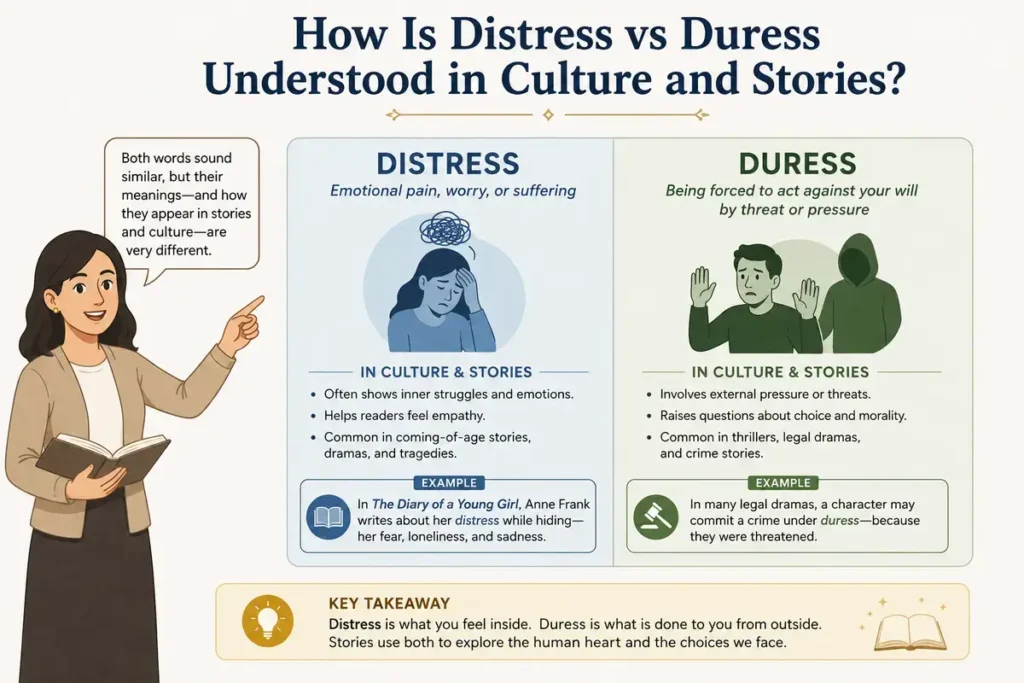
How Is Distress vs Duress Understood in Culture and Stories?
When we look at distress vs duress in stories, movies, and everyday life, the two words often appear in different situations. Distress is usually connected to emotions. A character may feel distress after losing a loved one, facing danger, or going through a difficult experience. For example, in many family stories, a character feels distress when something sad happens. Readers understand that the person is hurting emotionally.
Duress is different. A character under duress is being pressured or forced to do something. Many adventure stories use this idea. A person may be threatened by a villain and forced to make a choice. In that case, the character acts under duress.
Distress in Popular Stories
You can often find distress when:
- Someone loses something important.
- A family faces hardship.
- A hero feels worried.
- A friend experiences heartbreak.
- A community faces a disaster.
The focus is on suffering and emotions.
Duress in Popular Stories
You can often find duress when:
- Someone is threatened.
- A person is forced to sign something.
- A villain demands obedience.
- A character has no safe choice.
- Pressure causes an unwanted action.
The focus is on force and control.
Why Writers Use These Words
Writers use distress to show feelings. They use duress to show pressure. Understanding this difference helps readers understand characters more clearly.
What Is the Biblical and Mythological Meaning of Distress vs Duress?
The Bible often talks about distress. Many people in biblical stories experience distress during hard times. They face:
- Fear
- Trouble
- Loss
- Uncertainty
- Suffering
In these stories, distress often leads people to seek help, strength, or guidance. For example, people may pray during times of distress because they need comfort. The word duress is less common in biblical discussions, but the idea appears. Many biblical characters face pressure from rulers, enemies, or difficult situations. Sometimes they are pushed to make choices they do not want to make. That is similar to the modern idea of duress.
In Mythology
Mythological stories also contain both ideas. Heroes often experience distress when facing monsters, danger, or loss. They may experience duress when powerful figures force them into difficult tasks. The emotional pain reflects distress. The outside pressure reflects duress. This pattern appears in stories from many cultures.
What Is the Symbolism of Distress vs Duress?
Words often carry deeper meanings beyond their dictionary definitions. Good examples.
Distress vs Duress Symbolism: What Distress Represents
Distress often symbolizes:
- Human suffering
- Emotional pain
- Personal struggle
- Fear
- Grief
- Hardship
When readers see distress in a story, they often think about inner pain. It reminds people that life can be difficult and that everyone faces challenges. Distress is often connected to the heart and emotions.
Distress vs Duress Symbolism: What Duress Represents
Duress often symbolizes:
- Pressure
- Control
- Lack of freedom
- Force
- Threats
- Difficult choices
When readers see duress in a story, they often think about outside forces affecting a person’s actions. Duress reminds people that choices are not always completely free. Sometimes pressure changes what people do.
Simple Comparison
Distress is about what hurts inside.
Duress is about what pushes from outside.
That simple idea helps explain the symbolism behind both words.
Related Words You Should Know About Distress vs Duress
Learning related words can make the meanings even clearer.
Anxiety
A feeling of worry or nervousness. Anxiety can be a form of distress.
Suffering
Physical or emotional pain. Distress often includes suffering.
Grief
Deep sadness after a loss. Grief is a common type of distress.
Pressure
A force that pushes someone toward a decision. Pressure is closely related to duress.
Threat
A warning that harm may happen. Threats often create duress.
Coercion
Forcing someone to do something. This word is very close in meaning to duress.
Fear
A strong feeling of danger or worry. Fear can appear in both distress and duress situations.
Hardship
A difficult life situation. Hardship may cause distress.
Compulsion
A strong force pushing someone to act. Compulsion is related to duress.
How Do People Actually Use in Daily English?
Most people use distress and duress in different situations. Here are common real-life examples.
Distress Examples
“I was in distress after hearing the news.”
“The dog seemed distressed during the storm.”
“She felt emotional distress after the breakup.”
“The family faced financial distress.”
“The accident caused a lot of distress.”
Duress Examples
“He signed under duress.”
“She made the decision under duress.”
“The worker acted under duress.”
“They agreed under duress.”
“The confession was given under duress.”
Daily Conversation Example
Friend: ” Is she upset?”
Friend 2: “She’s in distress because she lost her job.”
Notice how naturally the meanings fit.
Friend: “Why did he sign the agreement?”
Friend 2: “He signed it under duress.”
One discusses feelings.
The other discusses pressure.
Common Mistakes People Make With Distress vs Duress
Many learners make the same mistakes. The good news is that they are easy to fix.
Mistake 1: Using Distress Instead of Duress
Incorrect:
“He signed the contract in distress.”
This focuses on feelings.
Correct:
“He signed the contract under duress.”
This focuses on pressure.
Mistake 2: Using Duress Instead of Distress
Incorrect:
“The family was under duress after the flood.”
This may sound strange unless someone was forcing them to do something. Better:
“The family was in distress after the flood.”
This focuses on suffering.
Mistake 3: Thinking They Mean the Same Thing
Some learners believe distress and duress are synonyms. They are not.
Distress means suffering.
Duress means force or pressure.
Mistake 4: Using Duress Too Often
Many English speakers rarely use duress in casual conversation. Most often, it appears in legal or serious situations. Distress is generally more common in everyday English.
Easy Correction Rule
Remember:
Feeling = Distress
Force = Duress
That quick rule fixes most mistakes.
Final Teacher Explanation of Distress vs Duress
Imagine you are sitting in a classroom and I ask two simple questions. First question:
“Is the person hurting emotionally?”
If the answer is yes, use distress.
Second question:
“Is the person being forced or pressured?”
If the answer is yes, use duress. That is the easiest way to remember the difference. Many students worry because the words sound alike. But once you focus on the meaning, the choice becomes much easier. Think about feelings for distress. Think about force for duress. You will usually get the answer right.
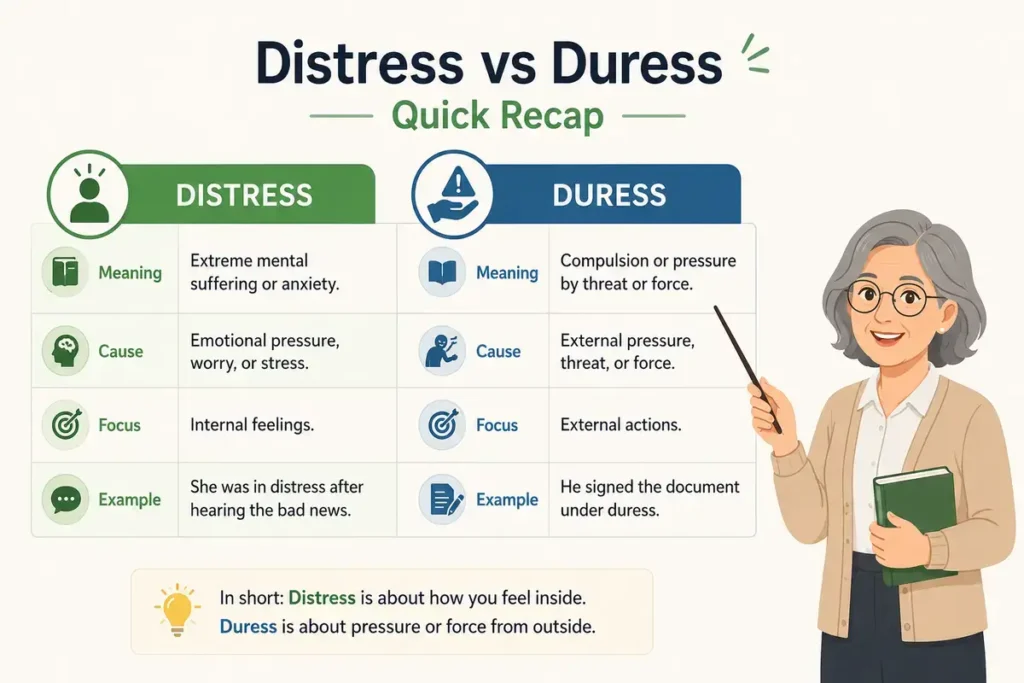
Final Answer: Distress vs Duress Quick Recap
Distress means suffering, sadness, worry, or emotional pain. Duress means being forced, pressured, or threatened into doing something. A simple rule to remember is this:
Distress = feelings.
Duress = force.
Conclusion
Understanding distress vs duress is simpler than many people think. Both words describe difficult situations, but they focus on different things. Distress is about emotional, mental, or physical suffering. Duress is about pressure, threats, or being forced to act. When you remember that distress deals with feelings and duress deals with force, choosing the correct word becomes easy.
The next time you see these words in a book, article, conversation, or legal document, you will know exactly what they mean and how they are different.
A related grammar guide is Steam vs Steem: Which Is Correct And Simple Meaning (2026).
Frequently Asked Questions (FAQs)
What does distress mean in simple words?
Distress means emotional or physical suffering. It often includes sadness, worry, fear, or pain.
What does duress mean in simple words?
Duress means being forced or pressured to do something you do not want to do.
What is the main difference between distress vs duress?
Distress is about suffering. Duress is about force or pressure.
Why do people confuse distress vs duress?
The words sound similar and both involve difficult situations.
Can a person experience both distress and duress?
Yes. Someone who is under duress may also feel distress because of the pressure.
Which word is more common in everyday English?
Distress is usually more common in everyday conversations.
Is duress mostly used in legal situations?
Yes. Duress often appears in legal, business, and formal discussions.
How can I remember distress vs duress?
Use this simple memory trick:
Distress = feelings.
Duress = force.
