
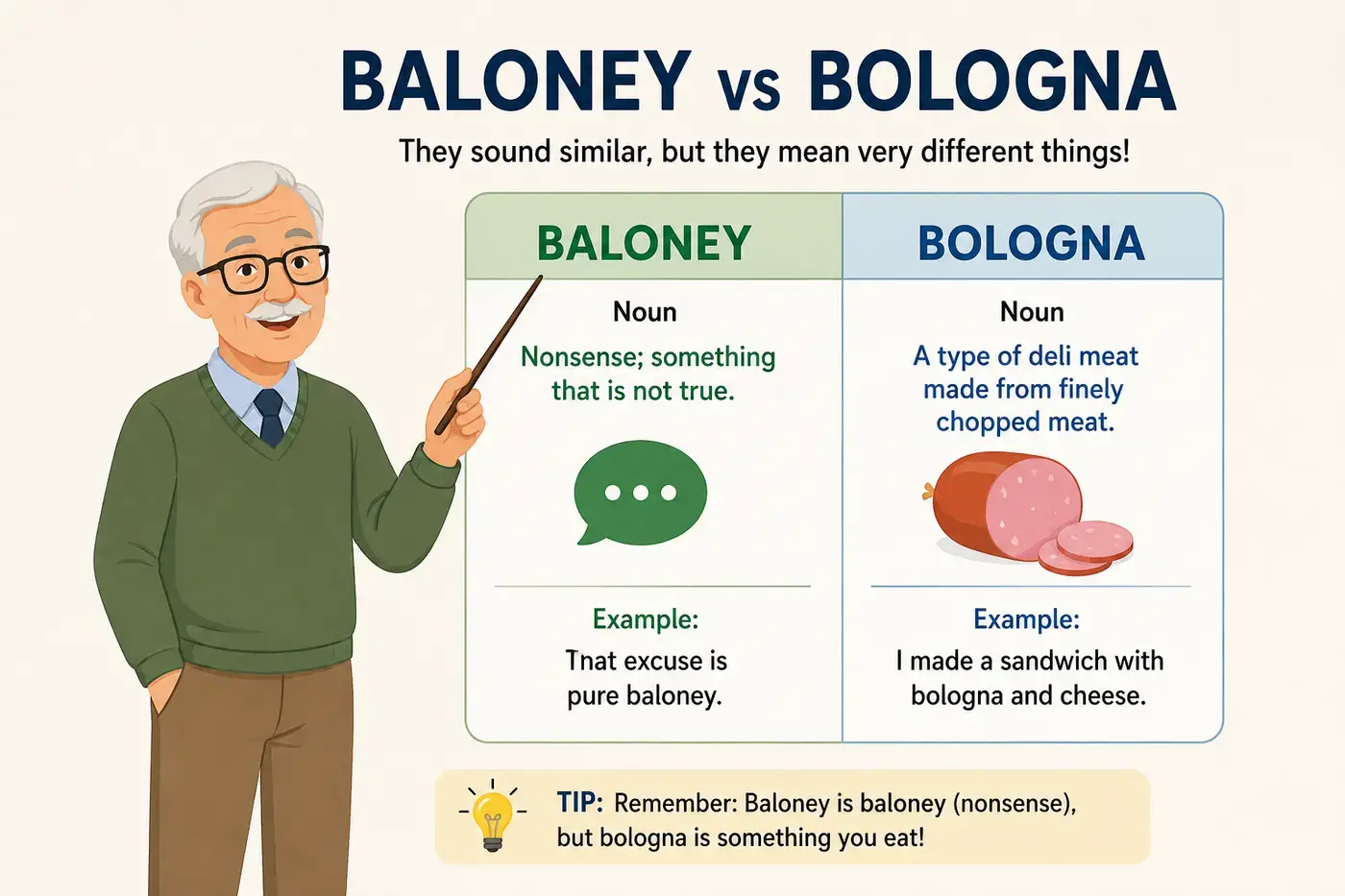
Many English learners get confused about baloney vs bologna because both words sound almost the same. One word is the correct spelling for a type of sausage, while the other is often used to mean “nonsense.” This unusual spelling and pronunciation make many people wonder which word they should write.
If you have ever stopped while writing because you were unsure about words and you are not alone. Even native English speakers mix them up. The good news is that the difference is simple once you understand where each word comes from and how people use them.
This guide explains in very easy US English. By the end, you will know which spelling is correct, what each word means, and how to use both with confidence.
Need another quick comparison? Read Footnote Before or After Period? Rule You Can Remember.
Simple Answer in One Look
Bologna is the original and correct spelling for the sausage.
Baloney is a common spelling that matches how people pronounce the word. It is also the usual spelling when someone means “nonsense” or “something that is not true.”
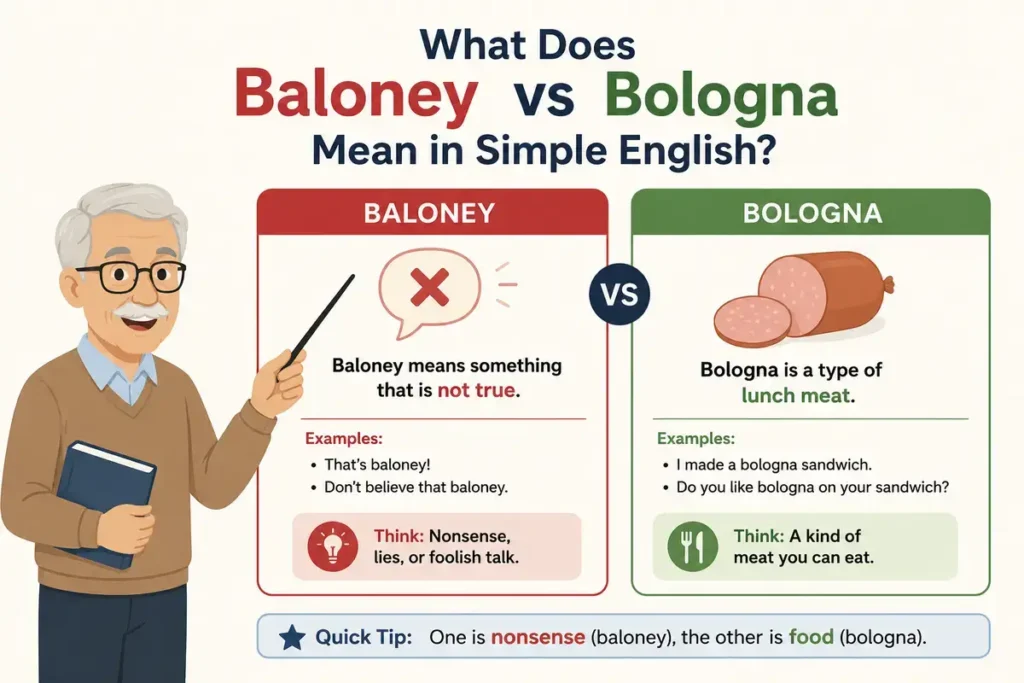
What Does Baloney vs Bologna Mean in Simple English?
To understand both words think about two different meanings. Bologna is a kind of cooked sausage. It is often sliced and used in sandwiches. Example:
- I made a bologna sandwich for lunch.
Baloney usually means something that is silly, false, or not believable. Example:
- That’s complete baloney.
Many people pronounce bologna as “buh-LOH-nee.” Because of this sound, people began spelling the slang word as baloney. So, even though the words sound alike, they are not always used in the same way.
Why Do People Mix Up Baloney vs Bologna?
There are several reasons people confuse these words.
The spelling does not match the pronunciation.
When people first see bologna, they often expect it to sound like “bo-log-na.” Instead, English speakers say “buh-LOH-nee.” That surprises many learners.
The words sound exactly alike.
When you hear someone say the word, you cannot tell if they mean baloney or bologna without seeing it written or knowing the sentence.
Both appear in everyday English.
You may hear:
- I bought some bologna at the store.
- That’s baloney.
Since the pronunciation is the same, people often spell one like the other.
Clear Difference Explained Simply
Here is an easy comparison.
| Bologna | Baloney |
|---|---|
| Original spelling | Phonetic spelling |
| A type of sausage | Usually means nonsense |
| Used in food writing | Used in casual speech and writing |
| Found on grocery labels | Found in conversations and stories |
Remember this simple trick:
If you are talking about lunch, use “bologna.”
If you are talking about something that is not true, use “baloney.”
Which Form Should You Use in Baloney vs Bologna?
The correct choice depends on what you mean.
Use bologna when talking about food.
Examples:
- We bought fresh bologna.
- My brother likes fried bologna.
- She packed a bologna sandwich.
Use baloney when talking about nonsense.
Examples:
- That’s pure baloney.
- I don’t believe that baloney.
- Stop telling me baloney.
Some writers also spell the food as baloney in very informal writing because it matches the pronunciation. However, bologna is still the standard spelling on menus, grocery stores, dictionaries, and formal writing. If you want the safest choice, remember this rule:
Food = Bologna
Nonsense = Baloney
Easy Real-Life Sentences Using Baloney vs Bologna
Here are some everyday examples.
- I made a bologna sandwich before school.
- My dad likes grilled bologna.
- The store sells different kinds of bologna.
- That’s complete baloney.
- Don’t believe that baloney.
- His excuse was pure baloney.
- We ate bologna with cheese and bread.
- She laughed and said, “That’s baloney.”
These examples make it easy to see which word belongs in each situation.
Where Does Baloney vs Bologna Come From?
The story behind baloney vs bologna is actually fun. The word bologna comes from the Italian city of Bologna, which became famous for making a special kind of sausage many years ago. When the sausage became popular in English-speaking countries, people kept the original spelling.
Over time, English speakers shortened the pronunciation to “buh-LOH-nee.” Because that pronunciation sounded like baloney, many people started spelling it that way in casual writing. Later, Americans began using baloney as a funny way to say that something was foolish, fake, or untrue. Today, both spellings exist, but each has its own main job.
- Bologna usually refers to the meat.
- Baloney usually refers to nonsense.
Now that you understand the basic difference. The next part will explain how these words are used in culture, everyday conversations, common expressions, writing, and popular sayings. You will also learn memory tricks, common mistakes, and expert tips that will help you remember the correct word every time.
How Is Baloney vs Bologna Understood in Culture and Stories?
The words have become more than food words. They also carry different ideas in everyday culture. Bologna is mostly connected with simple meals, family lunches, school sandwiches, and comfort food. Many people remember eating bologna sandwiches as children. Because of that, the word often brings back warm memories.
Baloney, on the other hand, has become a fun way to say that something is not true. People use it when they hear a story that sounds fake or an excuse they do not believe. For example:
- “You finished all your homework in five minutes? That’s baloney.”
- “He said he caught a fish bigger than a car. That’s baloney.”
In movies, books, and TV shows, you may hear someone shout, “Baloney!” instead of saying, “That’s not true!” The word sounds friendly and funny, so people often use it instead of stronger words.
You may also want to read Rug vs Rag Meaning Difference and Correct Usage Guide.
Is There a Biblical or Mythological Meaning for Baloney vs Bologna?
No. It has no special meaning in the Bible or in mythology.
The word bologna simply comes from a famous Italian sausage.
The word baloney later became a slang word in English.
If you see these words in religious or mythological writing, they usually keep their normal meanings. They are not special symbols in those stories.
Symbolism Explained in Simple Words
What Baloney Represents
When people say baloney, they usually mean:
- Something that is not true.
- A silly idea.
- A weak excuse.
- A funny way to disagree.
- Something that should not be believed.
The word often has a playful feeling. It is usually not meant to hurt someone’s feelings. Example:
“My dog ate my math homework.”
“That’s baloney.”
What Bologna Represents
Bologna usually represents simple things in everyday life. People often connect it with:
- Family lunches.
- Childhood memories.
- School sandwiches.
- Budget-friendly meals.
- Comfort food.
Unlike baloney, bologna is not used to call something false. It almost always means the food. This makes the difference easy to remember.
Baloney = nonsense.
Bologna = sausage.
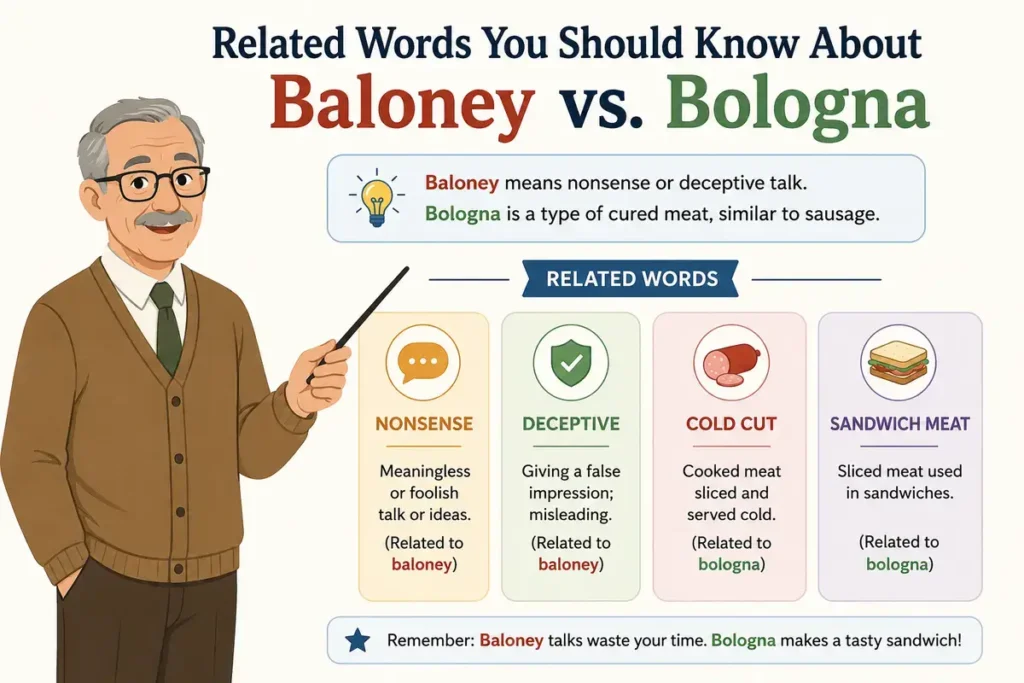
Related Words You Should Know About Baloney vs Bologna
Learning similar words makes English easier.
Nonsense
Something that does not make sense or is not true. Example:
“That story is nonsense.”
Silly
Something that is funny, foolish, or not serious. Example:
“That was a silly excuse.”
Fake
Not real or not honest. Example:
“The picture was fake.”
Hogwash
Another funny word for nonsense. Example:
“That’s hogwash.”
Rubbish
A common British English word that can mean nonsense. Example:
“That’s complete rubbish.”
Sausage
A food made from ground meat and spices. Example:
“We cooked sausage for breakfast.”
Deli Meat
Sliced meat that people often use in sandwiches. Example:
“I bought deli meat for lunch.”
Knowing these related words helps you understand conversations more easily.
How Do People Actually Use Baloney vs Bologna in Daily English?
Here are some real-life examples.
- I made a bologna sandwich before work.
- My kids love fried bologna.
- We bought fresh bologna from the grocery store.
- That’s complete baloney.
- Don’t give me that baloney.
- His excuse sounded like baloney.
- She laughed and said, “What a bunch of baloney!”
- We packed bologna sandwiches for the picnic.
- That story is pure baloney.
- I don’t believe one word of that baloney.
Notice how bologna always talks about food, while baloney talks about ideas or stories.
Common Mistakes People Make with Baloney vs Bologna
Many learners make the same mistakes.
Mistake 1: Using baloney for food in formal writing
❌ I bought baloney at the supermarket.
✅ I bought bologna at the supermarket.
While some people casually spell it baloney, dictionaries and food labels usually use bologna.
Mistake 2: Using bologna to mean nonsense
❌ That’s complete bologna.
This sentence is sometimes seen because the words sound alike, but the standard slang spelling is:
✅ That’s complete baloney.
Mistake 3: Thinking both words always mean the same thing
They do not. Remember:
- Bologna is mainly food.
- Baloney is mainly slang for nonsense.
Mistake 4: Pronouncing Bologna Like It Is Spelled
Many beginners try saying:
“Bo-log-na.”
The normal pronunciation is:
“Buh-LOH-nee.”
This unusual pronunciation is the main reason people become confused.
Final Teacher Explanation
Here is the easiest way to remember everything. Imagine you are making lunch. You open the refrigerator and take out sliced bologna. Now imagine your friend tells you a story that sounds impossible. You smile and say, “That’s baloney.”
One word belongs in the kitchen. The other belongs in conversations about ideas. Even though they sound exactly the same, they have different jobs. Whenever you are writing about meat, choose bologna. Whenever you mean “nonsense,” choose baloney. That simple rule will help you almost every time.
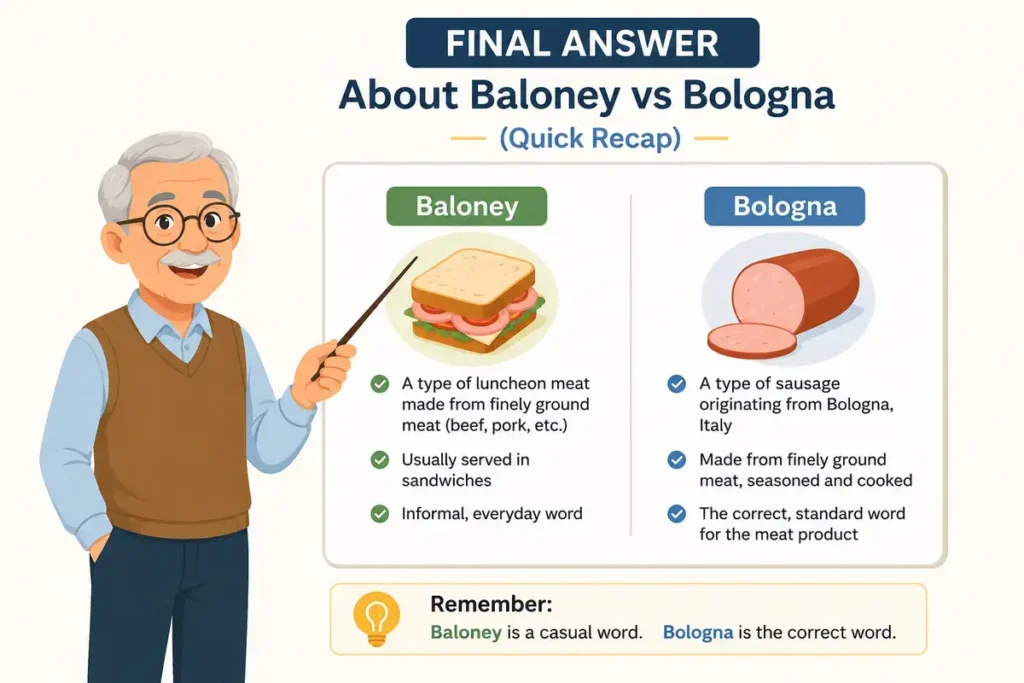
Final Answer About Baloney vs Bologna (Quick Recap)
The difference is easy once you know the meaning.
Bologna is the correct spelling for the sausage.
Baloney is the common spelling for the slang word meaning “nonsense.”
If you remember food equals bologna and nonsense equals baloney, you will almost never make a mistake.
For another common grammar confusion, see Developed vs Developped: Easy Guide for English Learners.
Conclusion
Many English words are confusing because their spelling and pronunciation do not match. That is one of the best examples. Although they sound exactly the same, they are used in different ways. Bologna is the correct spelling for the sausage you eat, while baloney is the common spelling for a slang word that means nonsense or something that is not true.
Once you remember this simple difference, choosing the right word becomes easy. Think about the meaning first. If you are talking about food, write bologna. If you are talking about a false story or a silly idea, write baloney. With a little practice, you will use both words correctly and confidently.
Frequently Asked Questions (FAQs)
What does baloney mean in simple words?
Baloney means something that is not true, silly, or hard to believe.
What does bologna mean?
Bologna is a type of cooked sausage that people often eat in sandwiches.
Which is correct, baloney or bologna?
Both are correct, but they have different meanings. Bologna is for the food, while baloney usually means nonsense.
Why do people confuse?
People confuse them because both words are pronounced the same even though they are spelled differently.
Can I use baloney for the meat?
People sometimes do in casual writing, but bologna is the standard spelling for the food.
Can I say, “That’s bologna”?
Some people do because of the pronunciation, but That’s baloney is the standard spelling when you mean “That’s nonsense.”
How can I remember?
Think of this simple rule:
Lunch = Bologna.
Nonsense = Baloney.
Is baloney an insulting word?
Usually no. It is a light and playful way to say that you do not believe something.
