
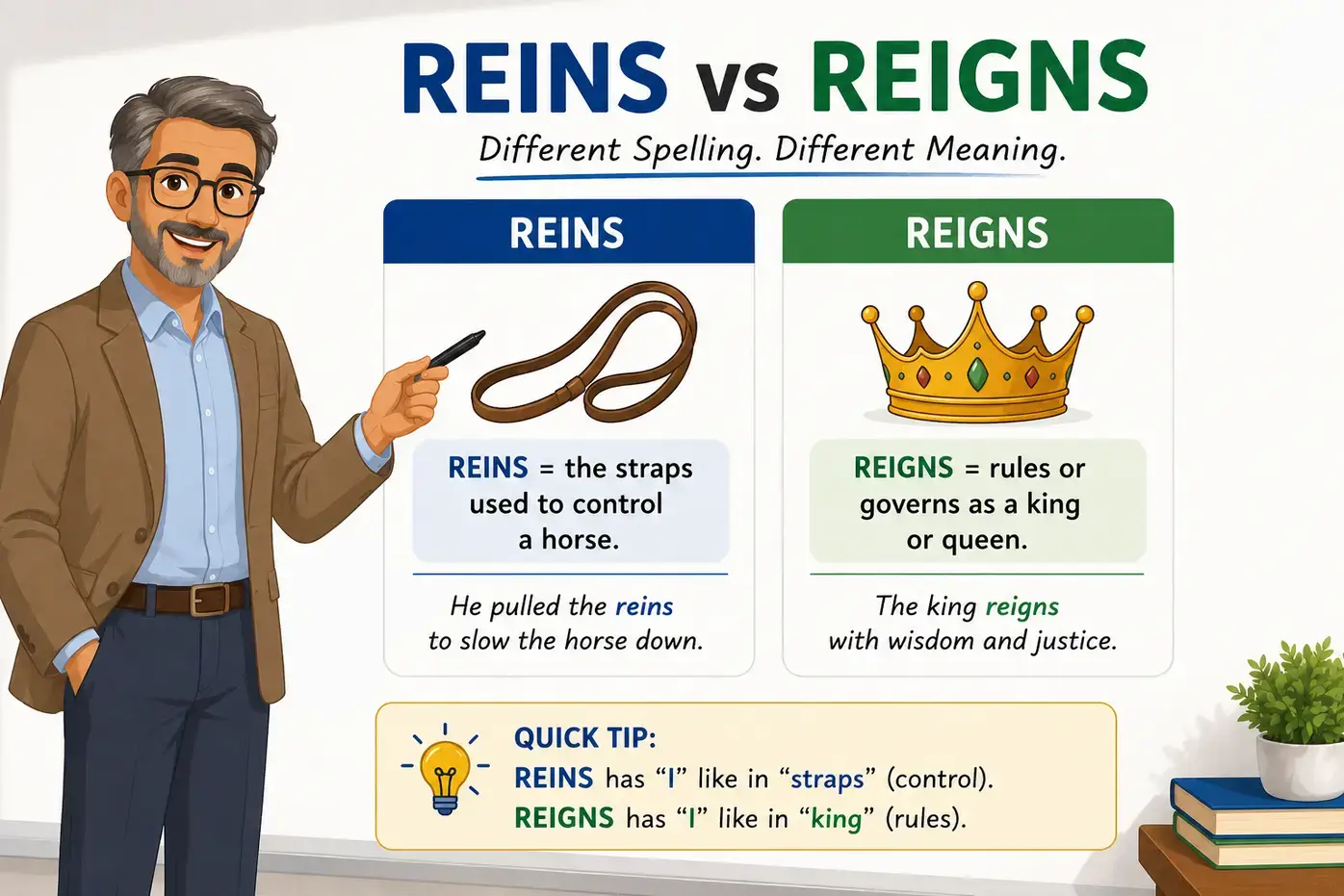
Many English learners get confused about reins vs reigns because the two words sound exactly the same. They are homophones, which means they have the same pronunciation but different meanings and spellings.
The short answer is simple. Reins relates to controlling a horse or guiding something. Reigns relates to ruling, leading, or being in power. Knowing this difference can help you avoid a common writing mistake.
If you have ever wondered about the difference between reins vs reigns, this guide will explain everything in simple words. By the end, you will know which spelling is correct and how to use each one with confidence.
A related grammar guide is Using or Useing: Which Spelling Is Correct?.
Reins vs Reigns: Simple Answer in One Look
Reins = straps used to control a horse, or control and guidance.
Reigns = periods of rule, leadership, or power.
Example:
- She took the reins of the project.
- The king’s reigns lasted many years.
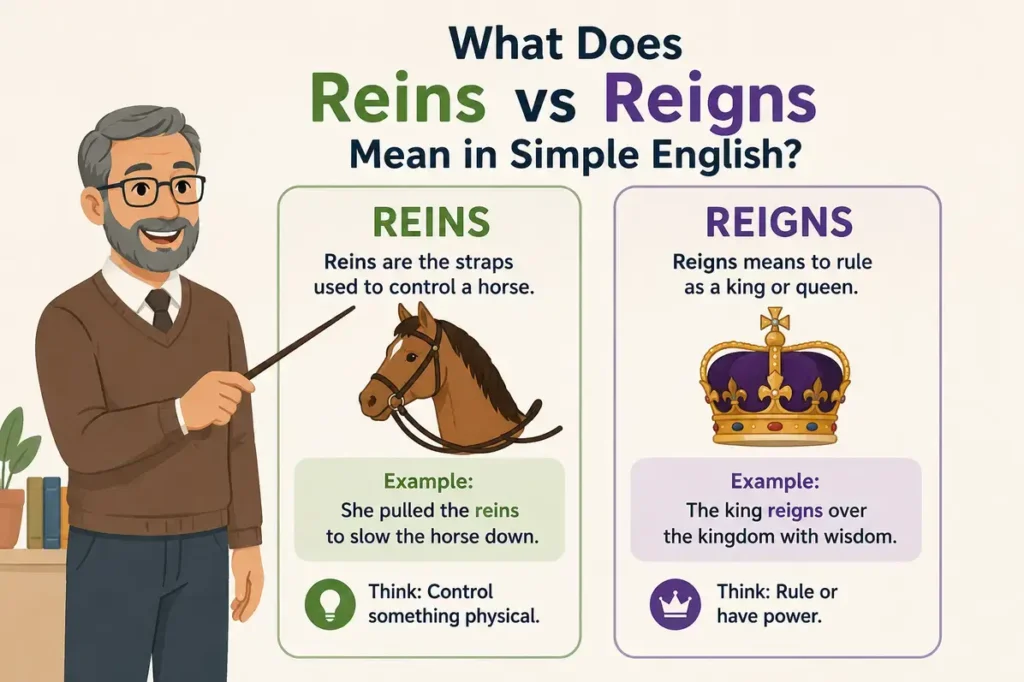
What Does Reins vs Reigns Mean in Simple English?
Think of these words as belonging to two different worlds. Reins comes from horseback riding. When someone rides a horse, they hold reins to guide the animal. Because reins help control direction, English speakers also use the word for control in everyday situations. For example:
- The manager took the reins of the company.
- Parents sometimes need to keep the reins tight.
In these examples, nobody is riding a horse. The word simply means control or guidance. Reigns, on the other hand, is connected to kings, queens, rulers, and leadership. A reign is the time during which a ruler is in power. For example:
- The queen’s reign lasted decades.
- Several kings had long reigns.
Today, the word can also describe a period when something dominates or controls a situation. For example:
- The smartphone reigns as the most popular device.
So the basic difference is easy:
- Reins = control and guidance
- Reigns = ruling and power
Why People Mix These Words Reins vs Reigns
There is one main reason people confuse reins vs reigns. They sound exactly alike. When you hear someone say either word, you usually cannot tell which spelling they mean without seeing the sentence. Here are some examples:
- Take the reins.
- Take the reigns.
Only one spelling is correct, but both sound the same when spoken. Another reason for confusion is that both words can involve the idea of control. Consider these examples:
- She took the reins of the business.
- The king’s reign ended.
Both sentences involve leadership in some way. Because of this shared idea, writers sometimes choose the wrong spelling. Many people also learn these expressions by hearing them rather than reading them. As a result, they may spell the word based on sound instead of meaning.
Reins vs Reigns: Clear Difference Explained Simply
The easiest way to remember reins vs reigns is to connect each word with a picture.
Reins
Imagine a rider holding straps attached to a horse. The rider uses those straps to guide the horse.
Meaning:
- Control
- Guidance
- Direction
Examples:
- Take the reins.
- Hold the reins.
- Hand over the reins.
Reigns
Imagine a king sitting on a throne. The king rules a country.
Meaning:
- Rule
- Leadership
- Power
- Authority
Examples:
- The king’s reign.
- During her reign.
- His reign lasted twenty years.
Quick Comparison
| Word | Meaning | Easy Memory Tip |
|---|---|---|
| Reins | Control and guidance | Think of riding a horse |
| Reigns | Rule and power | Think of a king or queen |
A Simple Memory Trickto remind Reins vs Reigns
Reign contains the letters g-n, which can remind you of a king.
Reins can remind you of horse riding and guiding direction.
When you think about horses, choose reins.
When you think about rulers, choose reigns.
Which Form Should You Use?
The correct choice depends on what you want to say. Use reins when talking about:
- Control
- Guidance
- Management
- Directing people or projects
- Horse riding
Examples:
- She took the reins of the department.
- The rider pulled the reins gently.
- It’s time to hand over the reins.
Use reigns when talking about:
- Kings
- Queens
- Emperors
- Rule and leadership
- A period of power
Examples:
- The queen’s reign was peaceful.
- His reign ended after ten years.
- Technology reigns over modern life.
Common Expression: Take the Reins
Many people mistakenly write:
❌ Take the reigns.
The correct expression is:
✅ Take the reins.
Why? Because the phrase comes from controlling a horse by holding the reins. The expression means taking charge or taking control. Examples:
- She took the reins after the director retired.
- He is ready to take the reins of the family business.
- The new coach took the reins of the team.
Easy Real-Life Sentences You Can Use for Reins vs Reigns
Here are some simple examples with reins:
- The rider tightened the reins.
- She took the reins of the company.
- Dad handed me the reins for the weekend trip.
- The teacher kept the reins on the noisy class.
- It’s your turn to take the reins.
- The manager gave her the reins of the project.
- He held the reins carefully while riding.
Now examples with reigns:
- The king’s reign lasted forty years.
- Her reign brought peace to the country.
- The queen enjoyed a long reign.
- His reign ended after a major conflict.
- Digital technology reigns today.
- The champion’s reign continued another season.
- The ruler’s reign changed history.
Practice Quiz
Choose the correct word.
- The new CEO took the _____ of the company.
- The queen’s _____ lasted many years.
- The rider held the horse’s _____ tightly.
- The champion’s _____ finally ended.
- It is time for you to take the _____.
Answers:
- reins
- reign
- reins
- reign
- reins
Where Reins vs Reigns Expression Comes From (Simple History)
The history of reins vs reigns helps explain why the words are different.
The Origin of Reins
The word reins comes from old words related to straps used to guide horses. For hundreds of years, riders used reins to control direction and speed. Over time, English speakers started using the word as a metaphor. Instead of controlling a horse, a person could control:
- A company
- A team
- A project
- A government
That is why phrases like “take the reins” became common.
The Origin of Reigns
The word reigns comes from old words connected to ruling and governing. It has long been associated with:
- Kings
- Queens
- Monarchs
- Leaders
The word refers to the period during which a ruler holds power. As English evolved, people also began using it in a broader sense. For example:
- Basketball reigns as the most popular sport in the town.
- Online shopping reigns in many markets.
In these examples, the word means something dominates or rules over others.
Common Mistakes With Reins vs Reigns
Many writers make these mistakes:
Mistake 1: Writing “Take the Reigns”
Incorrect:
❌ She took the reigns of the company.
Correct:
✅ She took the reins of the company.
Mistake 2: Using Reins for Royal Rule
Incorrect:
❌ The king’s reins lasted thirty years.
Correct:
✅ The king’s reign lasted thirty years.
Mistake 3: Choosing Based Only on Sound
Since both words sound alike, always check the meaning before spelling them. Ask yourself:
- Am I talking about control and guidance? → reins
- Am I talking about ruling and power? → reigns
That simple question solves most mistakes.
Transition to Deeper Meaning
Now that you understand the basic difference between reins vs reigns, the next part looks at how these words are used in culture, stories, symbolism, and everyday expressions. Understanding these deeper meanings will make the words even easier to remember and use correctly.
Still confused? Compare Serpent Vs Snake: Easy Guide Every Student Needs (2026).
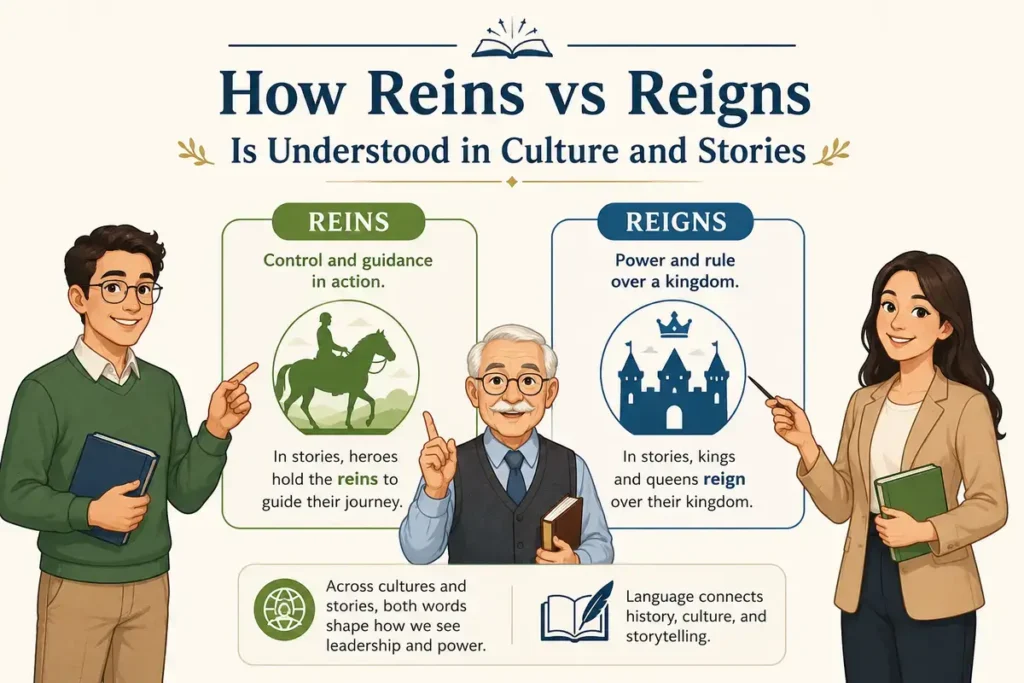
How Reins vs Reigns Is Understood in Culture and Stories
The difference between reins vs reigns is not just about spelling. These words also appear in stories, books, movies, and everyday conversations.
How Reins Is Used in Culture
The word reins often represents control, guidance, and responsibility. In stories, a character may “take the reins” when they become the leader of a group or family. For example:
- A young prince takes the reins after his father retires.
- A team captain takes the reins during a difficult game.
- A business owner hands over the reins to the next generation.
People like this expression because it creates a clear picture. Just as a rider guides a horse, a leader guides people. Because of this, “take the reins” is often connected with:
- Responsibility
- Leadership
- Confidence
- Direction
How Reigns Is Used in Culture
The word reigns is often connected with kings, queens, rulers, and power. Many famous stories include long reigns and powerful rulers. Examples include:
- A king’s reign over a kingdom.
- A queen’s reign during peaceful years.
- A ruler’s reign that changes history.
Modern culture also uses the word in a broader way. People might say:
- Social media reigns today.
- Streaming reigns over traditional TV.
- Technology reigns in modern life.
Here, the word means something is dominant or highly influential. Both words can involve leadership, but they come from very different images.
Reins = guiding.
Reigns = ruling.
Biblical and Mythological Meaning of Reins vs Reigns
Reins in the Bible
In older Bible translations, the word reins sometimes appears in a special way. It does not refer to horse straps. Instead, it can refer to a person’s inner thoughts, feelings, or emotions. Long ago, people believed certain emotions came from inside the body. Because of that, the word had a symbolic meaning. Modern readers may find this confusing because the word is rarely used that way today.
Reigns in the Bible
The word reign appears more often in a leadership sense. It refers to kings, rulers, kingdoms, and authority. Examples include:
- A king reigning over a nation.
- A ruler governing people.
- A kingdom under a leader’s reign.
Reins in Mythology
Stories from different cultures often show heroes taking control of horses, chariots, or magical creatures. Holding the reins symbolizes:
- Self-control
- Wisdom
- Leadership
- Direction
Reigns in Mythology
Myths often include powerful gods, kings, and rulers. Their reigns represent:
- Power
- Order
- Authority
- Influence
Even today, these meanings remain easy to recognize.
Symbolism Reins vs Reigns Explained in Simple Words
When learning reins vs reigns, symbolism can make the difference easier to remember.
Reins vs Reigns: What Reins Represents
The word reins usually symbolizes guidance. Imagine a rider holding reins while traveling down a path. The rider decides:
- Where to go
- How fast to move
- When to stop
Because of this image, reins often represent:
- Control
- Responsibility
- Direction
- Good decision-making
- Leadership through guidance
When someone says: “She took the reins.” It often means: “She accepted responsibility and started guiding others.” This creates a positive image of leadership.
Reins vs Reigns: What Reigns Represents
The word reigns usually symbolizes power. Think about a king sitting on a throne. That ruler makes decisions and holds authority. Because of this image, reigns often represent:
- Rule
- Authority
- Influence
- Dominance
- Leadership through power
When someone says: “Technology reigns.” They mean technology is the strongest influence in that situation.
Simple Comparison
| Reins | Reigns |
|---|---|
| Guidance | Rule |
| Direction | Authority |
| Control | Power |
| Leading others | Governing others |
| Horse rider image | King or queen image |
A simple memory tip:
Reins guide. Reigns rule.
Related Words You Should Know about Reins vs Reigns
Learning a few related words can make reins vs reigns easier to remember.
Control
The power to direct something. Example:
She kept control of the situation.
Leadership
Guiding a group toward a goal. Example:
Good leadership helps teams succeed.
Authority
The right to make decisions. Example:
The principal has authority at school.
Rule
To govern or lead. Example:
The king ruled for many years.
Govern
To manage a country or group. Example:
The queen governed wisely.
Direct
To guide someone or something. Example:
He directed the team through the project.
Command
To give orders or lead. Example:
The officer commanded the soldiers.
Responsibility
A duty you must handle. Example:
Taking the reins means accepting responsibility.
How People Actually Use Reins vs Reigns in Daily English
Many learners understand the definitions but still wonder how native speakers use these words. Here are common real-life examples.
Daily Uses of Reins
- She took the reins of the company last year.
- The coach handed him the reins of the team.
- It’s time for you to take the reins.
- Mom gave me the reins while she was away.
- The rider loosened the reins.
Daily Uses of Reigns
- The queen’s reign lasted decades.
- His reign ended after the election.
- Technology reigns in modern society.
- Online shopping reigns supreme.
- The champion’s reign finally ended.
Common Workplace Example
Many people say:
“The new manager took the reins.”
This means the manager became responsible for leading the team.
Common News Example
You may hear:
“The king’s reign began in 2025.”
This refers to the period during which the king rules.
Common Sports Example
Sports reporters often write:
“The team’s reign as champion is over.”
This means the team is no longer the top winner.
Common Mistakes People Make With Reins vs Reigns
Because these words sound the same, mistakes happen often.
Mistake 1: Writing “Take the Reigns”
Incorrect:
❌ She took the reigns of the company.
Correct:
✅ She took the reins of the company.
Why?
The expression comes from horse riding and guidance.
Mistake 2: Using Reins for a King’s Rule
Incorrect:
❌ The king’s reins lasted thirty years.
Correct:
✅ The king’s reign lasted thirty years.
A king has a reign, not reins.
Mistake 3: Guessing Based on Sound
Many people write whichever spelling looks familiar.
Instead, ask yourself:
Am I talking about guidance?
Use reins.
Am I talking about ruling?
Use reigns.
Mistake 4: Mixing the Meanings
Some writers think both words can always replace each other. They cannot. These words have different meanings even though they sound alike.
Quick Correction Trick
Think of one image:
- Horse = reins
- King = reigns
This trick works almost every time.
Final Teacher Explanation of Reins vs Reigns
Imagine I am standing in front of a classroom. A student asks: “How do I remember the difference between reins vs reigns?” My answer would be very simple. Picture two scenes. In the first scene, a rider holds the reins of a horse. The rider guides the horse and controls its direction. That is why reins means guidance, control, and responsibility. In the second scene, a king sits on a throne. The king rules a kingdom during his reign.
That is why reigns means ruling, authority, and power. Whenever you are unsure, stop and ask: “Am I guiding something or ruling something?”
If you are guiding, choose reins.
If you are ruling, choose reigns.
That one question will help you choose the correct spelling almost every time.
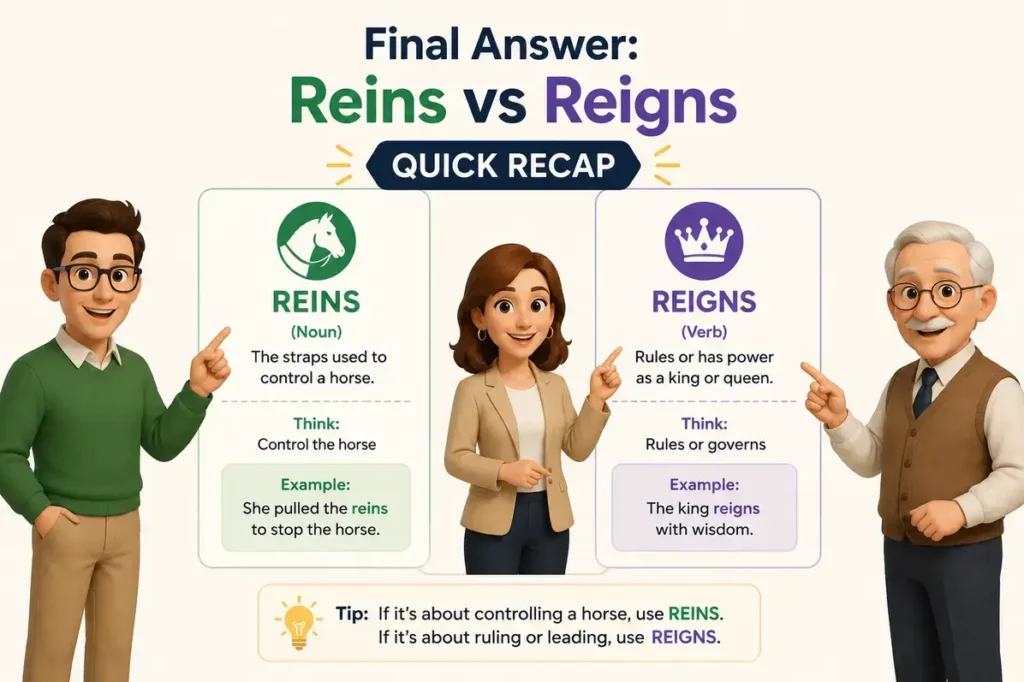
Final Answer: Reins vs Reigns Quick Recap
Reins means control, guidance, or direction. It comes from horse riding.
Reigns means periods of rule, leadership, or power. It is connected with kings, queens, and authority.
Easy memory tip:
Reins guide. Reigns rule.
Conclusion
Use reins when talking about control, guidance, responsibility, or the common expression “take the reins.” Think about a rider guiding a horse.
Use reigns when talking about rulers, kingdoms, authority, or a period of leadership. Think about a king or queen ruling a nation.
Even though these words sound the same, their meanings are very different. Remember the simple rule: reins guide, reigns rule. With that image in mind, you can use both words correctly in speaking and writing.
For another common grammar confusion, see Seal vs Seel: Which Spelling Should You Choose.
Frequently Asked Questions (FAQs)
What does reins mean in simple words?
Reins means control or guidance. It can also refer to the straps used to guide a horse.
What does reigns mean in simple words?
Reigns means ruling, leading, or being in power for a period of time.
Is it take the reins or take the reigns?
The correct expression is take the reins because it comes from horse riding and means taking control.
Why do people confuse?
They sound exactly the same when spoken, so many people choose the wrong spelling.
Can I use reins and reigns interchangeably?
No. They have different meanings and should not replace each other.
Which word is related to horses?
Reins is the horse-related word.
Which word is connected to kings and queens?
Reigns is connected to kings, queens, rulers, and leadership.
How can I remember the difference?
Think of a horse for reins and a king for reigns. Reins guide. Reigns rule.
