
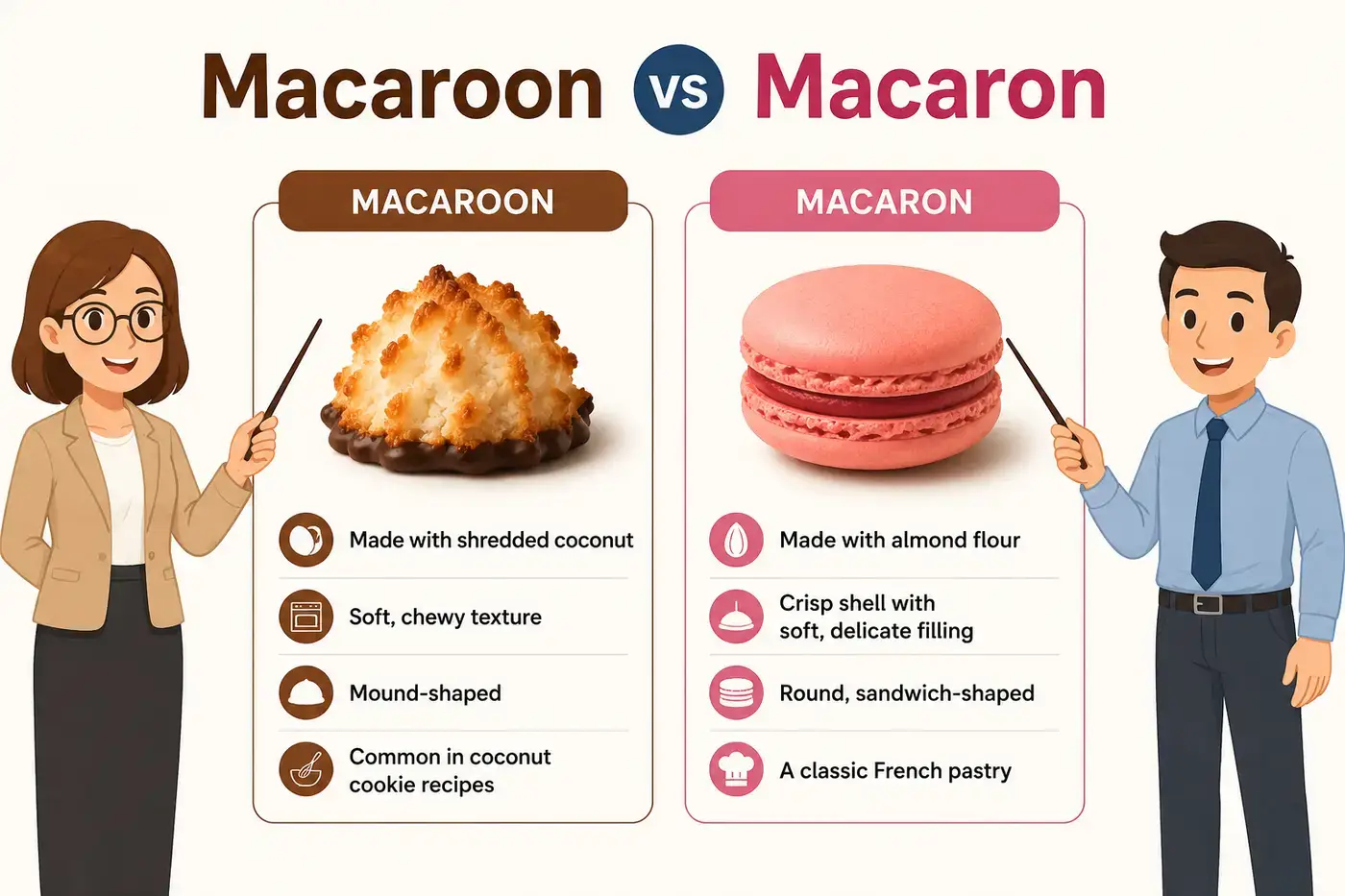
Many people get confused about macaroon vs macaron because the names look almost the same. When you see these sweet treats in a bakery, it can be hard to know which one is which. Even native English speakers often mix them up.
The truth is that a macaroon and a macaron are two completely different desserts. They have different ingredients, different textures, and different origins. The similar names are the main reason people confuse them.
If you have ever wondered about macaroon vs macaron, this guide will explain everything in very simple words. By the end, you will know exactly what each dessert is and when to use the correct name.
Learn the difference in Naive vs Nieve Explained With Easy Examples.
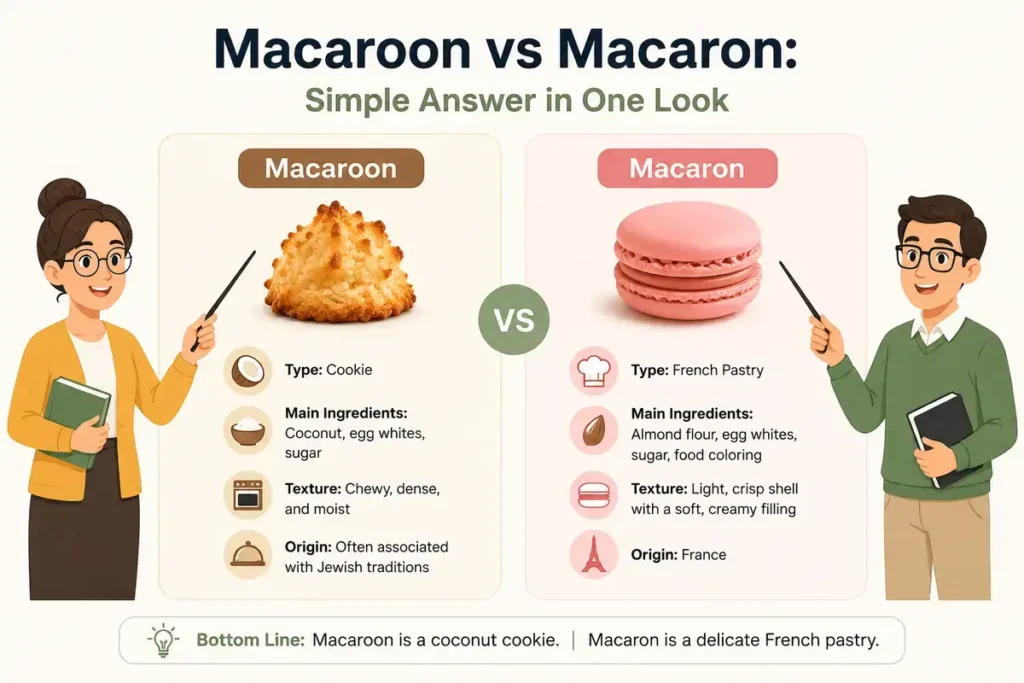
Macaroon vs Macaron: Simple Answer in One Look
Macaron = a colorful French sandwich cookie made with almond flour.
Macaroon = a chewy coconut cookie made with shredded coconut.
They are different desserts, even though their names sound alike.
What Does Macaroon vs Macaron Mean in Simple English?
When people talk about macaroon vs macaron, they are talking about two sweet baked treats. A macaron is a small round cookie. It has two light shells with a creamy filling in the middle. Macarons often come in bright colors and many flavors.
A macaroon is usually made with coconut. It is soft, chewy, and often shaped like a small mound. Some macaroons are dipped in chocolate. Think of it this way:
- Macaron = fancy French sandwich cookie.
- Macaroon = chewy coconut cookie.
Even though the names look almost identical, the desserts are not the same.
What Is a Macaron?
A macaron is a delicate French pastry.
It is made from:
- Almond flour
- Egg whites
- Sugar
The cookies are baked into thin shells. Two shells are joined together with a filling. Common fillings include:
- Chocolate
- Vanilla
- Raspberry
- Pistachio
- Caramel
Macarons are known for their colorful appearance and light texture.
What Is a Macaroon?
A macaroon is a coconut-based cookie. It is usually made from:
- Shredded coconut
- Sugar
- Egg whites
The cookie becomes golden on the outside and chewy on the inside. Many people enjoy macaroons because they are simple, sweet, and rich in coconut flavor.
Why People Mix These Words Macaroon vs Macaron
The biggest reason is that the words look almost the same. Look at them side by side:
- Macaron
- Macaroon
Only a few letters are different. Another reason is pronunciation. Many people are not sure how to say each word correctly. In everyday conversation, someone might see a colorful French cookie and call it a macaroon by mistake. The confusion also happens in:
- Restaurants
- Cafés
- Bakeries
- Social media posts
- Cooking blogs
Because both desserts are sweet cookies, people often assume they are the same thing.
Similar Names Cause Confusion
Many English words have similar spellings but different meanings. For example:
- Desert and dessert
- Affect and effect
- Principal and principle
Macaroon and macaron belong to the same type of confusion.
Both Are Desserts
Since both items are cookies or sweet treats, people do not always notice the difference. If someone sees them quickly in a bakery display, they may use the wrong name without realizing it.
Macaroon vs Macaron: Clear Difference Explained Simply
Here is the easiest way to understand macaroon vs macaron.
Ingredients
Macaron
- Almond flour
- Egg whites
- Sugar
Macaroon
- Coconut
- Egg whites
- Sugar
Appearance
Macaron
- Round and smooth
- Usually colorful
- Has filling in the middle
Macaroon
- Rough texture
- Coconut flakes visible
- Usually no sandwich filling
Texture
Macaron
- Light
- Crisp outside
- Soft inside
Macaroon
- Dense
- Chewy
- Moist
Origin
Macaron
- France
Macaroon
- Developed from older coconut cookie traditions
Quick Memory Trick
Remember this:
MacarON has one “O” and looks like one sandwich cookie.
MacarOON has extra letters and extra coconut.
This little trick helps many learners remember the difference.
Which Form Should You Use?
Use macaron when talking about the colorful French sandwich cookie.
Examples:
- I bought a strawberry macaron.
- The bakery sells chocolate macarons.
- She loves French macarons.
Use macaroon when talking about the coconut cookie.
Examples:
- My grandmother baked coconut macaroons.
- I ate a chocolate-dipped macaroon.
- These macaroons are very chewy.
Which Is More Common?
The answer depends on the situation. If you visit a French bakery, you will probably hear the word macaron more often. If you are discussing coconut cookies, then macaroon is the correct word. Neither word is more correct than the other. They simply refer to different desserts.
Is One a Misspelling?
No.
Both words are correct.
The problem happens when people use one word for the other dessert.
For example:
- Calling a French macaron a macaroon.
- Calling a coconut macaroon a macaron.
That is where mistakes happen.
Macaroon vs Macaron: Easy Real-Life Sentences You Can Use
Here are some simple examples.
- I bought a pink macaron at the bakery.
- My favorite macaron flavor is chocolate.
- She made homemade coconut macaroons.
- These macaroons are sweet and chewy.
- The colorful macarons looked beautiful.
- He served vanilla macarons at the party.
- I love chocolate-covered macaroons.
- The bakery sells both macarons and macaroons.
Everyday Conversation Examples
At a bakery
Customer: What is that colorful cookie?
Worker: It is a macaron.
At home
Friend: What are you baking?
You: Coconut macaroons.
At a party
Guest: These desserts are amazing.
Host: The colorful ones are macarons, and the coconut ones are macaroons.
Where Macaroon vs Macaron Comes From (Simple History)
The story behind macaroon vs macaron is actually very interesting. Long ago, both words came from related European baking traditions. The word macaron developed in France. Over time, French bakers created the delicate sandwich cookie that people know today.
The word macaroon later became connected with coconut cookies. As recipes changed through the years, the coconut version became its own dessert. Because both words share historical roots, their spellings stayed very similar. That is one reason the confusion still exists today.
How the French Dessert Became Famous
Macarons became popular because of their elegant appearance and wide variety of flavors.
Today, bakeries make them in colors such as:
- Pink
- Blue
- Yellow
- Green
- Purple
People often buy them for:
- Weddings
- Birthdays
- Celebrations
- Gifts
Why Macaroons Remained Popular
Macaroons became popular because they are easy to make and have a rich coconut taste. Many families have passed macaroon recipes down through generations. They are often enjoyed during holidays and special gatherings.
Understanding Macaroon vs Macaron at a Glance
If you remember only one thing, remember this:
A macaron is the colorful French sandwich cookie made with almond flour.
A macaroon is the chewy coconut cookie made with shredded coconut.
The names are similar, but the desserts are completely different. Knowing this simple difference will help you order, bake, and talk about these treats correctly. As you can see, the basic difference is easy once you know what each dessert looks like and how it is made. Next, we will look at the deeper cultural meaning, symbolism, popularity, and interesting facts behind macaroon vs macaron.
Need another quick comparison? Read Coachs Or Coaches: Easy Grammar Guide (2026).
How Macaroon vs Macaron Is Understood in Culture and Stories
When people hear macaroon vs macaron, they often think of food, baking, and special treats. These desserts have become part of different food cultures around the world. A macaron is often connected with elegance and celebration. People may buy macarons for birthdays, weddings, baby showers, and gifts. Because they are colorful and beautiful, they are often seen as a luxury dessert.
A macaroon has a different image. It feels more homemade and traditional. Many families make macaroons during holidays or special family gatherings. They are often linked with comfort, warmth, and home baking.
In movies, cooking shows, and social media posts, macarons are usually shown as fancy desserts. Macaroons are often shown as simple treats made from family recipes. Neither dessert is better than the other. They simply have different cultural images.
Macaroon vs Macaron in Modern Food Culture
Today, both desserts are popular around the world.
Macarons are common in:
- French bakeries
- Dessert shops
- Wedding dessert tables
- Luxury gift boxes
Macaroons are common in:
- Home kitchens
- Holiday celebrations
- Family gatherings
- Traditional dessert trays
This difference helps explain why people often see them as very different treats.
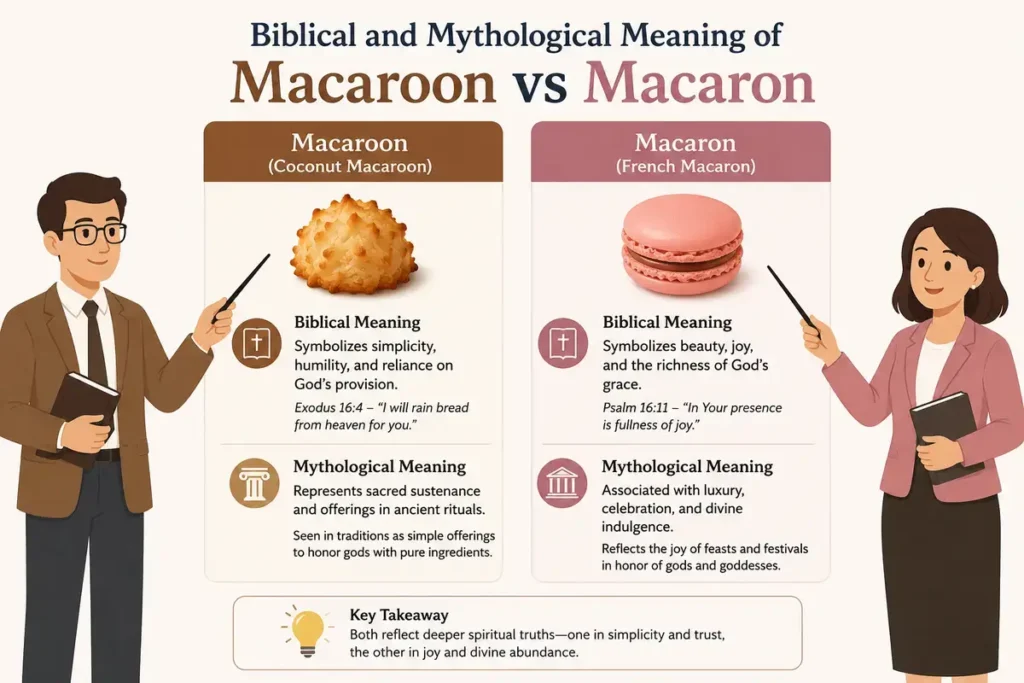
Biblical and Mythological Meaning of Macaroon vs Macaron
There is no direct biblical meaning for either a macaroon or a macaron. The Bible does not mention these desserts because they were created many centuries later. There is also no major mythological story connected to macaroon vs macaron. However, sweets in many cultures often symbolize:
- Happiness
- Celebration
- Sharing
- Hospitality
When people serve desserts to guests, it is often a sign of kindness and welcome. So while macarons and macaroons do not have religious meanings of their own, they can represent joyful moments that bring people together.
Symbolism Macaroon vs Macaron Explained in Simple Words
People sometimes connect foods with feelings and ideas. This is where symbolism comes in.
What One Version Represents
A macaron often represents:
- Beauty
- Creativity
- Celebration
- Elegance
- Attention to detail
Because macarons come in many colors and flavors, they are often linked with artistic expression. People may choose macarons for events that feel special or sophisticated. A colorful box of macarons can symbolize thoughtfulness and celebration.
What the Other Version Represents
A macaroon often represents:
- Comfort
- Tradition
- Family
- Simplicity
- Home baking
Macaroons are usually less flashy than macarons. Their homemade appearance often reminds people of family recipes and holiday traditions. For many people, a macaroon symbolizes warmth and familiar memories.
Macaroon vs Macaron Symbolism Compared
You can think of it this way:
| Macaron | Macaroon |
|---|---|
| Fancy | Traditional |
| Colorful | Simple |
| Artistic | Comforting |
| Elegant | Homemade |
| Modern bakery style | Family recipe style |
These are not strict rules, but they help explain how people often view the two desserts.
Related Words You Should Know About Macaroon vs Macaron
Here are some related food words that often appear when discussing macaroon vs macaron.
Cookie
A sweet baked snack that is usually small and easy to hold.
Biscuit
In some countries, a biscuit means what Americans call a cookie.
Pastry
A baked dessert made with dough and other ingredients.
Almond Flour
A fine flour made from almonds. It is used in macarons.
Coconut
A tropical fruit used in most macaroons.
Filling
The sweet layer placed between two macaron shells.
Confection
A general word for candy or sweet desserts.
Bakery
A place where breads, cakes, cookies, and pastries are made and sold.
Dessert
A sweet food usually eaten after a meal. Knowing these words can make discussions about desserts much easier.
How People Actually Use Macaroon vs Macaron in Daily English
In everyday English, people usually use these words when talking about food, baking, or desserts. Here are some natural examples.
- I bought a box of macarons for my sister’s birthday.
- These coconut macaroons taste amazing.
- My favorite macaron flavor is pistachio.
- Grandma makes homemade macaroons every holiday season.
- The bakery sells macarons in many colors.
- I thought it was a macaroon, but it was actually a macaron.
- We served macarons at the wedding reception.
- Chocolate-dipped macaroons are my favorite dessert.
- The recipe teaches you how to make French macarons.
- She packed a few macaroons for the picnic.
In Restaurants
Server: Would you like a macaron for dessert? Customer: Yes, I would love one.
In a Bakery
Customer: Are these macaroons? Baker: No, those are macarons. The coconut cookies are over there. These examples show how the words appear in real conversations.
Common Mistakes People Make With Macaroon vs Macaron
Many learners make simple mistakes when using these words. The good news is that the mistakes are easy to fix.
Mistake 1: Using the Wrong Name
Incorrect:
- I bought a coconut macaron.
Correct:
- I bought a coconut macaroon.
If it is the chewy coconut cookie, use macaroon.
Mistake 2: Calling Every Fancy Cookie a Macaroon
Incorrect:
- Those colorful French macaroons look beautiful.
Correct:
- Those colorful French macarons look beautiful.
French sandwich cookies are macarons.
Mistake 3: Thinking They Are the Same Dessert
Incorrect:
- Macaroons and macarons are exactly the same.
Correct:
- Macaroons and macarons are different desserts.
Mistake 4: Forgetting the Main Ingredient
A simple trick is to remember the ingredients.
Macaron:
- Almond flour
Macaroon:
- Coconut
Remembering the ingredients helps you choose the correct word.
Mistake 5: Mixing Them Up in Writing
People often spell one when they mean the other.
Before writing, ask yourself:
“Am I talking about the colorful French cookie or the coconut cookie?”
The answer will guide you to the correct spelling.
Final Teacher Explanation of Macaroon vs Macaron
Imagine you are standing in a bakery. On one shelf, you see bright colorful sandwich cookies with cream in the middle. Those are macarons. On another shelf, you see chewy coconut cookies that look rough and golden. Those are macaroons.
That is really the easiest way to remember the difference. Many people think the words mean the same thing because they look almost identical. But they describe two separate desserts. A macaron is made mainly from almond flour. A macaroon is made mainly from coconut.
If you remember those two ingredients, you will rarely make a mistake. As an English teacher, I tell students not to worry if they confuse these words at first. Even native speakers mix them up sometimes. The key is simple practice. Each time you see the words, connect them to the correct dessert. Soon the difference will feel natural.
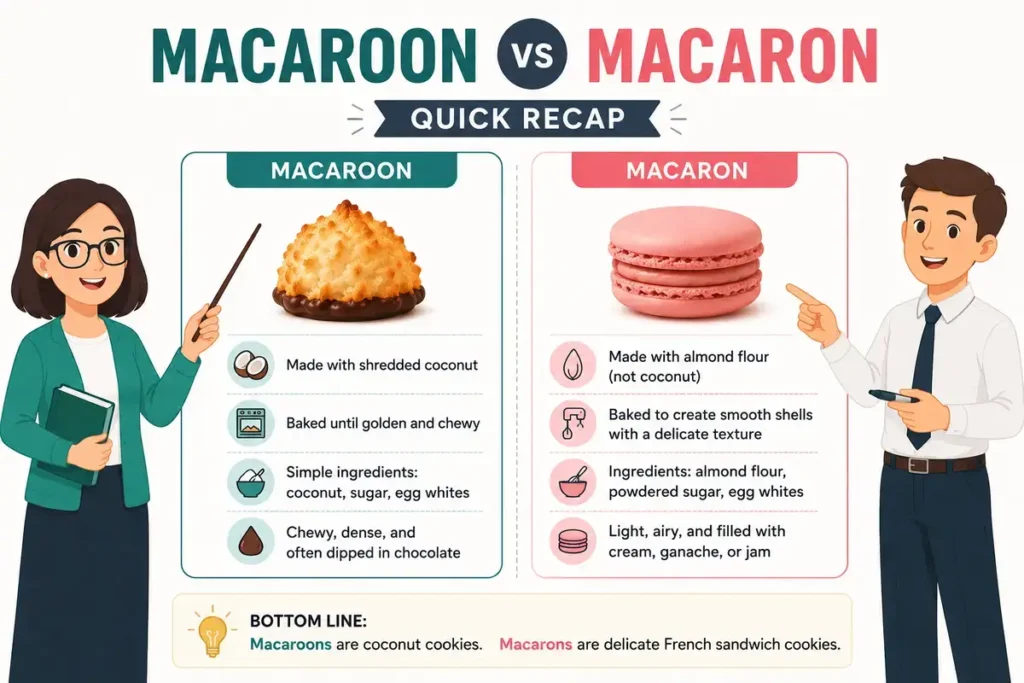
Final Answer: Macaroon vs Macaron Quick Recap
The difference between macaroon vs macaron is simple.
A macaron is a colorful French sandwich cookie made with almond flour and filling.
A macaroon is a chewy coconut cookie usually made with shredded coconut.
The names are similar, but they refer to completely different desserts.
You may also want to read Uninclined vs Disinclined: Which Word Should You Use (2026).
Conclusion
Understanding macaroon vs macaron is easier than many people think. The confusion happens because the spellings look very similar, but the desserts themselves are very different.
A macaron is the colorful French sandwich cookie made with almond flour. A macaroon is the chewy coconut cookie made with shredded coconut.
When you remember the main ingredients and appearance of each dessert, choosing the correct word becomes simple. The next time you visit a bakery, read a recipe, or talk about desserts, you will know exactly which word to use.
Frequently Asked Questions (FAQs)
What is the difference between macaroon vs macaron?
A macaron is a French sandwich cookie made with almond flour. A macaroon is a chewy coconut cookie.
Is macaroon or macaron correct?
Both are correct. They simply refer to different desserts.
Why do people confuse?
The names look and sound very similar, so many people think they are the same thing.
Which one contains coconut?
A macaroon contains coconut. A traditional macaron does not.
Which one is the colorful French cookie?
The colorful French sandwich cookie is called a macaron.
Can I use interchangeably?
No. They have different meanings and should not replace each other.
Which dessert is more popular?
Both are popular, but macarons are often more common in French bakeries and specialty dessert shops.
How can I easily remember?
Remember the ingredients. Macaron equals almond flour. Macaroon equals coconut.
