
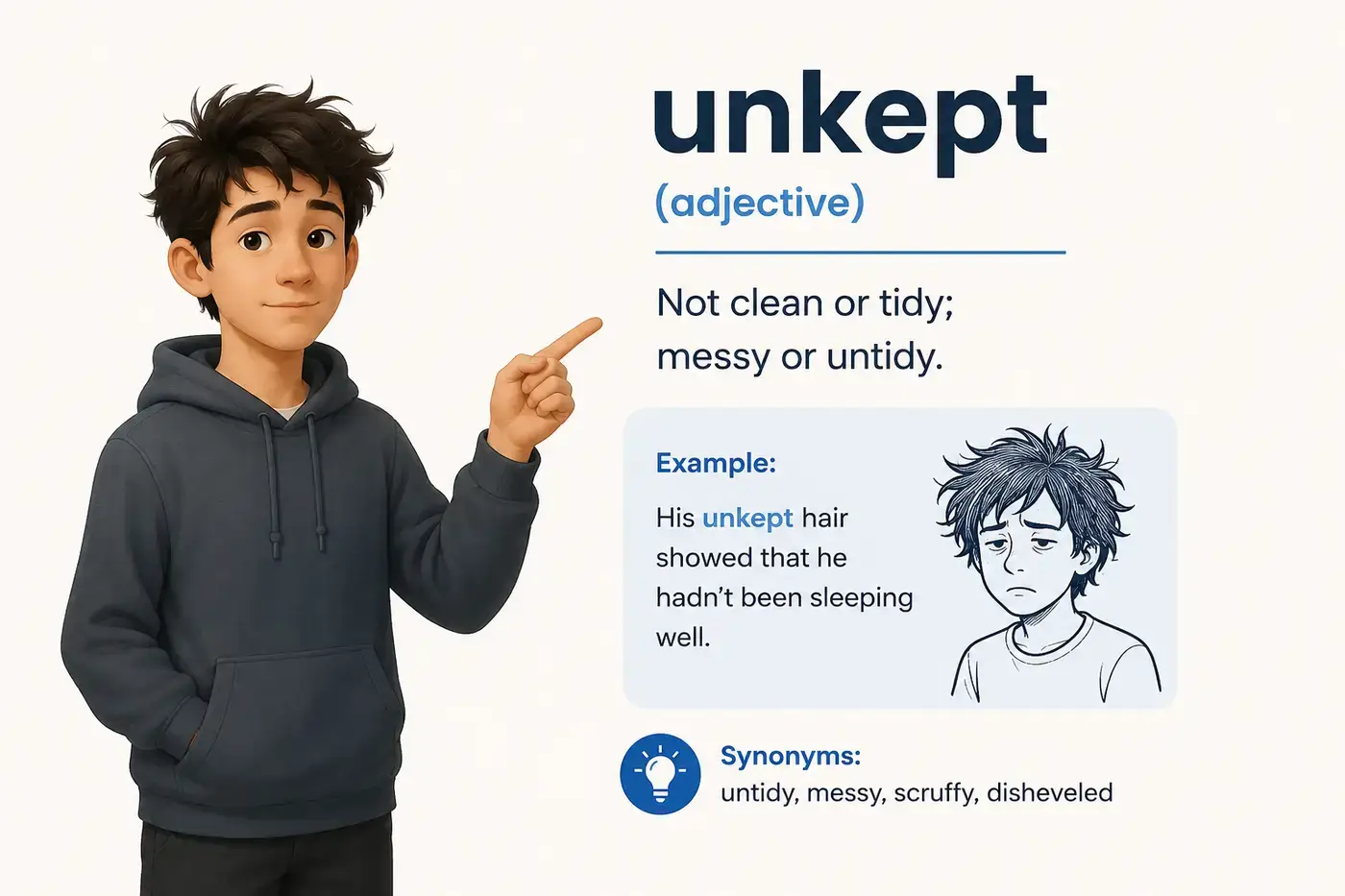
Many English learners get confused about unkept or unkempt because both words look possible. They start with un-, and both seem like they could describe something messy or untidy. That is why people often wonder which one is correct.
The short answer is simple. Unkempt is the correct word in modern English. Unkept is usually not accepted as the standard word for describing messy hair, clothes, or appearance. Knowing this small difference can help you avoid a common English mistake.
In this guide, you will learn the meaning and why people confuse them, how to use the correct form, and easy examples that you can remember in daily conversations.
You may also want to read Drier vs Dryer: Which One Should You Use(2026 Guide)?.
Simple Answer in One Look: Unkept or Unkempt
Unkempt is the correct English word.
Unkept is usually considered incorrect when talking about someone’s messy appearance.
Correct: His hair looked unkempt.
Incorrect: His hair looked unkept.
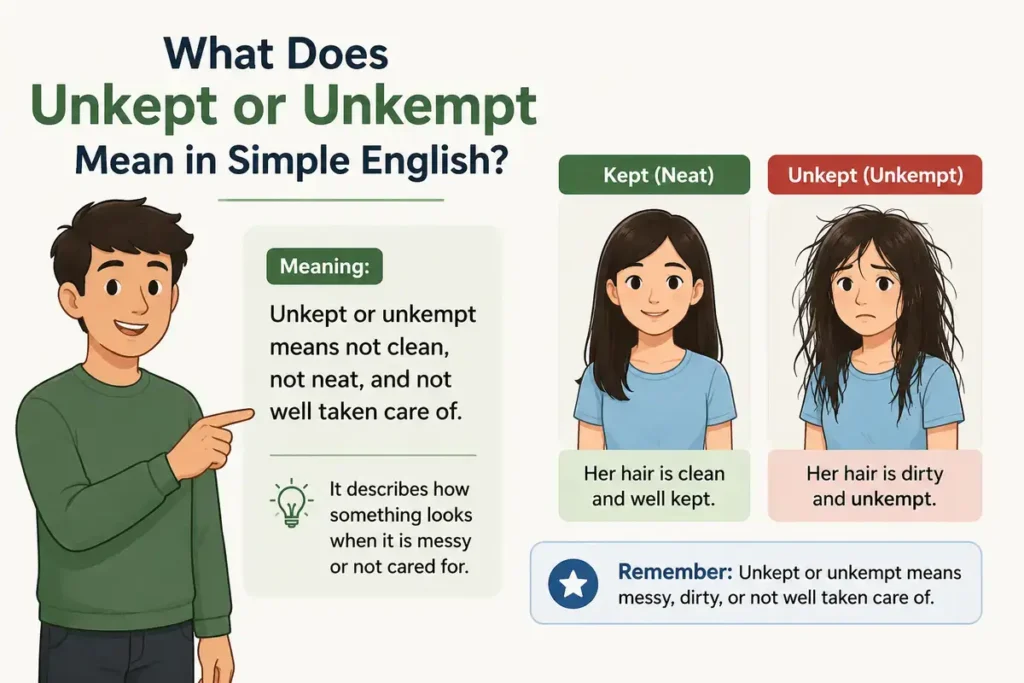
What Does Unkept or Unkempt Mean in Simple English?
When people ask about words they usually want to know which word describes someone or something that looks messy.
The answer is unkempt.
Unkempt means:
- Not neat
- Not clean-looking
- Messy
- Untidy
- Not well cared for
You can use it for:
- Hair
- Clothes
- Gardens
- Yards
- Beards
- Rooms
- General appearance
Imagine someone waking up late without brushing their hair or changing clothes. Their appearance may look unkempt. Here are some easy examples.
- His hair was unkempt after sleeping.
- The old garden looked unkempt.
- She arrived wearing unkempt clothes.
- The empty house had an unkempt yard.
- His beard became unkempt during vacation.
The word describes how something looks, not how good or bad the person is.
Why Do People Mix These Words Unkept or Unkempt?
The confusion between words happens for a few simple reasons.
Both Start With “Un”
Many English words begin with un-. For example:
- Unhappy
- Unfair
- Unkind
- Unknown
Because of this pattern, many learners think unkept should also be correct.
People Know the Word “Kept”
The word kept is the past form of keep. Examples:
- I kept the book.
- She kept the door closed.
- They kept the promise.
Since people already know kept, they naturally create unkept in their minds.
Unkempt Looks Strange
The word unkempt does not follow a pattern that many learners see every day.
The ending -kempt is not common in modern English.
That makes people stop and think.
Many even believe unkempt must be a spelling mistake because they rarely hear kempt by itself.
Spell Check Does Not Always Help
Sometimes people type unkept, and their writing tool does not clearly explain why it sounds wrong.
As a result, they continue using it without realizing that unkempt is the accepted word.
They Sound Similar
When spoken quickly, unkept and unkempt can sound close to each other.
This makes the confusion even more common.
Clear Difference Explained Simply: Unkept or Unkempt
The easiest way to remember the difference is to think about appearance.
| Unkempt | Unkept |
|---|---|
| Correct word | Usually incorrect for appearance |
| Means messy or untidy | Often mistaken because of the word “kept” |
| Used in dictionaries | Rarely accepted in standard English |
| Used by native speakers | Better avoided |
Here is another simple comparison.
Unkempt
- Correct
- Standard English
- Describes messy appearance
- Safe to use in writing and speaking
Unkept
- Usually incorrect
- Not the standard choice
- Often caused by spelling confusion
- Best not to use for appearance
Easy Memory Trick
Think about this sentence:
Messy hair is always unkempt.
Do not replace it with unkept.
Remember:
Messy equals unkempt.
Which Form Should You Use? Unkept or Unkempt
You should almost always choose unkempt. Use it whenever you describe something that looks untidy or poorly cared for. Examples include:
- Hair
- Beard
- Lawn
- Garden
- Clothes
- Room
- Appearance
Use Unkempt Like This
- She had unkempt hair.
- The yard looked unkempt.
- His beard became unkempt.
- Their garden looked unkempt after winter.
- The abandoned house appeared unkempt.
Avoid Using Unkept
Instead of writing:
- His hair looked unkept.
Write:
- His hair looked unkempt.
That simple change makes your English sound much more natural.
A Simple Rule
If you are talking about how something looks, choose unkempt.
You do not need to think twice.
Easy Real-Life Sentences You Can Use
Here are simple examples you can copy into your own English.
- His hair looked unkempt after the long trip.
- The old garden became unkempt during the summer.
- She fixed her unkempt hair before school.
- His beard looked unkempt after camping.
- The empty house had an unkempt yard.
- My room became unkempt after a busy week.
- The little dog had unkempt fur after playing outside.
- The park looked unkempt because nobody cleaned it.
Now look at these incorrect examples.
- ❌ His hair was unkept.
- ❌ The garden looked unkept.
- ❌ She had unkept clothes.
Correct them like this.
- ✅ His hair was unkempt.
- ✅ The garden looked unkempt.
- ✅ She had an unkempt appearance.
Where Does Unkempt Come From? Simple History
The story behind unkempt is interesting. Long ago, English had the word kempt, which meant well-combed, neat, or tidy. Over time, people stopped using kempt in everyday conversations. But unkempt stayed popular.
That is why many people know unkempt but have never heard someone simply say kempt. Today, kempt still exists, but it is much less common than unkempt. You may sometimes hear:
- She looked neatly kempt.
However, most native English speakers would simply say:
- She looked neat.
- She looked well groomed.
- She looked tidy.
That is why unkempt feels much more natural in modern English.
Common Mistakes People Make With Unkept or Unkempt
Many learners make the same mistakes again and again. Here are the most common ones.
Mistake 1: Using Unkept for Hair
❌ Her hair was unkept.
✅ Her hair was unkempt.
Mistake 2: Using Unkept for a Garden
❌ The yard looked unkept.
✅ The yard looked unkempt.
Mistake 3: Thinking Both Words Are Equal
Some learners believe both spellings are acceptable.
They are not.
For standard English, choose unkempt.
Mistake 4: Avoiding the Word Completely
Some students stop using the word because they fear making a mistake.
There is no need to avoid it.
Just remember this simple rule.
Messy appearance = unkempt.
That one idea will help you use the word correctly in almost every situation.
As you continue learning it also helps to understand how the word is used in books, stories, everyday culture, and different situations. In the next section, you will learn about its deeper meaning, symbolism, common expressions, related words, and more simple examples that make this word even easier to remember.
Learn the difference in Symptomatology vs Symptomology: Which Word Is Correct.
How Is Unkept or Unkempt Understood in Culture and Stories?
When people hear about both words, they usually think about someone’s appearance. In many stories, movies, and books, an unkempt person looks tired, busy, poor, or distracted. The word helps readers imagine how someone looks before the story explains more. An unkempt look does not always mean someone is careless. Sometimes it simply shows that the person has been through a difficult time. For example:
- A detective who has been working all night may look unkempt.
- A traveler after a long journey may have unkempt hair.
- A gardener may look unkempt after working outside all day.
- A child playing in the rain may come home looking unkempt.
Writers also use unkempt places to create a mood. For example:
- An unkempt garden may show that nobody has lived there for years.
- An unkempt house may suggest that its owner has been away.
- An unkempt room may show that someone has been very busy.
The word helps readers picture a scene without using many extra words.
Does Unkept or Unkempt Have a Biblical or Mythological Meaning?
There is no special biblical meaning. The Bible does not use unkempt as an important religious word. However, many Bible stories mention people wearing torn clothes, dusty clothing, or having messy hair during times of sadness, travel, or hardship. These descriptions are similar to what we now call an unkempt appearance.
In mythology, there is also no special meaning for unkempt. Still, artists sometimes show heroes, travelers, or wild characters with unkempt hair to show they have spent a long time on difficult adventures. So, the word has no special religious or mythological meaning. It is mainly used to describe how someone or something looks.
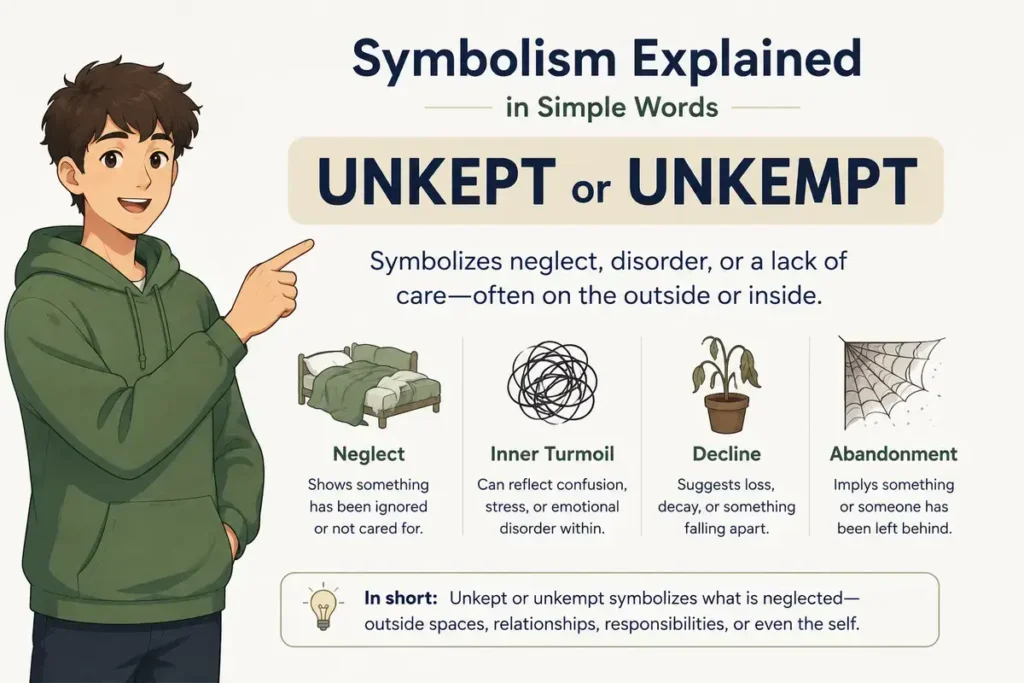
Symbolism Explained in Simple Words about Unkept or Unkempt
Words often create pictures in our minds. That is why understanding their symbolism can help you remember them.
What Unkempt Represents
Unkempt often represents:
- A messy appearance
- A busy lifestyle
- Long travel
- Hard work
- Neglect
- Nature growing freely
- Stress or tiredness
It does not always mean something bad. For example, an artist with unkempt hair may simply be focused on painting instead of fixing their appearance. A gardener with dirty clothes may look unkempt because they have been working hard.
What Unkept Represents
When people ask about words they often expect unkept to have the same meaning. In standard English, unkept is not the accepted word for describing someone’s appearance. Because of that, it does not carry the same clear meaning. If readers see unkept, many will think it is a spelling mistake. That is why you should choose unkempt whenever you want to describe something that looks untidy. The simple comparison is easy to remember.
Unkempt = Correct and standard
Unkept = Usually incorrect for appearance
Related Words You Should Know About Unkept or Unkempt
Learning similar words makes your English stronger.
Messy
Something is not neat or organized.
Example: My desk looks messy today.
Untidy
Not clean or well arranged.
Example: His room is untidy.
Disheveled
Hair or clothes look very messy.
Example: She looked disheveled after the storm.
Scruffy
Looking old, dirty, or untidy.
Example: He wore scruffy shoes.
Well Groomed
Looking clean and neat.
Example: She always looks well groomed.
Neat
Clean and organized.
Example: Keep your notebook neat.
Tidy
Everything is in the right place.
Example: Their kitchen is tidy.
Groomed
Hair and clothes are clean and cared for.
Example: The dog was freshly groomed.
Neglected
Something has not been cared for.
Example: The neglected garden became overgrown.
Well Kept
Properly cared for and maintained.
Example: They live in a well-kept neighborhood.
How Do People Actually Use Unkept or Unkempt in Daily English?
Native English speakers almost always use unkempt. Here are real-life examples you may hear.
- Your hair looks a little unkempt today.
- The front yard has become unkempt.
- He came to work looking unkempt.
- After camping for three days, we all looked unkempt.
- The old building looked unkempt and empty.
- She quickly brushed her unkempt hair.
- His beard became unkempt during vacation.
- The abandoned park looked unkempt.
- My room gets unkempt when I’m busy.
- The puppy’s fur looked unkempt after playing outside.
Notice that none of these examples use unkept.
That is because unkempt is the normal word in everyday English.
Common Mistakes People Make With Unkept or Unkempt
Many English learners make the same mistakes. The good news is that they are easy to fix.
Mistake 1: Writing Unkept Instead of Unkempt
❌ His beard looked unkept.
✅ His beard looked unkempt.
Mistake 2: Thinking Both Words Are Correct
Many learners believe both words are accepted.
They are not.
For standard English, choose unkempt.
Mistake 3: Mixing It With Well Kept
People sometimes confuse well kept with unkempt.
Remember:
- Well kept means neat and cared for.
- Unkempt means messy or untidy.
Mistake 4: Using Unkempt for Everything
Unkempt is mainly used for appearance.
It is better to use other words for different situations.
For example:
Instead of:
❌ My homework is unkempt.
Say:
✅ My homework is messy.
Mistake 5: Believing Unkempt Means Dirty
Something can be unkempt without being dirty. For example:
Someone’s hair may be clean but still unkempt because it has not been brushed.
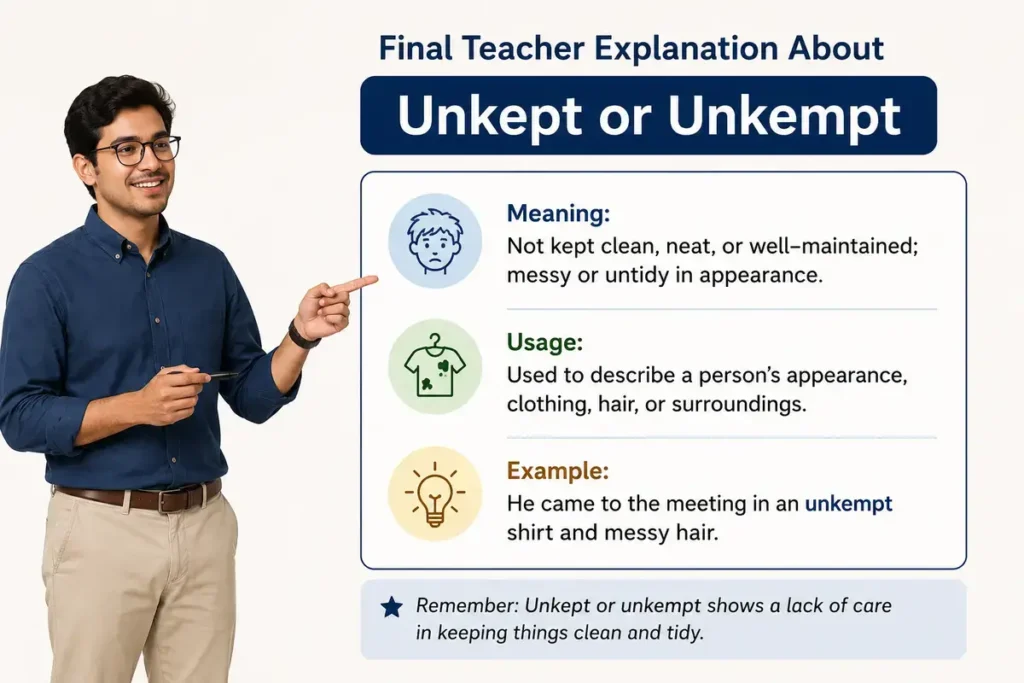
Final Teacher Explanation About Unkept or Unkempt
Now you know the answer. The correct word is unkempt. Use it when you want to describe hair, clothes, gardens, rooms, or anything that looks messy, untidy, or not well cared for. Avoid using unkept for appearance because it is not the standard English word. A simple memory trick can help. Think of this sentence: Messy appearance equals unkempt.
Whenever you describe messy hair, an untidy beard, an overgrown yard, or a person who looks untidy, choose unkempt. The more you read and hear English, the more natural this choice will become.
Final Answer: Unkept or Unkempt
If you are choosing between both words always choose unkempt for standard English.
It means messy, untidy, or not well cared for.
Unkept is usually considered incorrect when describing someone’s appearance, so it is best to avoid it.
Learn the difference in Choosing or Chosing: How to Use It the Right Way (2026).
Conclusion
The difference between is easier than it first appears. Unkempt is the correct word and means messy, untidy, or not well cared for. Unkept is a common mistake because it looks similar to the word kept, but it is not the standard choice for describing appearance.
Whenever you talk about messy hair, an untidy beard, an overgrown yard, or a person who looks untidy, use unkempt with confidence. This simple rule will help your English sound more natural and accurate in both speaking and writing.
Frequently Asked Questions (FAQs)
Is unkempt the correct spelling?
Yes. Unkempt is the correct and standard English spelling.
Is unkept a real English word?
People sometimes write unkept, but it is not the standard word for describing a messy appearance.
What does unkempt mean in simple words?
It means messy, untidy, or not neat.
Why do people confuse?
They know the word kept, so they naturally think unkept should also be correct.
Can I use unkept in formal writing?
No. It is better to use unkempt in both formal and everyday writing.
Can unkempt describe places?
Yes. You can describe gardens, yards, parks, rooms, and buildings as unkempt if they look untidy.
What is the opposite of unkempt?
Common opposites include neat, tidy, well groomed, and well kept.
How can I remember the correct word?
Remember this simple rule:
Messy hair, messy beard, messy garden, or messy clothes = unkempt.
