
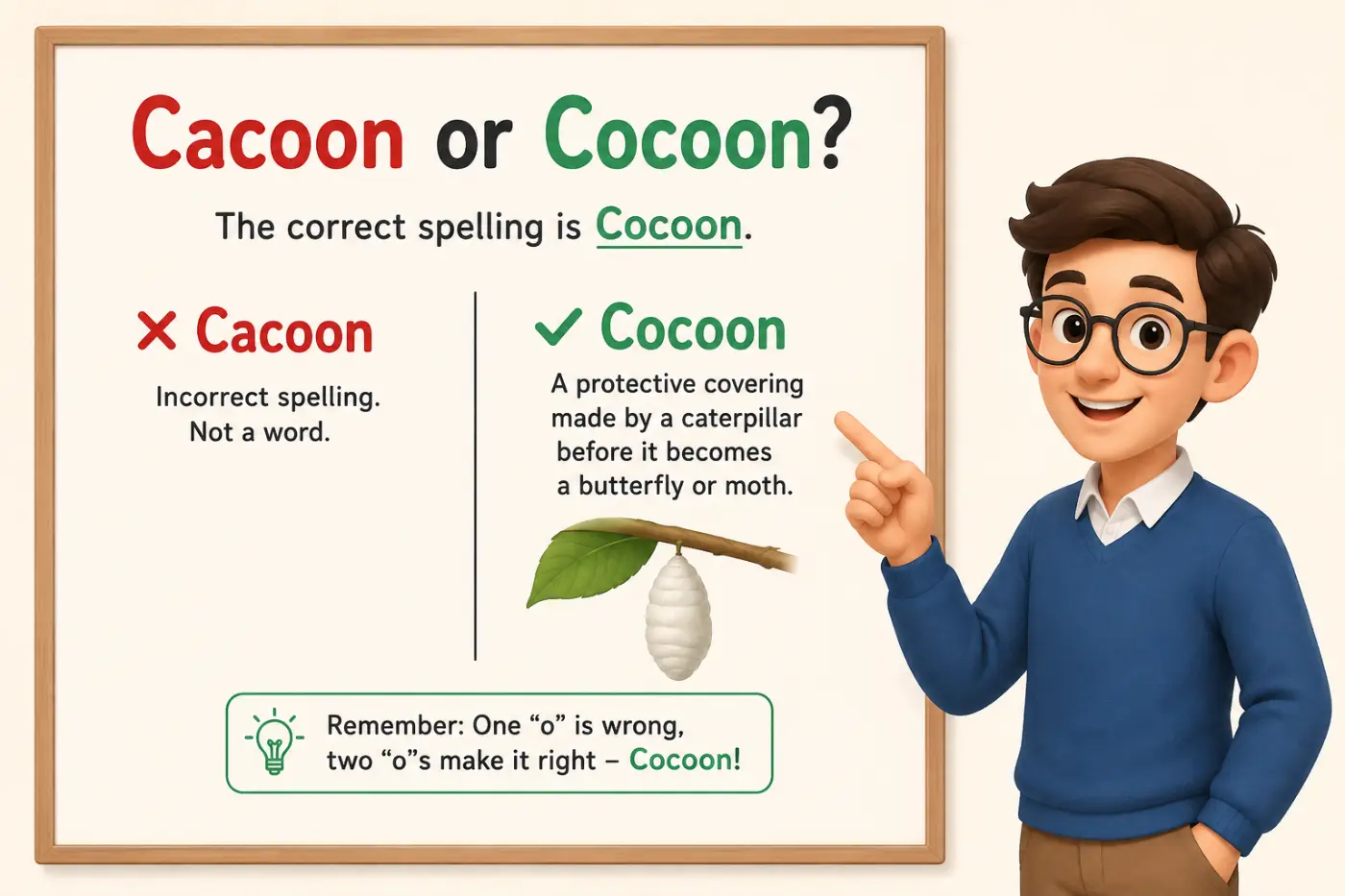
Many people search for cacoon or cocoon because both words look almost the same. Only one of them is correct in standard English. The correct spelling is cocoon. The word cacoon is a spelling mistake. If you want to write good English you should always use cocoon.
This small spelling difference can confuse students writers and even native English speakers. That is because the two words sound very similar. Once you learn one simple rule you will remember the correct spelling every time.
In this guide you will learn the meaning of the correct spelling why people mix them up easy examples and the simple history behind the word. By the end you will know exactly which word to use with confidence.
Many readers also check Zeroes Or Zeros: Which Is Correct Simple Answer (2026).
Simple Answer in One Look.
If you are choosing between both words the correct word is cocoon.
Cocoon is the correct English spelling. It is the protective covering that some insects make around themselves while they grow into adults.
Cacoon is not a standard English word. It is simply a common misspelling.
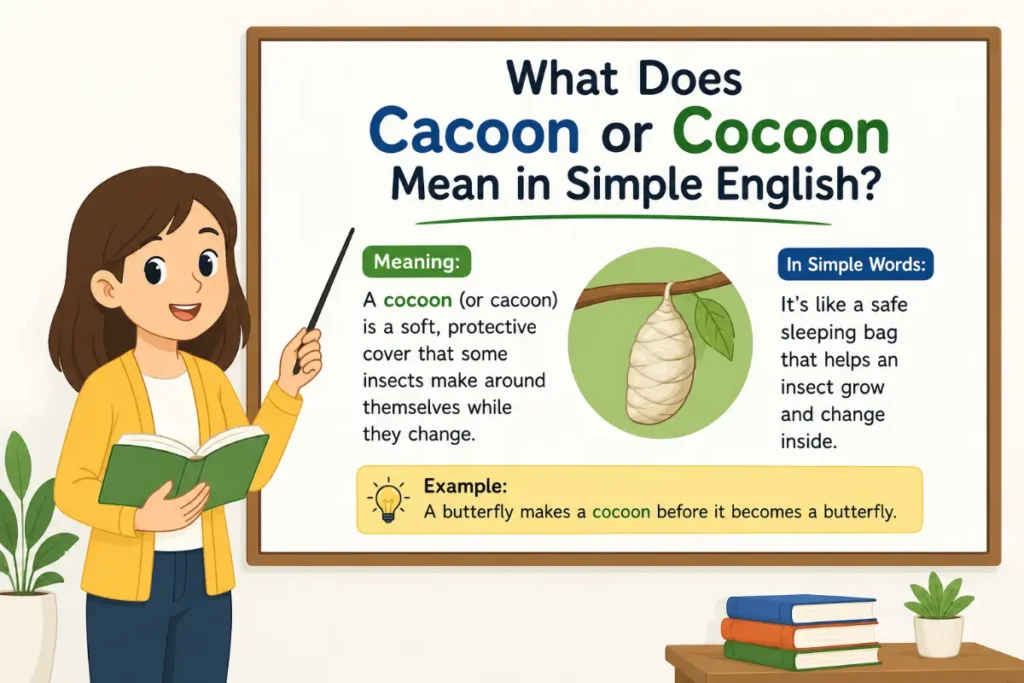
What Does Cacoon or Cocoon Mean in Simple English.
When people ask about words they usually want to know which spelling is correct and what the word means. A cocoon is a soft protective case made by some insects. A caterpillar may build a cocoon before it becomes a moth. Inside the cocoon the insect changes little by little until it is ready to come out.
The word is also used in everyday English with a second meaning. When someone says they are in a cocoon they mean they feel safe comfortable and protected from the outside world. For example a person may wrap themselves in a warm blanket and say they feel like they are in a cocoon. You can also use the word to describe a quiet peaceful place.
Here are some simple meanings.
- A protective covering made by certain insects.
- A safe warm and comfortable place.
- A time of personal growth or change.
All of these meanings come from the same idea of protection and development.
Why Do People Mix These Words Cacoon vs Cocoon.
Many learners search for because the pronunciation makes the spelling hard to remember. Here are the main reasons.
The Sound Is Very Similar.
When people hear the word they hear the long oo sound. They may guess the spelling instead of remembering it.
That guess often becomes cacoon instead of cocoon.
Typing Mistakes.
Fast typing can easily change one letter.
Many people never notice the mistake because both spellings look possible.
Learning by Hearing.
Some English learners hear the word in a movie classroom or conversation before they ever see it written.
Without seeing the correct spelling they may write it the way it sounds.
Similar Looking Words.
English has many words with double letters and unusual spellings.
People compare cocoon with words like cartoon balloon or raccoon and sometimes choose the wrong pattern.
Autocorrect Does Not Always Help.
Some devices may not immediately fix the mistake especially if another uncommon word is suggested.
That is why proofreading is always helpful.
Clear Difference Explained Simply.
The difference between two word is actually very easy.
| Word | Correct | Meaning | Should You Use It |
|---|---|---|---|
| Cocoon | Yes | Protective covering made by some insects. Also means a safe comfortable place. | Yes |
| Cacoon | No | No standard English meaning. Misspelling of cocoon. | No |
You can also remember it this way.
- Cocoon belongs in dictionaries.
- Cocoon belongs in books schools and newspapers.
- Cacoon is only a spelling mistake.
- Whenever you write about insects protection or personal growth use cocoon.
That simple rule will help you avoid the mistake every time.
Which Form Should You Use Cacoon and Cocoon.
Always choose cocoon. Do not write cacoon in school work emails reports articles or everyday writing. Here is a simple rule.
If you are talking about an insect changing into its adult form write cocoon.
If you are talking about feeling safe warm peaceful or protected also write cocoon.
Never replace it with cacoon because readers may think it is an error.
Here are a few examples.
Correct: The caterpillar built a cocoon.
Correct: I stayed inside my cozy cocoon during the storm.
Wrong: The butterfly came out of its cacoon.
Wrong: My blanket feels like a cacoon.
Using the correct spelling makes your writing look more professional and easier to understand.
Easy Real Life Sentences You Can Use.
These examples show how cocoon is used in everyday English.
- The caterpillar made a cocoon before becoming a moth.
- My sleeping bag felt like a warm cocoon.
- The baby rested safely in a soft cocoon.
- She stayed home and enjoyed her quiet cocoon.
- The insect remained inside the cocoon for several weeks.
- Winter made our house feel like a cozy cocoon.
- The science teacher showed us a real cocoon.
- He needed a peaceful cocoon to relax after work.
Where Cacoon vs Cocoon Word Comes From Simple History.
The word cocoon has been part of English for hundreds of years. It came from the French word cocon. That French word described the silky covering made by insects. As English borrowed the word the spelling became cocoon. The meaning stayed almost the same. People first used it for the protective covering around insects.
Later writers started using it as a picture of safety comfort and personal change. That is why you may hear someone say they are living in a cocoon even when no insect is involved. The idea is simple. A cocoon protects what is inside until it is ready for the next stage. Because of this the word became a symbol of growth hope and new beginnings. Today the spelling has never changed from cocoon in standard English.
The form cacoon has never become an accepted English spelling. As a result dictionaries teachers and professional writers all use cocoon. When you remember its history it becomes easier to remember the correct spelling. Think of the word as something that protects and prepares for change. That picture makes the spelling much easier to keep in your memory.
As you can see the spelling question is simple once you know the rule. The word cocoon has a clear meaning an interesting history and many everyday uses. In the next section you will learn how this word is understood in culture stories symbolism common expressions related words frequent mistakes and practical situations that will help you remember the correct spelling for life.
How Is Understood in Culture and Stories.
The word cocoon is used in many stories because it represents change. A small insect goes inside a cocoon and later comes out as something new. This simple idea has inspired people for many years. Writers often use a cocoon to show that someone is growing or preparing for a better future. A person may spend time alone to learn new skills, heal from hard times, or think about life. That quiet time is sometimes compared to being inside a cocoon.
Parents may also use the word when talking about keeping a baby safe. A soft blanket or a warm sleeping bag may be called a cocoon because it makes someone feel protected. In movies and books, a character may leave their “cocoon” when they become more confident. They are ready to face the world with new strength.
When people search for words, they often find that only cocoon carries these positive meanings. The spelling cacoon does not have any accepted meaning in English.
Need another quick comparison? Read Has Been Have Been: Simple Rules, and Examples (2026).
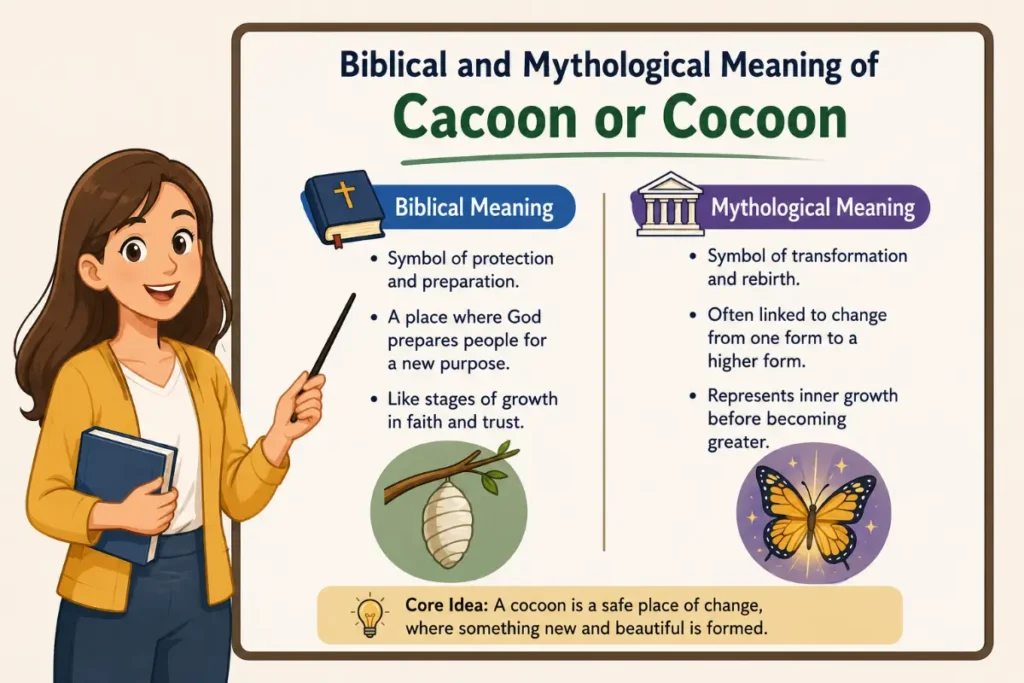
Biblical and Mythological Meaning of Cacoon or Cocoon.
The word cocoon does not appear as an important word in the Bible. However, many people connect the idea of a cocoon with personal growth, hope, and new life.
For example, a person may compare a cocoon to a time of waiting before better days come. This is a personal comparison instead of an official biblical meaning.
In mythology, there is also no famous story centered on a cocoon itself. Still, many myths include change and transformation. Because a cocoon is linked with change, people sometimes use it as a simple symbol when talking about these stories. So, if you are asking about both words, remember that cocoon may have symbolic meaning, but it does not have a special biblical or mythological definition.
Symbolism Explained in Simple Words
People often use symbols to explain feelings and ideas. The discussion about words becomes much easier when you understand what the correct word represents.
What Cocoon Represents.
A cocoon usually represents positive ideas.
It can stand for:
- Safety.
- Protection.
- Growth.
- Change.
- New beginnings.
- Healing.
- Hope.
- Quiet time before success.
For example, someone studying hard before an important exam may say they are staying inside their cocoon. They mean they are preparing for something better. A person recovering from illness may also describe their home as a cocoon because it feels peaceful and safe.
What Cacoon Represents.
The word cacoon does not represent any accepted idea because it is not a correct English spelling.
If someone writes cacoon, readers usually understand that they meant cocoon.
So the comparison is very simple.
| Word | Represents |
|---|---|
| Cocoon | Protection, growth, safety, change, hope |
| Cacoon | A spelling mistake with no accepted meaning |
Remember this easy rule.
If you want to express protection, comfort, or transformation, always write cocoon.
Related Words You Should Know Cacoon and Cocoon
Learning related words helps you remember the correct spelling.
Caterpillar.
A young insect that later changes into a butterfly or moth.
Chrysalis.
The hard outer covering of a butterfly during its transformation. People sometimes confuse it with a cocoon, but they are not exactly the same.
Butterfly.
A colorful flying insect that grows through different life stages.
Moth.
Another insect that often develops inside a cocoon before becoming an adult.
Transformation.
A complete change from one form into another.
Metamorphosis.
The scientific name for the process of changing from one life stage to another.
Protection.
Keeping someone or something safe from harm.
Shelter.
A safe place that protects people or animals.
Growth.
The process of becoming stronger, bigger, or better.
Change.
Becoming different over time.
These related words make it easier to understand why cocoon has become a symbol of personal development.
How People Actually Use It in Daily English.
Most people use cocoon in simple conversations. Here are some natural examples.
- I stayed inside my cozy cocoon all weekend.
- The caterpillar built a cocoon on the tree.
- This blanket feels like a warm cocoon.
- She needed a quiet cocoon after a busy week.
- The science class watched a moth leave its cocoon.
- The baby looked comfortable in its soft cocoon.
- He spent months in his creative cocoon writing a new book.
- Winter makes me want to stay inside my little cocoon.
- The insect remained inside the cocoon until spring.
- Our cabin felt like a peaceful cocoon during the snowstorm.
Common Mistakes People Make Cacoon vs Cocoon
Many learners make the same mistakes when writing this word.
Mistake One.
Wrong: The insect made a cacoon.
Correct: The insect made a cocoon.
Mistake Two.
Wrong: I love sleeping in my cacoon.
Correct: I love sleeping in my cocoon.
Mistake Three.
Thinking both spellings are correct.
Correction: Only cocoon is accepted in standard English.
Mistake Four.
Confusing cocoon with chrysalis.
Correction: A chrysalis belongs to butterflies. A cocoon is usually a silk covering made by many moths and some other insects.
Mistake Five.
Using the wrong spelling in school or work.
Correction: Always check your writing before sending or publishing it.
These small corrections make your English much clearer.
Final Teacher Explanation
Imagine you are sitting in my classroom.
I write two words on the board.
Cacoon
Cocoon
Then I ask which one belongs in a dictionary.
The answer is always cocoon.
That is the word English speakers use every day. You can use it when talking about insects. You can also use it when talking about feeling safe, comfortable, or protected. The spelling cacoon may look correct at first, but it is simply a common mistake. Whenever you forget the spelling, remember the picture of a caterpillar resting inside its protective covering. That covering is called a cocoon. Once you connect the picture with the word, you will probably never misspell it again.
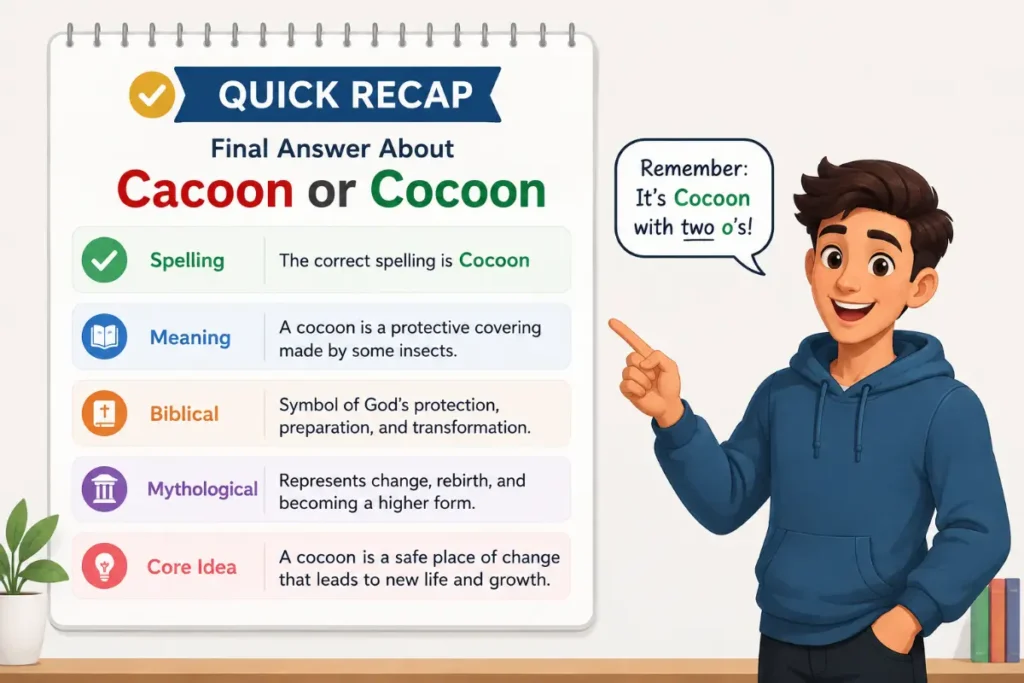
Final Answer About Cacoon or Cocoon Quick Recap.
If you are deciding between both words, the correct answer is simple. Always choose cocoon. It is the only standard English spelling and the one found in dictionaries, books, schools, and professional writing.
A cocoon is the protective covering made by certain insects before they become adults. The word is also used to describe a safe, warm, peaceful place or a time of personal growth. The spelling cacoon has no accepted meaning and should not be used in formal or everyday writing.
The easiest way to remember the correct spelling is to think of a caterpillar growing safely inside a cocoon. That simple picture can help you remember the right word every time.
You may also want to read Stellar vs Steller: Meaning, Spelling, and Usage Explained.
Conclusion
Many people search for words because the two spellings look similar. After learning the simple rule, the answer becomes easy. Cocoon is the correct English word, and cacoon is only a misspelling.
A cocoon can describe the protective covering around an insect or a safe and comfortable place. It is also a symbol of growth, hope, and positive change. These meanings make the word useful in both science and everyday English.
The easiest takeaway is this. If you remember a caterpillar growing safely inside its protective covering, you will remember that the correct spelling is always cocoon, never cacoon.
Frequently Asked Questions
What is the correct spelling?
The correct spelling is cocoon. Cacoon is a common spelling mistake.
What does cocoon mean in simple words?
A cocoon is a protective covering made by some insects. It can also mean a safe or comfortable place.
Can I use cacoon in writing?
No. Standard English uses only cocoon.
Why do people confuse?
The words sound very similar, so many people guess the spelling instead of remembering it.
Is cocoon used only for insects?
No. People also use cocoon to describe safety, comfort, peace, or personal growth.
Is cocoon a positive symbol?
Yes. It often represents protection, hope, change, healing, and new beginnings.
How can I remember the correct spelling?
Think about a caterpillar growing inside a cocoon. That picture makes the correct spelling easy to remember.
