
Many people get confused about wack or whack because the two words look almost the same. You may see both in text messages, songs, social media posts, or everyday conversations. That makes it hard to know which one is right.
The good news is that both words are real English words. They simply have different meanings and are used in different situations. Once you learn the difference, choosing the correct one becomes easy.
This guide explains in very simple English. You will learn what each word means, when to use it, and how native English speakers use them in daily life.
Learn the difference in Footnote Before or After Period? Rule You Can Remember.
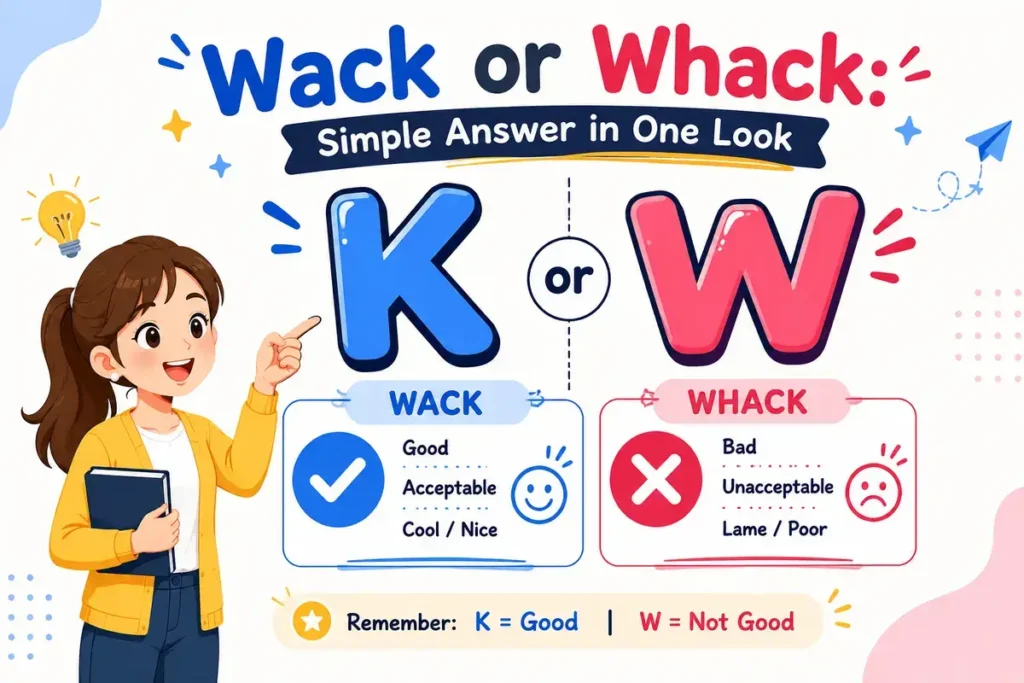
Wack or Whack: Simple Answer in One Look
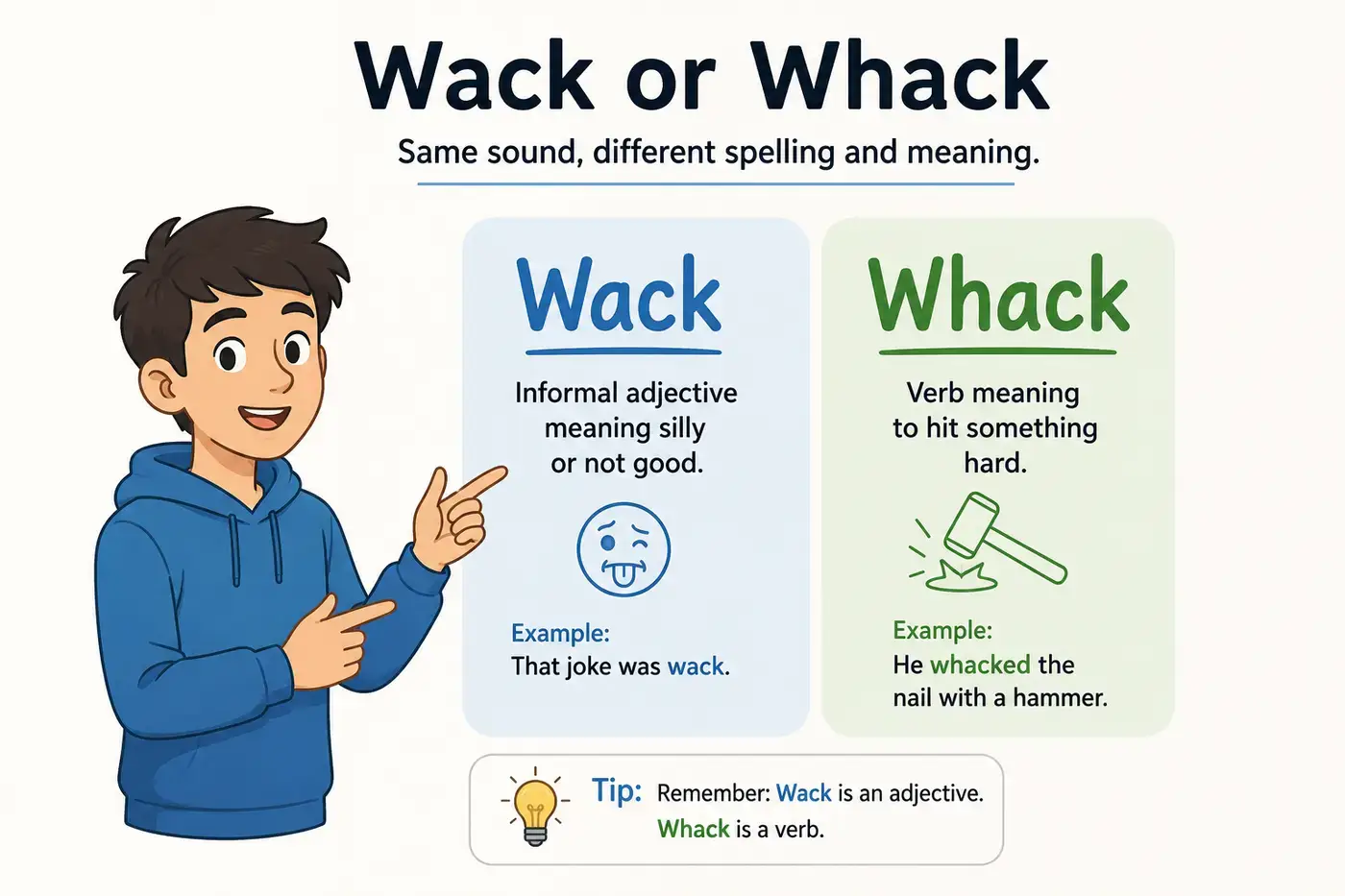
Whack is the standard English word. It usually means to hit something or a hard hit.
Wack is an informal slang word. It means bad, boring, poor quality, or not cool.
What Wack vs Whack Means in Simple English
The easiest way to remember and it is think about what you want to say. If you are talking about hitting someone or something, use whack. Example:
- He gave the ball a big whack.
- She whacked the pillow to remove the dust.
If you are talking about something that is bad, disappointing, or uncool, use wack. Example:
- That movie was wack.
- His excuse sounded wack.
One word talks about action. The other talks about quality or opinion. Here is another simple way to remember them.
- Whack = hit
- Wack = bad
That one rule helps in most situations.
Why People Mix These Words Wack and Whack
Many English learners mix up because they sound exactly the same. English has many words that sound alike but have different spellings and meanings. These are called homophones. There are a few reasons this pair causes confusion.
They Sound the Same
When people speak, you cannot hear the extra h in whack. For example:
“I’ll whack the ball.”
“That game is wack.”
Both sound almost identical.
Slang Is Everywhere
The word wack became popular through music, movies, and internet culture. People started using it to describe things they disliked. For example:
- That joke is wack.
- This song is wack.
- The ending was wack.
Fast Typing Creates Mistakes
When people text quickly, they sometimes forget the h.
Instead of writing:
“I’ll whack the pinata.”
They type:
“I’ll wack the pinata.”
That changes the meaning.
Spell Check Does Not Always Help
Some dictionaries now recognize wack because it has become common slang.
That means spell check may not mark it as an error.
You still need to choose the word that matches your meaning.
Clear Difference Explained Simply
Here is an easy comparison.
| Whack | Wack |
|---|---|
| Standard English word | Informal slang |
| Means to hit | Means bad or uncool |
| Can be a verb or noun | Usually an adjective |
| Used in writing and speech | Mostly casual conversation |
| Accepted in formal writing | Avoid in formal writing |
Think about these examples.
Whack
- Dad used a stick to whack the tree.
- The baseball player gave the ball a strong whack.
- She accidentally whacked her elbow.
Wack
- That restaurant was wack.
- His excuse sounds wack.
- The game became wack after the update.
A Quick Memory Trick
Ask yourself one question.
Am I talking about hitting something?
If the answer is yes, choose whack.
If not, ask another question.
Am I saying something is bad or uncool?
If yes, choose wack.
This simple test works almost every time.
Which Form Should You Use for Wack and Whack?
For most writing, you should choose whack.
Use whack when you mean:
- To hit something.
- A hard hit.
- A sudden strike.
Examples:
- Please don’t whack the table.
- He whacked the baseball over the fence.
- One whack broke the branch.
Use wack only when you mean:
- Bad.
- Low quality.
- Not interesting.
- Not cool.
Examples:
- That concert was wack.
- The ending felt wack.
- His attitude is wack.
In School Writing
Use whack if you mean hitting.
Avoid wack unless you are writing about slang or quoting someone’s speech.
Teachers usually expect standard English.
In Business Writing
Choose whack only if you mean striking something.
Avoid wack because slang sounds too casual for work emails, reports, or professional documents.
In Text Messages
Both words may appear.
Friends often use wack to express an opinion.
For example:
“That update is wack.”
People also use whack correctly.
For example:
“I accidentally whacked my knee.”
Easy Real-Life Sentences You Can Use for Wack or Whack
These examples show how native speakers use each word.
Using Whack
- Don’t whack the door.
- He whacked the ball into the yard.
- I gave the rug one good whack.
- She accidentally whacked her phone off the table.
- The stick gave the fence a loud whack.
Using Wack
- That movie was wack.
- This pizza tastes wack.
- His excuse sounds wack.
- The new game feels wack.
- That idea is pretty wack.
- Their customer service was wack.
- The ending was really wack.
Reading these examples makes the difference much easier to remember.
Where Wack vs Whack Word Expression Comes From
The word whack has been part of English for many years. It has long meant to hit something with force. Over time, people also began using it as a noun to describe a hard hit. For example:
- He gave the ball a good whack.
The slang word wack became popular much later. It grew in American street language and later became common in hip-hop music during the late 1900s. People used it to describe something they thought was poor, weak, boring, or disappointing. Today, wack is widely understood in casual conversations, especially online and in entertainment. Even so, it is still considered slang, so it is not the best choice for formal writing.
As you can see it is not just a spelling problem. Each word has its own meaning, history, and place in English. Knowing these basics gives you a strong foundation. Next, you’ll learn how these words appear in culture, common expressions, and everyday situations, along with more examples that make choosing the right word even easier.
How Wack or Whack Is Understood in Culture and Stories
The words have different places in modern culture. Whack is the older and more traditional word. People have used it for many years in books, stories, movies, and everyday speech. It usually means a hard hit or a quick strike. Sometimes writers also use it to make a scene sound more exciting because the word itself sounds strong. For example:
- The hero gave the villain one hard whack.
- The hammer landed with a loud whack.
You may also hear expressions like “out of whack.” This does not mean someone was hit. Instead, it means something is not working correctly or is out of balance. Examples:
- My schedule is out of whack.
- The weather feels out of whack this year.
The word wack belongs more to modern slang. It became popular through music, movies, television, and the internet. Younger speakers often use it when they dislike something or think it is boring. For example:
- That party was wack.
- This phone update is wack.
Today, both words are easy to recognize, but they belong in different situations.
- Whack is standard English.
- Wack is casual slang.
Knowing this helps you sound natural when speaking or writing.
Still confused? Compare Natzi or Nazi: Which Spelling Is Correct (2026 Guide)?.
Biblical and Mythological Meaning of Wack and Whack
It has a special meaning in the Bible. The slang word wack does not appear in biblical language because it is a modern expression. The word whack is also not used as a special Bible term. Although the Bible describes people striking or hitting objects, it normally uses words like hit, strike, or smite instead.
In mythology, these words also have no special symbolic meaning. So, if you see they are usually being used with their everyday meanings instead of any religious or mythical meaning.
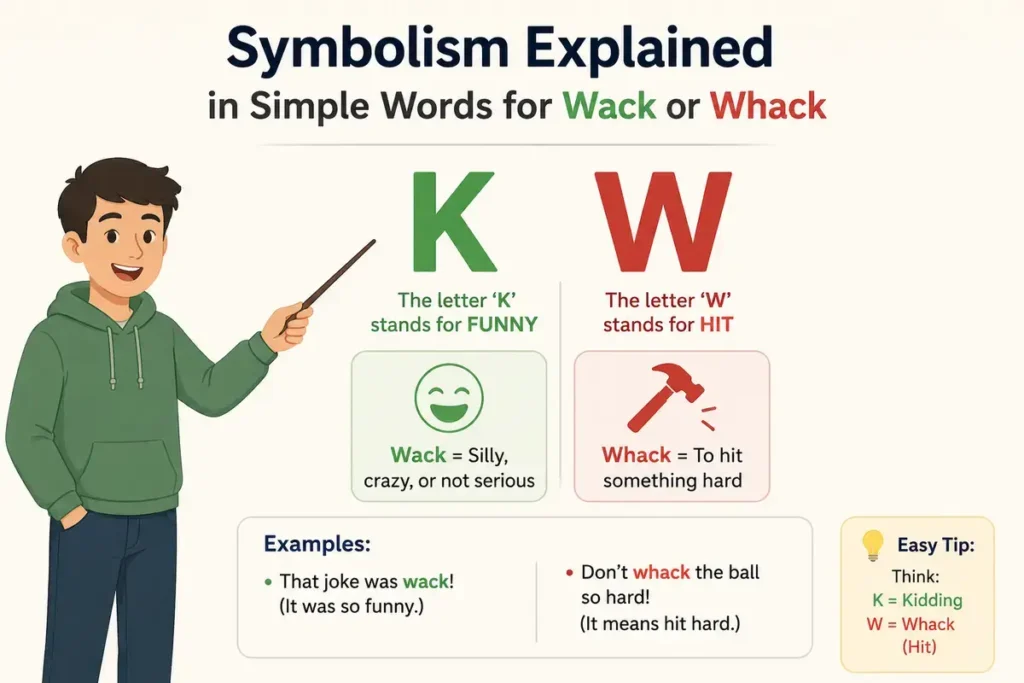
Symbolism Explained in Simple Words for Wack or Whack
Sometimes words make people think about ideas beyond their basic meanings.
What Whack Represents
The word whack often represents:
- Strength
- Action
- Power
- Sudden movement
- A quick change
When someone hears whack, they often imagine something happening fast. For example:
- A baseball hitting a bat.
- A hammer striking a nail.
- A stick hitting a tree.
The word feels active and energetic.
What Wack Represents
The word wack usually represents:
- Disappointment
- Low quality
- Something boring
- Something unpopular
- Something people do not enjoy
When someone says something is wack, they are sharing a negative opinion. Examples include:
- A boring movie.
- A bad joke.
- A poor performance.
- A disappointing game.
Simple Comparison
| Whack | Wack |
|---|---|
| Action | Opinion |
| Strong movement | Negative feeling |
| Something happens | Something is judged |
| Standard English | Informal slang |
| Used everywhere | Mostly casual speech |
This comparison makes the difference much easier to remember.
Related Words You Should Know
Learning similar words helps build your vocabulary.
Hit
To touch something with force. Example:
- He hit the ball.
Strike
A more formal word for hit. Example:
- Lightning struck the tree.
Smack
A quick hit that often makes a sound. Example:
- She smacked the table.
Punch
A hit made with a closed hand. Example:
- He punched the bag.
Slam
To hit something very hard. Example:
- She slammed the door.
Weak
Means not strong.
People sometimes confuse weak with wack, but they have different meanings.
Bad
Means poor quality or not good.
In many casual conversations, bad and wack can express a similar idea.
Awesome
Means very good or impressive.
It is almost the opposite of wack.
Cool
Means interesting, fun, or stylish.
If something is not cool, some people may call it wack.
How People Actually Use Wack or Whack in Daily English
Native speakers use these words in very different ways. Here are some real-life examples.
- Please don’t whack the wall with the broom.
- I accidentally whacked my head on the shelf.
- He gave the baseball a huge whack.
- That new movie was wack.
- Your excuse sounds wack to me.
- This restaurant is wack. Let’s eat somewhere else.
- My alarm clock is out of whack again.
- She whacked the pillow to remove the dust.
- That ending was really wack.
- One strong whack broke the old branch.
Notice something important.
Whenever people mean hitting, they use whack.
Whenever they mean bad or uncool, they use wack.
That simple pattern stays the same in almost every conversation.
Common Mistakes People Make With Wack or Whack
Many learners make the same mistakes. The good news is that they are easy to fix.
Mistake 1: Using Wack Instead of Whack
❌ He wacked the baseball.
✅ He whacked the baseball.
Remember, hitting needs the spelling whack.
Mistake 2: Using Whack to Mean Bad
❌ That movie was whack.
✅ That movie was wack.
If you mean bad or disappointing, use wack.
Mistake 3: Thinking One Word Is Always Wrong
Some learners believe only one spelling exists.
That is not true.
Both words are correct.
They simply mean different things.
Mistake 4: Using Wack in Formal Writing
Because wack is slang, it does not fit every situation.
Instead of writing:
- The company’s service was wack.
A business report should say:
- The company’s service was poor.
Mistake 5: Forgetting the Meaning
Some people only remember the spelling.
Instead, remember the idea.
- Whack = hit
- Wack = bad
That memory trick works quickly.
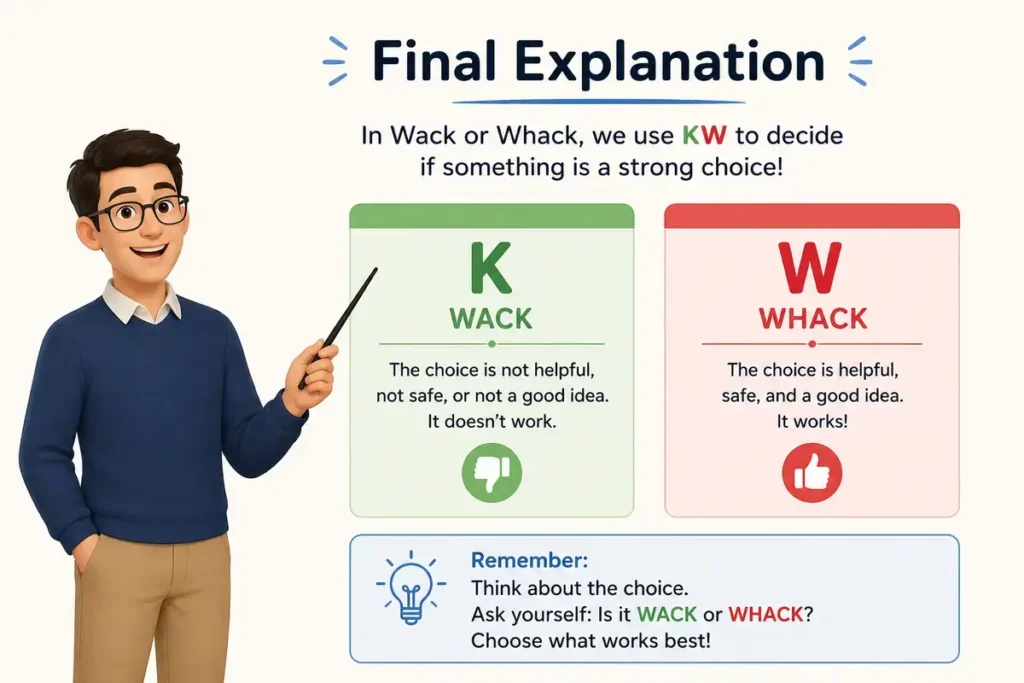
Final Teacher Explanation with Wack and Whack
Imagine I am standing in front of a classroom.
A student asks, “Which one should I use ?”
My answer would be simple. First, think about your meaning. Are you talking about hitting something?
If yes, choose whack.
Are you giving your opinion about something that is boring, poor, or not cool?
If yes, choose wack.
There is no need to make it harder than that. Many English words sound the same but have different meanings. This pair is another good example. The more books you read and the more English you hear, the easier this choice becomes. When writing school papers, essays, business emails, or professional documents, use whack only when you mean striking something. If you want to say something is bad, avoid wack unless you are writing casual dialogue or talking with friends. One final memory trick can help.
Whack makes you think of a hit.
Wack makes you think of a bad opinion.
If you remember those two ideas, you will almost never choose the wrong word.
Final Answer About Wack or Whack
When comparing both words are correct, but they have different meanings. Use whack when talking about hitting or striking something. Use wack as informal slang when you mean something is bad, boring, or uncool. Think “whack equals hit” and “wack equals bad.”
For another common grammar confusion, see Focussing or Focusing: Complete Grammar Guide (2026).
Conclusion
Learning the difference is much easier than it first seems. Whack is the standard English word for hitting or striking something, while wack is informal slang used to describe something that is poor, boring, or uncool. Although they sound exactly alike, they belong in different situations. Keep the simple memory trick in mind and you’ll be able to choose the correct word with confidence every time.
Frequently Asked Questions
What does wack mean in simple words?
Wack is a slang word that means bad, boring, poor quality, or not cool.
What does whack mean?
Whack means to hit something hard or a strong hit.
Is correct?
Both are correct. They simply have different meanings and uses.
Why do people confuse?
They sound the same when spoken, so many people choose the wrong spelling.
Can I use wack in school writing?
It is better not to. Since wack is slang, use more formal words like poor, bad, or disappointing instead.
What does out of whack mean?
It means something is not working properly or is out of balance.
Is whack a verb or a noun?
It can be both. It can mean to hit something or describe the hit itself.
How can I remember the difference?
Remember this simple rule: Whack = hit. Wack = bad.
