
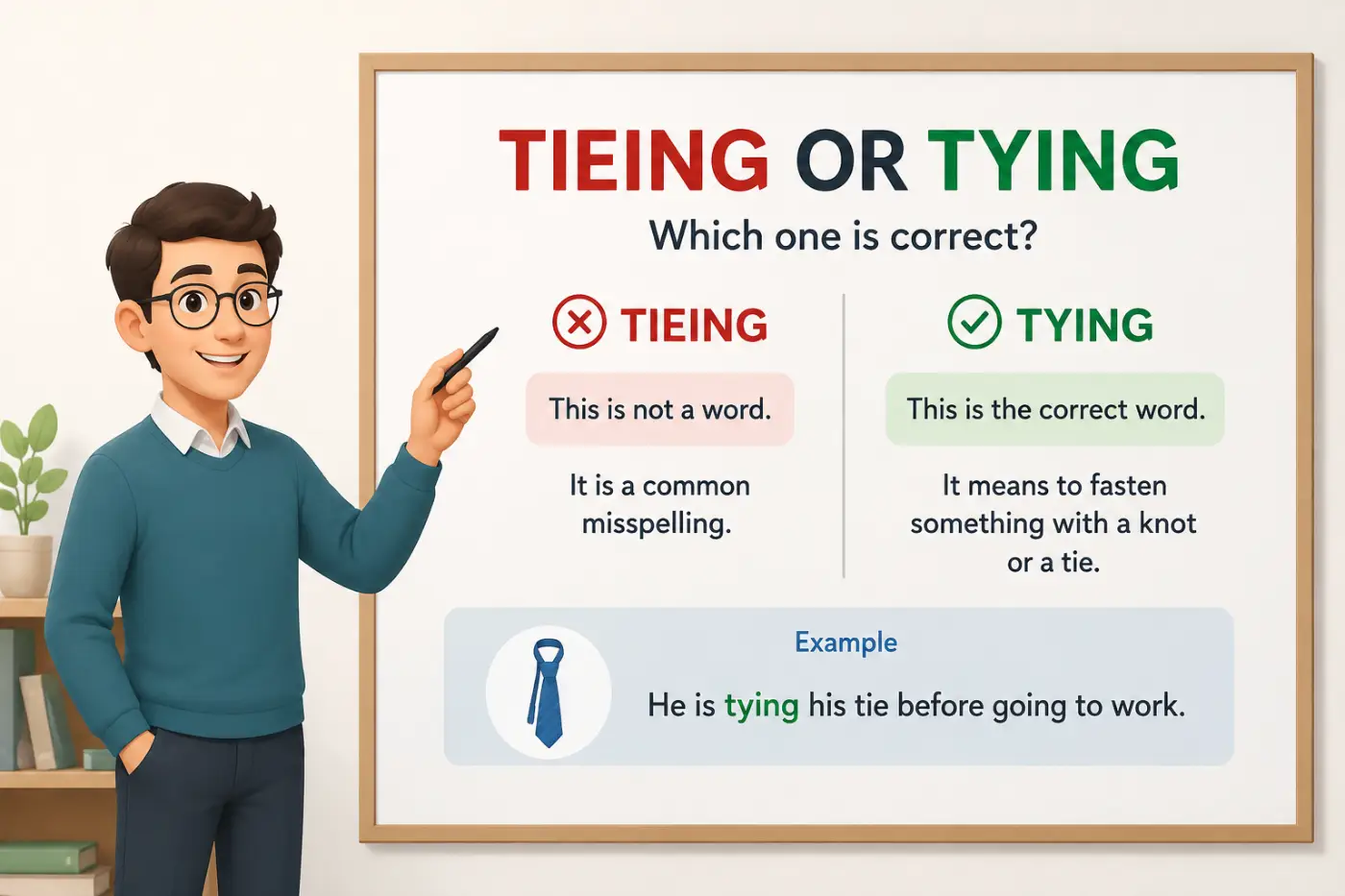
Many people stop for a second when they have to write tieing or tying. Both words look possible. Both seem to follow English spelling rules. Still only one is the standard spelling in modern English.
The short answer is simple. Tying is the correct spelling. Tieing is almost always considered a spelling mistake in modern English. If you are writing for school work business emails social media or everyday conversations you should use tying.
This guide explains in very simple English. You will learn the difference why people get confused how to remember the correct spelling and how to use it with confidence in real life.
Many readers also check Ninth vs Nineth: How Should You Use It (2026)?.
Simple Answer In One Look
Tying is the correct spelling.
Tieing is not the standard spelling and should usually be avoided.
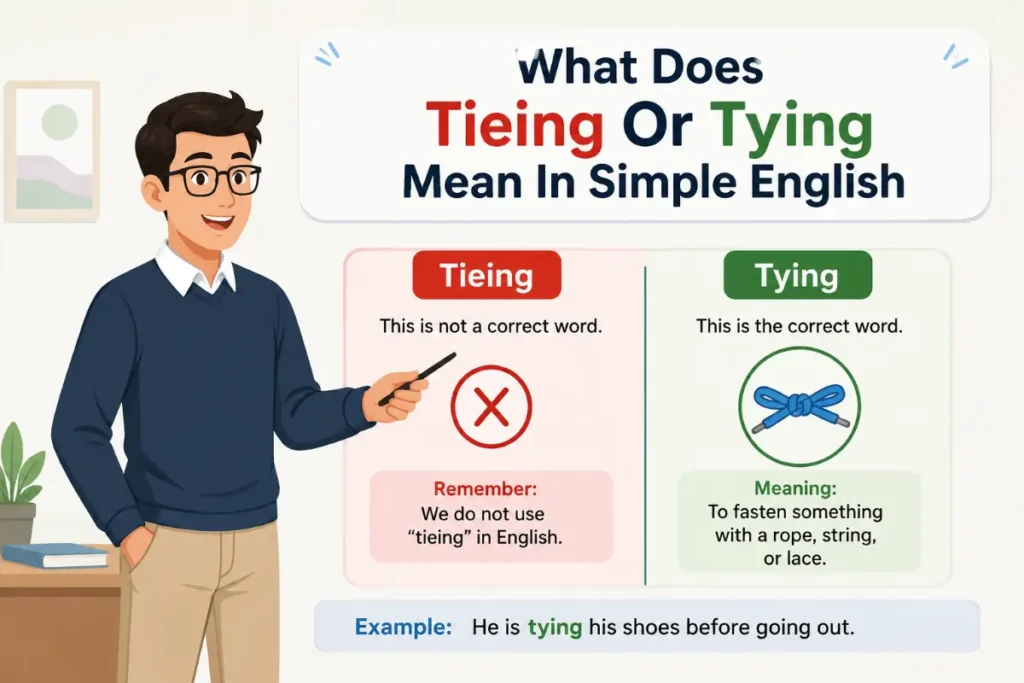
What Does Tieing Or Tying Mean In Simple English
The word tying comes from the verb tie.
To tie means to fasten something with a string rope ribbon lace or another object.
You tie your shoes before you go outside.
You tie a boat to a dock.
When you talk about doing this action right now or about the action in general you use tying.
Examples:
- She is tying her shoes.
- I am tying the package with string.
- They are tying the dog to the fence.
- We spent the morning tying balloons together.
- He is tying his necktie before work.
In all of these examples tying is the correct spelling.
Why Do People Mix These Words
Many English learners wonder about words because the word tie ends with the letter e. People often learn that when a verb ends in e you remove the e before adding ing.
Here are some examples.
- Make becomes making.
- Bake becomes baking.
- Smile becomes smiling.
- Drive becomes driving.
So many people expect tie to become tiing. That does not look right.
Then they think adding another e will fix the problem so they write tieing.
That seems logical but English has a special spelling rule for this word.
Instead of writing tieing the correct spelling changes ie to y before adding ing.
That gives us tying.
The same pattern appears in a few other words.
- Lie becomes lying.
- Die becomes dying.
- Tie becomes tying.
This is why tying looks different from many other words ending with e.
Clear Difference Explained Simply
Here is an easy comparison.
| Word | Correct | Meaning |
|---|---|---|
| Tying | Yes | Fastening something with a knot string ribbon lace or rope |
| Tieing | No | Usually treated as a spelling mistake in modern English |
Remember this simple rule.
If you mean making a knot or fastening something always write tying.
Never use tieing in normal writing.
One Simple Rule
When a verb ends in ie the ie changes to y before adding ing.
Examples:
- Tie becomes tying.
- Lie becomes lying.
- Die becomes dying.
This is one of the easiest ways to remember the correct spelling.
Which Form Should You Use
You should almost always use tying.
Use it in school assignments.
Use it whenever you want correct modern English.
Do not use tieing unless you are talking about an old spelling found in historical texts or discussing spelling itself.
For almost every learner the answer is simple.
Choose tying every time.
Easy Real Life Sentences You Can Use Tieing Vs Tying
These examples show how people naturally use tying in everyday English.
- Mom is tying my shoelaces.
- He is tying a ribbon around the gift.
- They are tying the boat to the dock.
- I am tying my hair before cooking.
- She spent the afternoon tying balloons together.
- We are tying the bags with rope.
- The coach is tying the team’s banner to the fence.
- My brother is tying his tie before school.
Notice that every sentence uses tying.
None of them uses tieing.
Where This Word Comes From Simple History
The word tie has been part of English for hundreds of years. People have used it to mean fastening or joining something with rope string ribbon or cloth. Over time English spelling became more consistent. Writers and dictionaries settled on tying as the standard spelling for the ing form.
That is why modern dictionaries schools newspapers and style guides all use tying. You may occasionally see tieing in very old books or in writing from people who are unsure of the spelling. Modern English almost always prefers tying.
As you keep learning English you will notice that some spellings follow special patterns instead of the most common rule. The word tying is one of those examples. Knowing this small spelling change makes your writing look more natural and helps you avoid a mistake that many learners make. In the next section you will see how tying is used in different situations along with its cultural meaning common mistakes related words and simple tips to remember the correct spelling forever.
How Is Understood In Culture And Stories
The word tying is more than just making a knot. In many cultures it also stands for connection, care, and commitment. When people tie something together, they often think about bringing two things closer.
For example, people tie ribbons on gifts to show love and kindness. Parents tie a child’s shoes before school as an act of care. Friends may tie decorations together during a celebration. These simple actions carry warm feelings.
Stories also use the idea of tying in a symbolic way. A hero may tie a rope to climb a mountain. A sailor may tie a boat before a storm. A camper may tie a tent before sleeping. In each case, tying shows preparation, safety, and responsibility.
You may also hear expressions like “tying up loose ends.” This does not mean making real knots. It means finishing unfinished work before moving on. No matter where you live, the idea of tying often suggests bringing things together in a careful and meaningful way.
You may also want to read Using or Useing: Which Spelling Is Correct?.
Biblical Meaning Of Tieing Or Tying
The Bible does not focus on the spelling. However, it does mention ropes, cords, belts, and binding in many places. Sometimes these objects show strength or protection. Other times they represent promises, responsibility, or unity among people.
For example, cords may be used to hold something firmly. Belts can stand for being ready to work or travel. These ideas remind readers about faithfulness, preparation, and commitment.
The spelling question about words has no special biblical meaning. It is simply an English spelling question. If you are writing about biblical stories in modern English, tying is still the correct spelling.
Symbolism Explained In Simple Words
What Tying Represents
Tying often represents connection and unity.
It can also represent:
- Love between people.
- Friendship.
- Family bonds.
- Responsibility.
- Protection.
- Teamwork.
- Keeping something safe.
- Finishing a task carefully.
These meanings come from the action of bringing things together and keeping them secure.
What Tieing Represents
In modern English, tieing does not have its own symbolic meaning.
People usually see it as a spelling mistake instead of a different word.
If someone writes tieing, readers normally understand that the writer meant tying.
That is why tying carries both the correct spelling and the symbolic meanings connected with the action of tying something together.
Related Words You Should Know
Tie
The base verb. It means to fasten something with a knot, string, ribbon, or rope.
Tied
This is the past form of tie. It means the action has already happened.
Example: I tied my shoes before leaving.
Ties
This is the simple present form used with he, she, or it. It can also mean connections between people or groups.
Example: She ties her hair every morning.
Tie
It can also be a noun. A tie may be neckwear or a game where both sides have the same score.
Example: He wore a blue tie to the meeting.
Knot
A knot is the loop made when something is tied together.
Example: Please make a strong knot.
Rope
A rope is a thick cord used for tying or pulling things.
Example: They used a rope to pull the boat.
Ribbon
A ribbon is a soft strip of fabric often used for tying gifts or decorations.
Example: She tied the ribbon around the box.
Lace
A lace is a string used to fasten shoes or clothing.
Example: My shoe lace came loose.
Fasten
Fasten means to close, attach, or secure something.
Example: Please fasten your seat belt.
Bind
Bind means to tie things tightly together.
Example: They bound the papers with string.
How People Actually Use Tieing And Tying In Daily English
People use tying every day in many situations.
Here are some natural examples.
- I am tying my shoes before we leave.
- She is tying her hair because it is windy.
- Dad is tying the boxes with rope.
- We spent an hour tying balloons for the party.
- He is tying the dog to a tree for a few minutes.
- They are tying the boat before the rain starts.
- The teacher is tying a ribbon around the prize.
- My little sister is learning how to tie her shoes.
- We are tying the garden plants to wooden sticks.
- I finished tying the package before the mail arrived.
These are the kinds of sentences you hear in everyday American English.
Common Mistakes People Make
Many learners make the same spelling mistakes. The good news is that they are easy to fix.
Mistake: Tieing my shoes takes only a minute.
Correct: Tying my shoes takes only a minute.
Mistake: She is tieing a ribbon.
Correct: She is tying a ribbon.
Mistake: They were tieing the boat.
Correct: They were tying the boat.
Another common mistake is thinking that every word ending in e simply drops the e before adding ing.
The word tie follows a different spelling pattern.
Remember this simple rule.
If the verb ends in ie, change ie to y before adding ing.
Tie becomes tying.
Lie becomes lying.
Die becomes dying.
This one rule will help you avoid the mistake almost every time.
Final Teacher Explanation About Tieing Vs Tying
Imagine you are sitting in an English class and someone asks which spelling is correct.
The answer is easy.
Use tying.
Do not use tieing in normal modern English.
The spelling changes because English replaces ie with y before adding ing.
You do not need to memorize a long grammar rule. Just remember three common words.
Tie becomes tying.
Lie becomes lying.
Die becomes dying.
When you remember these three examples, you will almost always spell the word correctly.
The next time you write about shoes, ropes, ribbons, boats, gifts, or anything else that needs a knot, you can confidently choose tying.
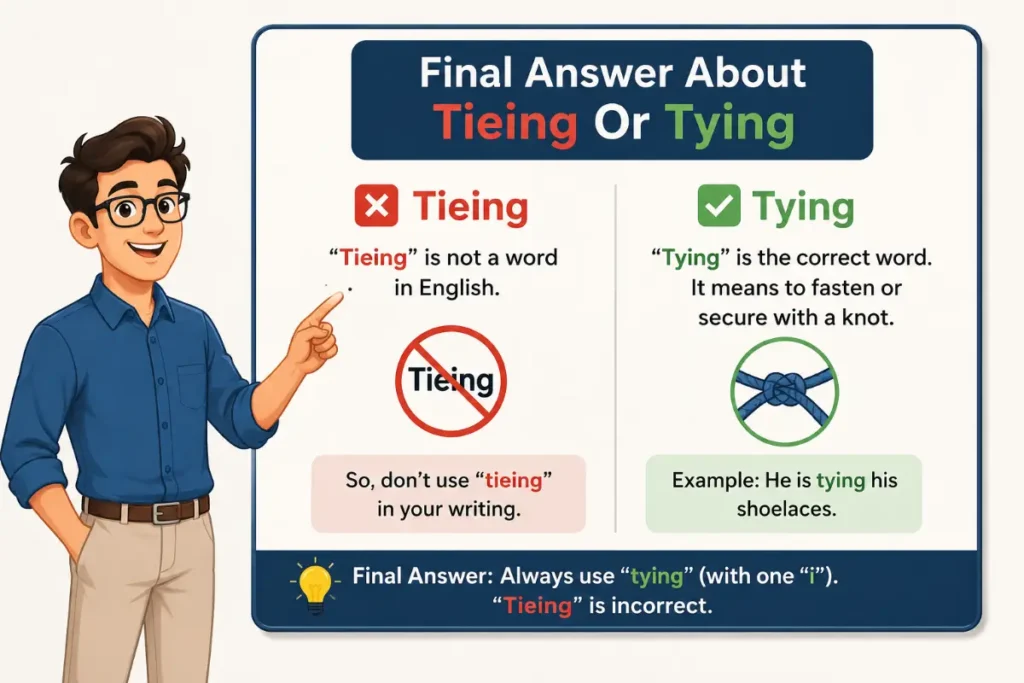
Final Answer About Tieing Or Tying
If you are wondering about both words, the correct answer is tying. It is the standard spelling used in modern English books, schools, websites, newspapers, and everyday writing.
People sometimes write tieing because it seems to follow a normal spelling pattern. However, English changes ie to y before adding ing. That is why tying is correct and tieing is usually treated as a spelling mistake.
The easiest way to remember this is to think of three words together. Tie becomes tying. Lie becomes lying. Die becomes dying.
Learn the difference in Lacs or Lakhs: Which Is Correct? Simple Meaning and Difference.
Conclusion
After reading this guide, you no longer have to guess between words. The correct spelling is tying, and it is the form you should use in almost every situation.
This small spelling change follows a special English pattern. Once you remember that ie changes to y before adding ing, the answer becomes easy.
The best takeaway is simple. When you see tieing or tying, always choose tying for clear, correct, and natural English.
Frequently Asked Questions
What is the correct spelling?
Tying is the correct spelling. Tieing is not the standard form in modern English.
Why does tie become tying?
The letters ie change to y before adding ing. This is the same pattern as lie becoming lying.
Is tieing ever correct?
In modern English, it is almost always considered incorrect. You should use tying instead.
Can I use tying in formal writing?
Yes. Tying is correct for school work, business writing, emails, and everyday English.
Why do people confuse?
Many people expect tie to follow the usual rule for adding ing. This special spelling pattern makes the word confusing at first.
How can I remember the correct spelling?
Think of these three words together: tie becomes tying, lie becomes lying, and die becomes dying.
Is tying used only for ropes?
No. You can use tying for shoes, ribbons, hair, balloons, boats, packages, and many other things that are fastened.
