
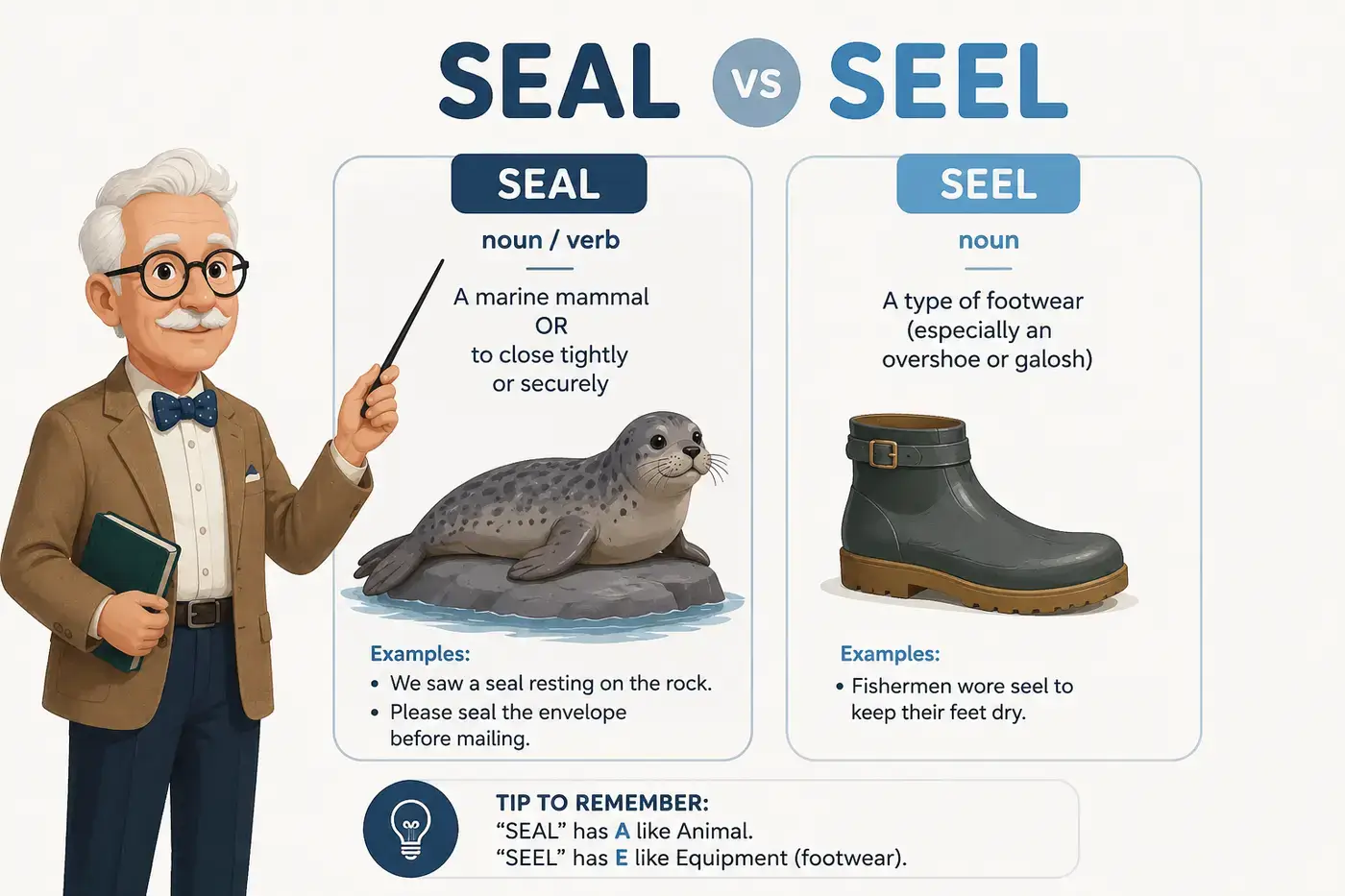
Many English learners get confused about seal vs seel because the two words look almost the same. You may wonder which spelling is correct and when you should use each one. The good news is that the answer is simple once you know the meaning of each word.
In most everyday writing, seal is the correct word. It is a common English word with several meanings. Seel is a very rare word that most people never use in normal conversation or writing. That is why many people think it is just a spelling mistake.
This guide will explain in very simple English. You will learn what each word means, why people mix them up, which one you should use, and how to remember the correct spelling with easy examples.
You may also want to read Kinesthesiology vs Kinesiology: A Simple Guide for Beginners.
Simple Answer in One Look: Seal vs Seel
When comparing seal is the correct word in almost every situation.
Seal is a common English word.
Seel is an old and very uncommon word that is almost never used in modern English.
If you are writing school work, emails, stories, or everyday messages, use seal.
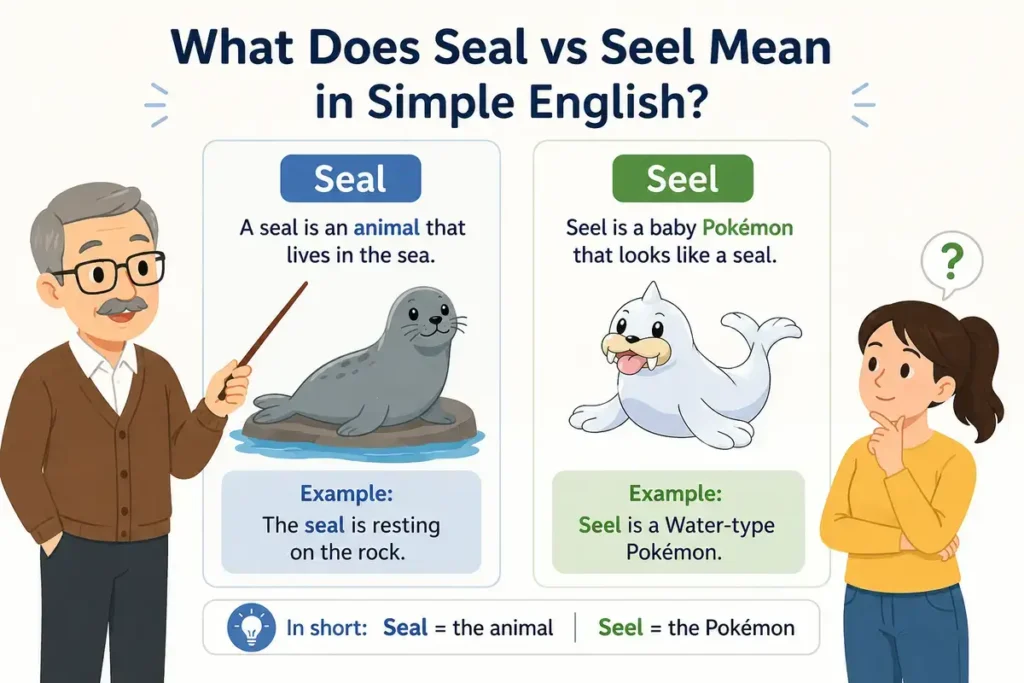
What Does Seal vs Seel Mean in Simple English?
To understand both words you first need to know what each word means.
What Does “Seal” Mean?
The word seal has several common meanings. It can mean to close something tightly.
Examples:
- Please seal the envelope before you mail it.
- Make sure the lid is sealed.
- The worker sealed the package.
It can also mean an official mark or stamp.
Examples:
- The document has the company’s seal.
- The letter carries a royal seal.
It can also be the name of a sea animal.
Examples:
- We watched a seal swim at the zoo.
- The baby seal stayed close to its mother.
As you can see, seal is used in many everyday situations.
What Does “Seel” Mean?
The word seel is very rare. Long ago, it meant to partly close the eyes of a hunting bird, such as a falcon, so the bird would stay calm during training. This practice is no longer common, and the word is almost never used outside old books or historical writing. Because it is so rare, many dictionaries label seel as an old or obsolete word. For most people, seel is not a word they will ever need to use.
Why Do People Mix Up Seal vs Seel?
Many people confuse about both words for a few simple reasons.
They Look Almost the Same
Only one letter is different.
- seal
- seel
When reading quickly, they can look alike.
They Sound Similar
Some speakers pronounce them almost the same. That makes spelling harder.
Typing Mistakes
People often type quickly. Their fingers may hit the wrong letters. Spell check may also miss the mistake if seel is accepted as a real word.
English Has Many Similar Words
English includes many words that differ by only one letter. Because of this, learners often stop and ask:
- Which is correct?
- Which spelling should I use?
- Is seel a real word?
These are very common questions.
Clear Difference Explained Simply
Here is the easiest way to remember the difference.
| Seal | Seel |
|---|---|
| Very common word | Very rare word |
| Used every day | Mostly found in old books |
| Means close tightly, official mark, or sea animal | Old word about training hunting birds |
| Correct in normal writing | Almost never needed today |
Think About It Like This
If you are writing about:
- closing a box
- closing an envelope
- a sea animal
- an official stamp
Use seal. If you are reading very old English about falcon training, you may see seel. That is almost the only time you will find it.
Quick Memory Trick
Seal has the letter A.
Think of A for Always used.
Seel has two E’s.
Think of the extra E as meaning Extremely rare.
This small trick can help you remember the correct spelling.
Which Form Should You Use? Seal vs Seel
If you are choosing between both words the answer is almost always seal. Use seal when talking about:
- closing something
- protecting something
- an official stamp
- a sea animal
- making something airtight
- finishing an agreement
Do not use seel unless you are discussing historical falconry or reading very old English texts. For nearly everyone, seal is the right choice. Here is a simple rule. If you are unsure, write “seal.” You will almost always be correct.
Easy Real-Life Sentences You Can Use with Seal vs Seel
These examples show how seal is used in everyday English.
- Please seal the package before shipping it.
- The bottle has a tight seal.
- We saw a playful seal at the aquarium.
- The judge placed an official seal on the paper.
- Seal the bag to keep the food fresh.
- Dad used tape to seal the box.
- Always check that the lid forms a good seal.
- The seal clapped its flippers during the show.
Now look at an old example with seel.
- The old book says the falconer would seel the bird before training it.
You will probably never need to write a sentence like this in daily life.
Where Does Seal vs Seel Come From? Simple History
The history of both words helps explain why one word is common and the other is rare. The word seal has been part of English for hundreds of years. It came from older languages that described closing something securely. Over time, English speakers also used it for official stamps because a stamp closed or confirmed an agreement. The animal name seal comes from a different old language family, but the spelling became the same.
Today, both meanings are part of modern English. The word seel also has a long history, but it followed a different path. It was mainly used by people who trained hunting birds like falcons. Since very few people do that today, the word slowly disappeared from everyday English. That is why modern dictionaries still include seel, but they mark it as an old or uncommon word.
Most students, writers, and English learners will only need the word seal. As you continue learning it also helps to understand how these words appear in stories, history, symbols, and culture. The next section explains those deeper meanings in simple language and shows why seal is still common while seel has almost disappeared.
How Is Seal vs Seel Understood in Culture and Stories?
The words have very different places in culture and stories. The word seal appears in many books, movies, children’s stories, and everyday conversations. It is a word that most people know. Sometimes it means the friendly sea animal. Other times it means closing something safely or making an agreement official.
For example, a king may place a seal on an important letter. A company may use its official seal on legal papers. A family may seal food to keep it fresh. The animal seal is also popular in children’s books. People often see seals as playful, smart, and friendly because they enjoy swimming, diving, and resting on rocks near the sea.
The word seel is very different. Most people have never seen it unless they read old books or stories about falconry. Since it belongs to older English, it does not appear in normal conversations today. If you ask an English speaker they will almost always recognize seal but may not know that seel is even a real word. That is why modern writers almost never choose seel.
For another common grammar confusion, see Transferred or Transfered: Simple Guide to Spelling and Meaning.
Does Seal vs Seel Have Biblical or Mythological Meaning?
When discussing only seal has some connection to the Bible. In the Bible, the word seal often means something is made official, protected, or confirmed. For example, a letter could be sealed to show that no one should open it without permission. A seal could also show ownership or authority.
These meanings are about trust, protection, and truth. The sea animal called a seal does not have a special biblical meaning. The word seel does not have a well-known biblical meaning. It is also not an important word in mythology. Since seel was mainly used in old falcon training, it has little connection to religious or mythological stories. So if someone asks in the Bible, they are almost always talking about seal, not seel.
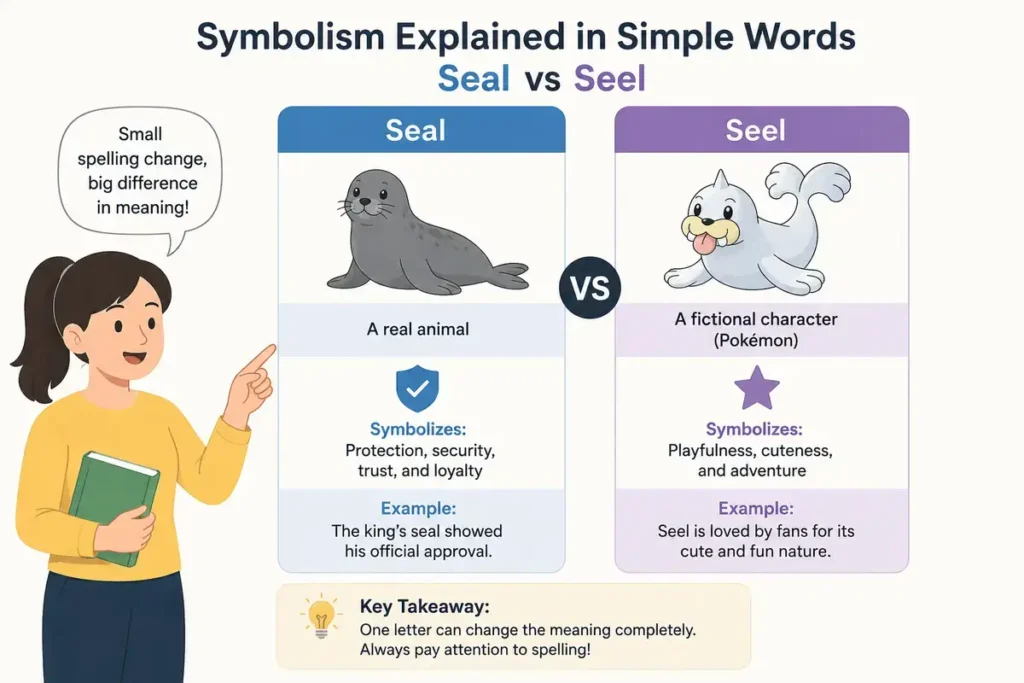
Symbolism Explained in Simple Words: Seal vs Seel
Words can have meanings beyond their dictionary definitions. Here is the simple symbolism behind.
What Does Seal Represent
The word seal often represents:
- Protection
- Safety
- Trust
- Promise
- Approval
- Security
- Completion
For example, sealing a letter means keeping it safe until the right person opens it. A wedding may be described as “sealed with a promise.” A business agreement may be “sealed” after both people agree. The animal seal can also symbolize:
- Playfulness
- Curiosity
- Adaptability
- Peace near the ocean
These are positive ideas that many people understand.
What Does Seel Represent
The word seel represents something very different. Historically, it referred to controlling a hunting bird during training. Because of that history, it may symbolize:
- Old traditions
- Falcon training
- Historical practices
- Ancient English writing
These meanings are very uncommon today. Most modern readers never connect any symbolism with seel because they rarely see the word. This is another reason why seal is much more useful than seel.
Related Words You Should Know About Seal vs Seel
Learning related words makes even easier to remember.
Sealed
Means something has been closed tightly.
Example: The box is sealed.
Sealing
Means the act of closing something.
Example: She is sealing the envelope.
Sealant
A material used to stop air or water from getting through.
Example: The worker used sealant around the window.
Signature
A person’s written name.
A signature and a seal can both show approval.
Stamp
A mark placed on paper.
Some official stamps are called seals.
Envelope
An envelope is often sealed before mailing.
Falcon
A hunting bird connected with the old meaning of seel.
Falconry
The practice of training falcons for hunting.
This is where the rare word seel was mostly used.
How Do People Actually Use Seal vs Seel in Daily English?
In real life, people almost always use seal. Here are some everyday examples.
- Please seal the bag before putting it away.
- I forgot to seal the envelope.
- The bottle has a broken seal.
- We watched a seal swimming near the beach.
- The company added its official seal.
- Seal the window so cold air stays outside.
- The food stayed fresh because the container had a good seal.
- The deal was sealed with a handshake.
- Check that the jar is fully sealed.
- The children loved watching the seals at the aquarium.
Notice something important. None of these examples use seel. That is because seel almost never appears in normal English today. If you accidentally write seel, most readers will think you made a spelling mistake.
Common Mistakes People Make with Seal vs Seel
Many learners make the same mistakes when comparing.
Mistake 1: Using Seel Instead of Seal
❌ Please seel the package.
✅ Please seal the package.
This is the most common mistake.
Mistake 2: Thinking Seel Is the Modern Spelling
Some learners believe both spellings are equally correct.
They are not.
Seal is the modern everyday word.
Mistake 3: Using Seel for the Animal
❌ We saw a seel at the zoo.
✅ We saw a seal at the zoo.
The sea animal is always spelled seal.
Mistake 4: Using Seel in School Writing
Students sometimes choose seel because it looks unusual.
This only creates confusion.
Use seal unless you are writing about historical falconry.
Mistake 5: Forgetting the Rare Meaning of Seel
Some people think seel is simply a typo.
It is actually a real English word.
It is just very old and very uncommon.
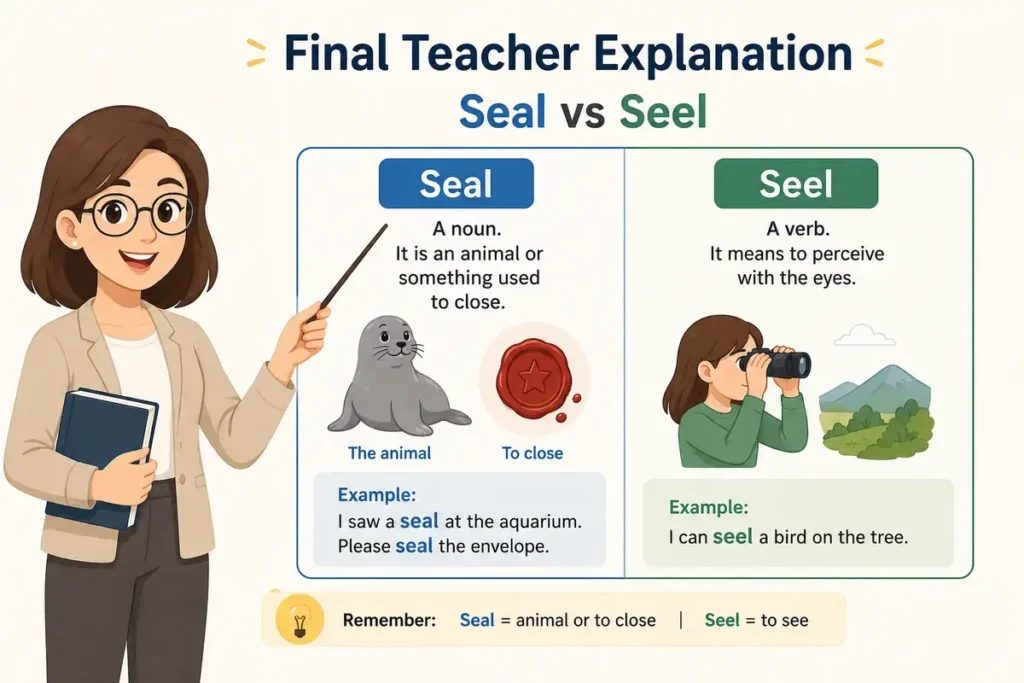
Final Teacher Explanation of Seal vs Seel
Now you know the full story behind. Think of it the same way a teacher would explain it in class. The word seal is one you will use many times in your life. You can use it when talking about:
- closing something
- keeping something safe
- official documents
- agreements
- the sea animal
It is a normal, everyday English word. The word seel is completely different. It belongs to older English and was mainly used by people who trained hunting birds. Very few people use it today. If you are writing homework, emails, reports, stories, or social media posts, seal is almost always the correct spelling. Here is one easy rule to remember. If you mean the animal or closing something, always write “seal.” That simple rule will help you avoid mistakes nearly every time.
Final Answer: Seal vs Seel
When choosing between both words seal is the correct word for almost every modern situation.
Seel is an old English word that is rarely used today and mainly appears in historical writing about falconry.
If you are unsure which spelling to choose, use seal. It is the correct choice for everyday English.
Need another quick comparison? Read Specialty or Speciality: Meaning, Difference, and Guide.
Conclusion
Understanding is much easier than it first seems. While the two words look alike, they have very different meanings and uses. Seal is a common English word that can mean to close something, an official mark, or a sea animal. Seel is a rare historical word that was used in falcon training and is almost never seen in modern English.
For school, work, emails, stories, and daily conversations, seal is the spelling you should use. Remember the simple rule: if you mean the animal, closing something, or making something official, choose seal every time.
Frequently Asked Questions (FAQs)
What does seal mean in simple words?
Seal means to close something tightly, an official mark, or a sea animal.
Is seel a real English word?
Yes. It is a real word, but it is very old and rarely used today.
Which is correct: seal or seel?
For almost all modern writing, seal is correct.
Why do people confuse?
The words look and sound similar, so people sometimes think they are different spellings of the same word.
Can I use seel in everyday writing?
No. Most readers expect the word seal. Use seel only when discussing historical falconry or old English texts.
Is seal the name of a sea animal?
Yes. A seal is a marine mammal that lives in oceans and along coastlines.
Does seel have the same meaning as seal?
No. Seal has many modern meanings. Seel is an old word that referred to partially closing a hunting bird’s eyes during training.
How can I remember the difference?
Remember this simple tip: Seal is the everyday word you use for closing things, official marks, and the sea animal. Seel is an old word that most people never use.
