
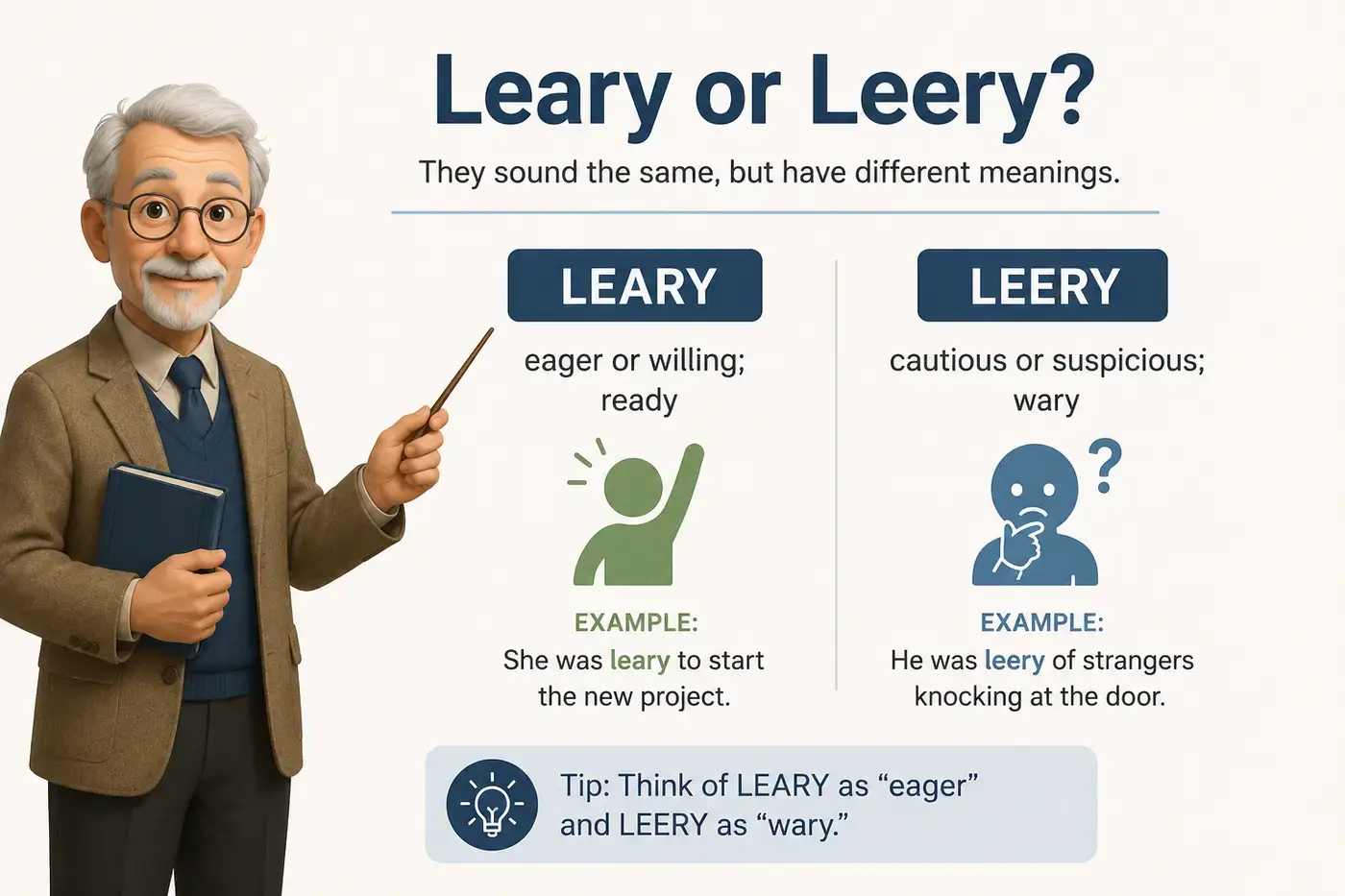
Many people search for leary or leery because both words look similar. They also sound close when spoken. This makes many English learners wonder which spelling is correct. The good news is that the answer is simple once you know the meaning.
If you are confused about you are not alone. Even native English speakers sometimes mix them up. One word is the correct English spelling in most situations, while the other is usually a mistake or a different name.
This guide will explain everything in very simple English. You will learn the difference, understand the meaning, see real-life examples, and know exactly which word to use in your writing and conversations.
Need another quick comparison? Read Scarey or Scary: Common Mistakes Explained Simply Today.
Leary or Leery: Simple Answer in One Look
Leery is the correct English word. It means careful, cautious, or not fully trusting someone or something.
Leary is usually a misspelling, although it can also be a person’s last name.
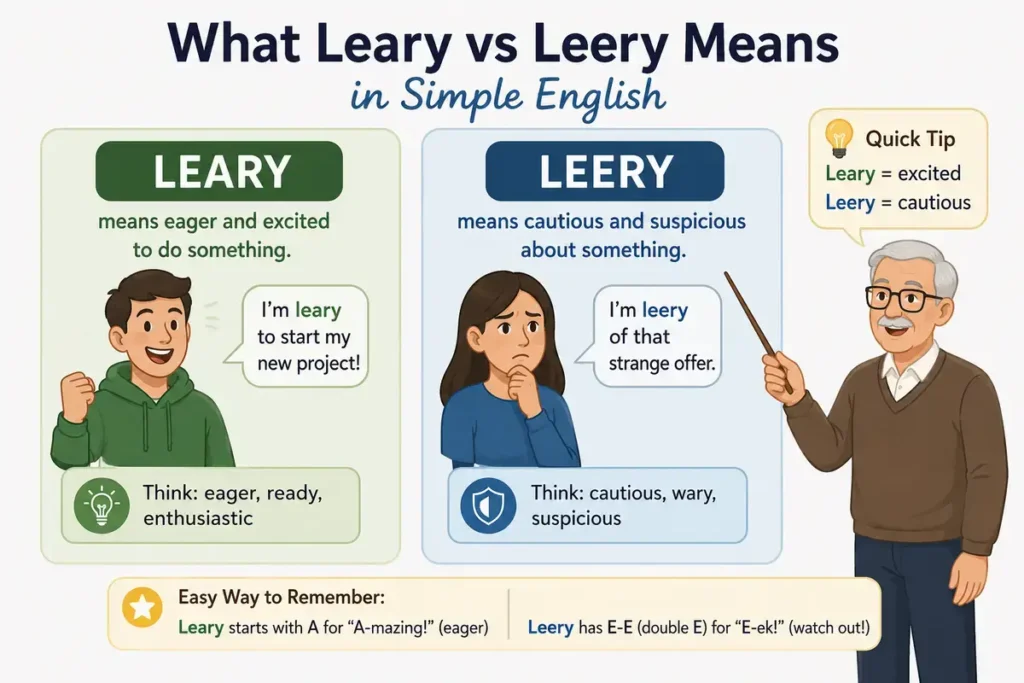
What Leary vs Leery Means in Simple English
When someone is leery, they feel unsure about a person, place, or situation. They think something may not be safe or honest, so they stay careful. Think about meeting a stranger who asks for your bank details online. You might feel leery because you do not fully trust that person. Being leery does not always mean you are afraid. It simply means you are careful before making a decision. Here are some simple ways to understand the word.
- You do not trust something right away.
- You want to be careful.
- You think there could be a problem.
- You wait before saying yes.
- You pay close attention because something feels strange.
People become leery in many everyday situations. For example:
- You are leery of buying from a new website.
- You are leery about walking alone at night.
- You are leery of answering unknown phone calls.
- You are leery of promises that sound too good to be true.
In each example, the person is simply being careful. Some easy words with a similar meaning include:
- Careful
- Cautious
- Suspicious
- Doubtful
- Watchful
- Wary
- Guarded
These words are close in meaning, but leery is often used when you do not fully trust someone or something.
Why People Mix These Words Leary and Leery
Many people search because the words look almost the same. There are several simple reasons for the confusion.
They Sound Similar
In fast speech, some people pronounce the words in a way that makes them sound almost alike. If you only hear the word and never see it written, you may guess the wrong spelling.
The Letters Are Very Close
The only difference is one letter.
- Leary
- Leery
Because the spellings are so close, typing mistakes happen often.
Spell Check Does Not Always Help
The word Leary is also a real surname. For example, someone may have the last name Leary. Because of this, some writing programs do not always mark it as an error.
This can make people think Leary is another correct spelling of leery, but it is not.
People Learn the Word by Hearing It
Many English learners hear the word in movies, TV shows, or conversations before they ever read it. Without seeing the correct spelling, it is easy to write leary.
Similar English Words Cause Confusion
English has many words that look alike but have different meanings or spellings. For example:
- Quiet and quite
- Accept and except
- Than and then
- Loose and lose
It is another common spelling confusion.
Clear Difference Explained Simply
The easiest way to remember the difference is this.
| Word | Is it correct? | Meaning |
|---|---|---|
| Leery | ✅ Yes | Careful, cautious, not trusting something fully |
| Leary | ❌ Usually no | Usually a spelling mistake, but sometimes a surname |
Here is another simple comparison.
Leery
- Correct English adjective.
- Means cautious.
- Used in speaking and writing.
- Found in dictionaries.
Example:
I am leery of giving my password to strangers.
Leary
- Usually not the word you want.
- Often just a typing mistake.
- Can be someone’s family name.
Example:
Mr. Leary is our new teacher.
Notice the difference.
In the first sentence, leery describes a feeling.
In the second sentence, Leary is a person’s name.
Quick Memory Trick
Remember the double e in leery.
Think of the two e letters as two careful eyes looking around before trusting someone.
Two e’s = extra careful.
This little trick helps many learners remember the correct spelling.
Which Form Should You Use for Leary or Leery?
For almost every English sentence, you should use leery. Use leery when you want to say someone is careful or does not completely trust something. Examples:
- She is leery of online scams.
- We were leery about signing the contract.
- They became leery after hearing the news.
- I am leery of fake emails.
Do not use leary unless you are writing someone’s name. For example:
- Sarah Leary started the meeting.
- Mr. Leary lives next door.
If you are writing about being careful or cautious, the correct spelling is always leery. Here is a simple rule.
Feeling careful or suspicious? Use “leery.”
Talking about a person’s last name? “Leary” may be correct.
When you remember this rule, choosing between becomes very easy.
Easy Real-Life Sentences You Can Use for Leary and Leery
These examples show how people naturally use leery in everyday English.
- I am leery of clicking strange links.
- She felt leery after receiving a fake message.
- We are leery about spending too much money.
- My parents are leery of unknown phone calls.
- He became leery when the price seemed too low.
- They were leery of the dark road at night.
- I am leery about sharing personal information online.
- The dog was leery of the loud noise.
Now compare them with incorrect examples.
❌ I am leary of fake websites.
✅ I am leery of fake websites.
❌ She felt leary about the offer.
✅ She felt leery about the offer.
Reading correct examples again and again is one of the best ways to remember the right spelling.
Where This Word Comes From (Simple History)
The word leery has been part of English for a long time. It became popular in the 1800s. At first, it meant someone who was clever, alert, or watchful. Over time, the meaning slowly changed. Today, leery mainly means being careful because you do not completely trust a person or situation. That meaning fits how people use the word now.
The spelling leary did not become another accepted English word with the same meaning. Instead, it remained mostly a family name. That is why dictionaries list leery as the correct adjective. As English changed through the years, leery stayed the standard spelling used in books, newspapers, schools, and everyday conversations.
Understanding a word’s history can make it easier to remember. In the next part, you will see how leery is used in stories, culture, everyday life, and common expressions. You will also learn extra tips that help you remember the correct spelling every time without guessing.
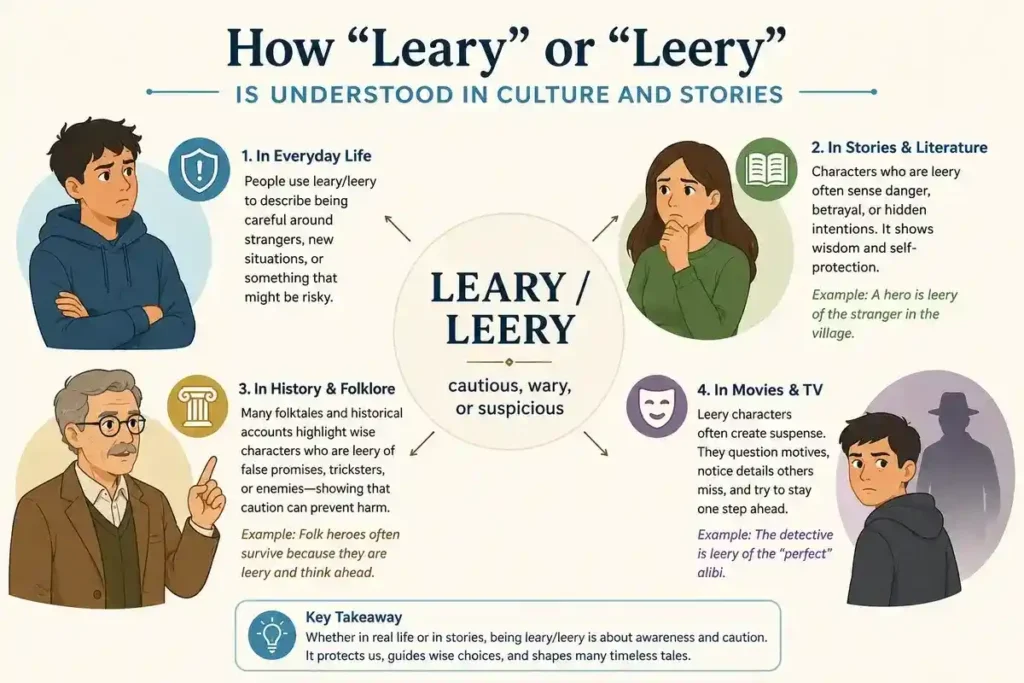
How Leary or Leery Is Understood in Culture and Stories
The word leery often appears in stories when a character feels careful before trusting someone. It helps readers understand that the person senses something may not be right.
For example, a traveler may be leery of a stranger who offers help in a dark forest. A child may be leery of entering an old house with strange noises. These situations do not always end badly. They simply show that the character is being careful.
Many mystery books use this feeling to build suspense. A detective may become leery after finding clues that do not match. A family may become leery when a new neighbor behaves in a strange way. Movies and TV shows also use this word. You may hear someone say: “I’m a little leery about this plan.”
That tells the audience the person does not fully trust what is happening. In everyday culture, being leery is often seen as a smart habit. People are told to be leery of fake emails, online scams, and strangers asking for personal information. Being leery does not mean being rude. It simply means thinking carefully before taking action.
Learn the difference in Comming vs Coming: Rule Every Student Needs (2026).
Biblical and Mythological Meaning of Leary vs Leery
The word leery does not appear as an important Bible word. It is also not a special word in Greek, Roman, or other famous myths. However, the idea behind leery appears many times. In the Bible, people are often encouraged to use wisdom, stay alert, and avoid people who try to deceive others. These ideas are close to the meaning of being leery.
In many old myths, heroes do not trust every stranger they meet. They stay careful because danger can be hidden behind a friendly face. So, while leery is not a biblical or mythological term, its meaning fits many stories that teach people to be wise and careful.
Symbolism Explained in Simple Words
Words often carry ideas beyond their dictionary meaning. The comparison between is a good example.
What Leery Represents
The word leery often represents:
- Carefulness
- Good judgment
- Self-protection
- Thinking before acting
- Learning from past mistakes
- Staying alert
Someone who is leery is not always scared. Instead, they pay attention before making a decision. For example, if you receive an email asking for your password, feeling leery helps protect you from scams. The word reminds us that being careful is sometimes the smartest choice.
What Leary Represents
Most of the time, Leary does not represent a feeling or idea. It is mainly used as a family name. Examples include:
- Sarah Leary
- Michael Leary
- Mr. Leary
If you write leary when you mean “careful,” readers may think you made a spelling mistake or are talking about someone’s name. That is why leery is the correct choice in normal English writing.
Related Words You Should Know about Leary or Leery
Learning similar words makes English easier.
Wary
Means careful because something may be dangerous.
Example: Stay wary of fake websites.
Cautious
Means thinking carefully before doing something.
Example: She was cautious while crossing the busy street.
Suspicious
Means believing something may be wrong.
Example: The message looked suspicious.
Doubtful
Means you are not sure something is true.
Example: He was doubtful about the promise.
Guarded
Means careful about showing trust or feelings.
Example: She gave a guarded answer.
Alert
Means ready to notice problems.
Example: Drivers should stay alert at night.
Careful
Means avoiding mistakes or danger.
Example: Please be careful with the glass.
Skeptical
Means you do not easily believe something.
Example: I am skeptical of unbelievable offers.
These words are close in meaning, but leery is often the best choice when you feel unsure about trusting someone or something.
How People Actually Use Leary and Leery in Daily English
People almost always use leery in daily conversation. Here are some natural examples.
- I’m leery of buying things from unknown websites.
- She’s leery about giving out her phone number.
- We’re leery of promises that sound too perfect.
- Dad is leery of driving during heavy storms.
- My friend became leery after reading the reviews.
- They were leery of investing without learning more.
- I’m leery of opening strange email attachments.
- He feels leery whenever someone asks for money online.
- The teacher was leery of the excuse because it did not sound true.
- Many shoppers are leery of fake online stores.
These examples sound natural because this is how native English speakers commonly use the word.
Common Mistakes People Make with Leary or Leery
Many learners make the same small mistakes.
Mistake 1: Writing
❌ I am leary of strangers.
✅ I am leery of strangers.
Mistake 2: Thinking Both Spellings Mean the Same Thing
Many people believe both spellings are accepted.
They are not.
Only leery means careful or cautious.
Mistake 3: Using the Wrong Word in School Writing
Teachers usually expect the correct spelling.
Always write leery unless you are writing someone’s last name.
Mistake 4: Forgetting the Double “E”
Many people leave out one e.
Remember this easy trick.
Two e’s help you keep two eyes open.
Two careful eyes remind you to stay alert.
Mistake 5: Confusing It with Similar Words
Some learners mix leery with:
- weary
- wary
- scary
These words all have different meanings.
Read carefully before writing.
Final Teacher Explanation about Leary and Leery
Imagine you are sitting in my English class. A student asks, “Should I write?” My answer is simple. If you want to say someone feels careful, cautious, or does not fully trust something, always write leery. That is the correct English word.
If you write leary, readers may think you are talking about a person’s last name. This is one of the easiest spelling mistakes to fix. Just remember the two e letters. When you think of leery, picture two eyes looking around carefully before making a decision. The more you read and use the word, the more natural it becomes. Soon you will not even have to think about it.
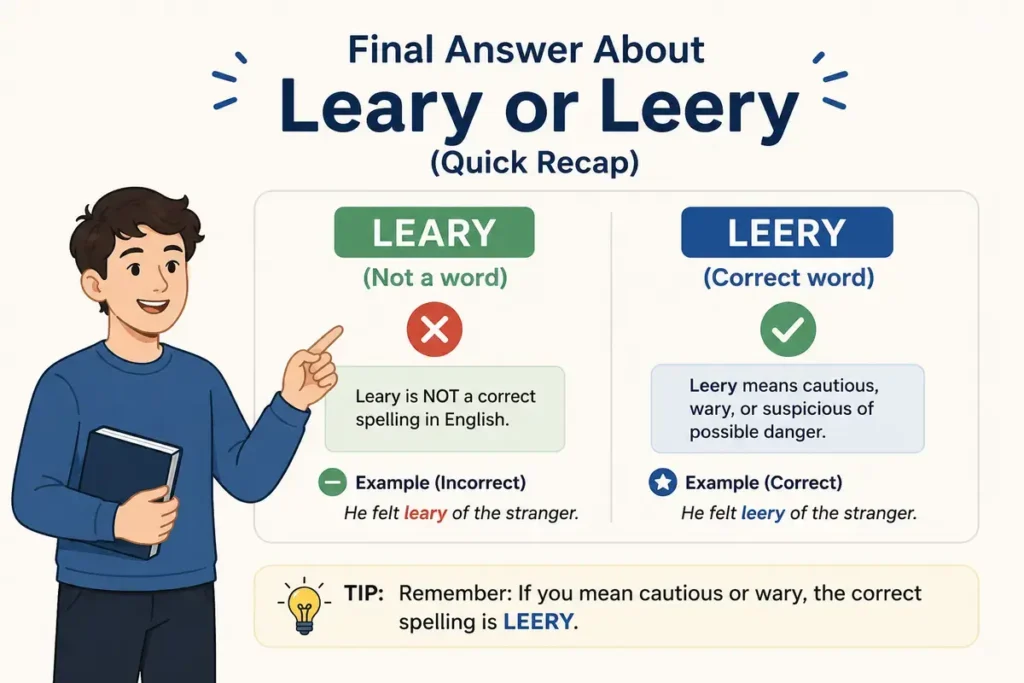
Final Answer About Leary or Leery (Quick Recap)
The correct word is leery.
Use leery when you mean careful, cautious, or not fully trusting someone or something.
Use Leary only when it is a person’s family name.
If you remember that simple rule, you will always choose the correct spelling.
Need another quick comparison? Read Footnote Before or After Period? Rule You Can Remember.
Conclusion
The choice between is much easier than it first appears. Leery is the correct English word when you want to describe someone who is careful, cautious, or not ready to trust a person or situation. Leary is usually a person’s last name, not the adjective you need in everyday writing.
A simple way to remember the difference is to think of the two e letters in leery as two careful eyes. That small memory trick can help you choose the right spelling every time. The more you read, write, and practice using leery, the more natural it will feel.
Frequently Asked Questions (FAQs)
What does leery mean in simple words?
It means being careful or not fully trusting someone or something.
Which is correct?
Leery is the correct spelling for the adjective. Leary is usually a surname or a spelling mistake.
Why do people confuse?
They look very similar and sound almost the same in conversation.
Can I use leary in normal writing?
No. Use leery.
Is leery the same as wary?
They are very close in meaning. Both describe someone who is careful, but leery often suggests a lack of trust.
How can I remember the correct spelling?
Think of the two e letters as two careful eyes watching for danger.
Is leery a formal or informal word?
It works in both everyday conversation and most types of writing.
Can native English speakers confuse these words?
Yes. Because they sound alike, even native speakers sometimes write leary by mistake.
