
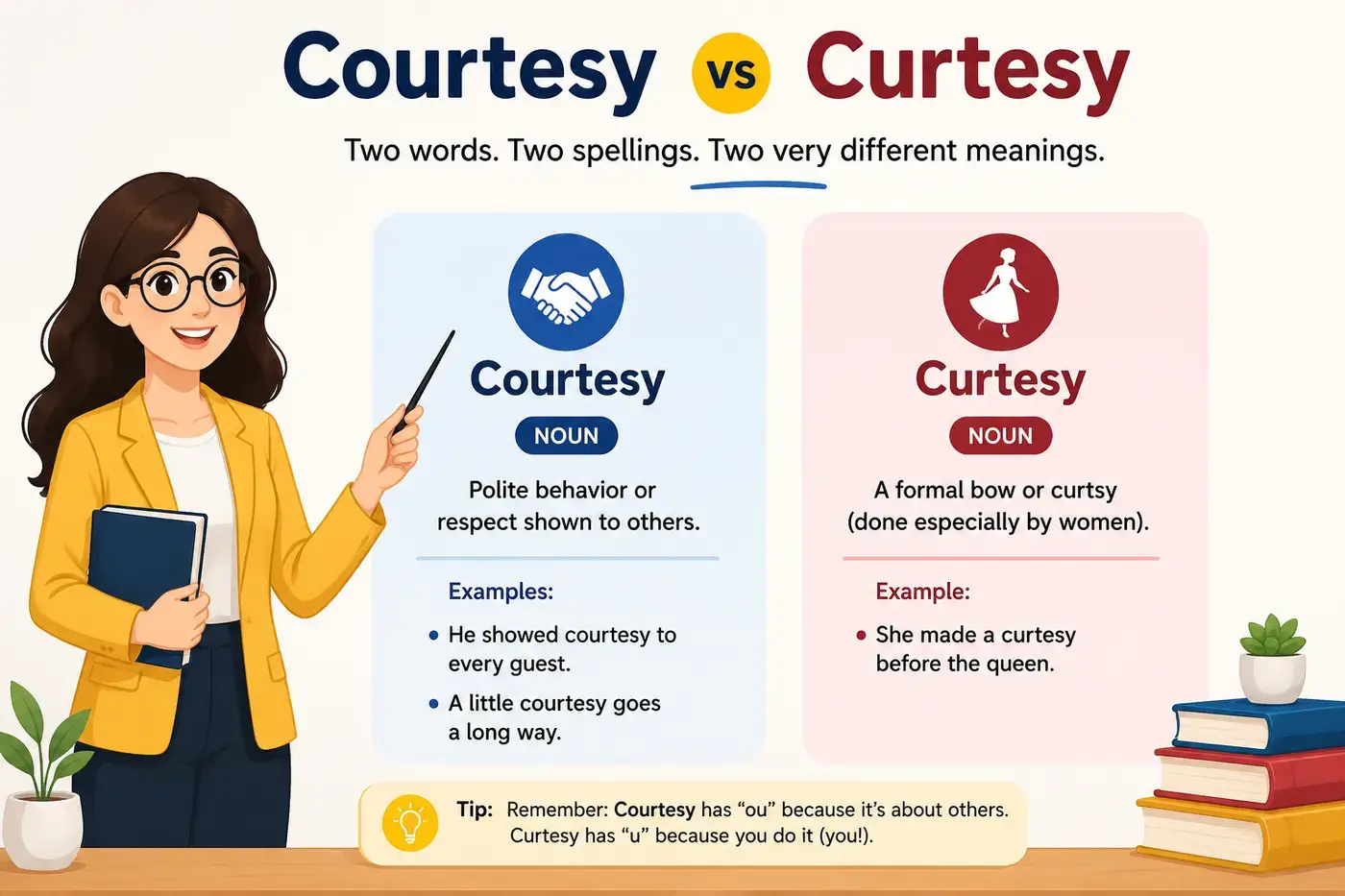
Many people get confused about courtesy vs curtesy because these two words look almost the same. They sound similar, but they do not mean the same thing. One word is common in everyday English, while the other belongs to a very different topic. Knowing the difference will help you avoid mistakes in writing and speaking.
If you have ever wondered about the short answer is simple. Courtesy is the correct word when you are talking about kindness, good manners, or polite behavior. Curtesy is an old legal word that most people never use in normal conversation.
This guide explains everything in simple English. You will learn what each word means, why people mix them up, when to use each one, and easy examples that you can remember.
For another common grammar confusion, see Time Slot vs Timeslot: Easy Guide With Simple Examples (2026).
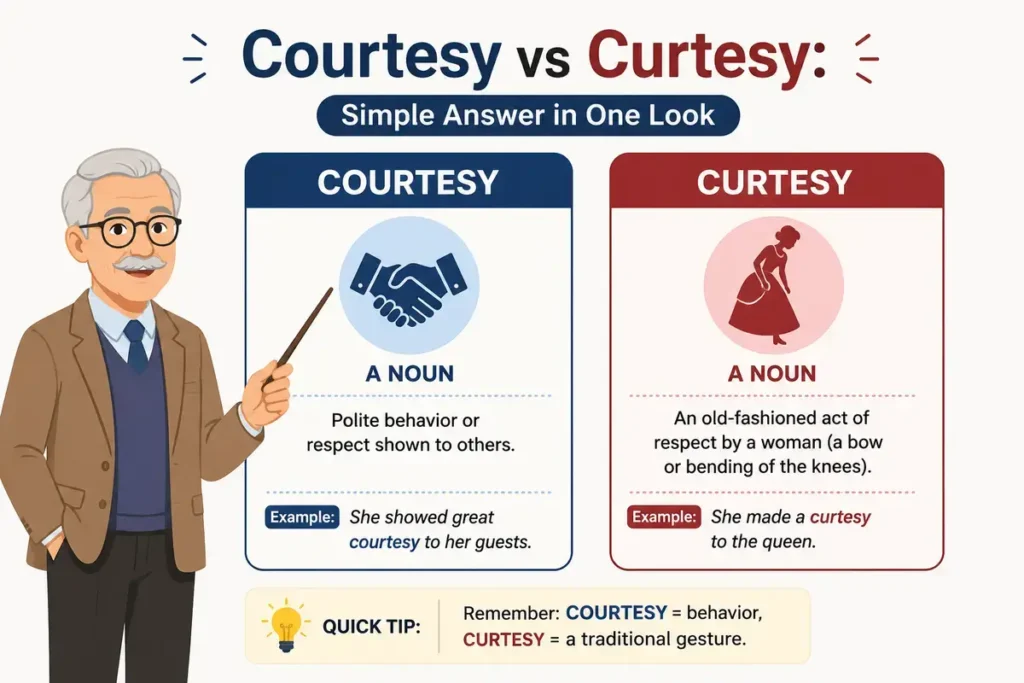
Courtesy vs Curtesy: Simple Answer in One Look
Courtesy means kindness, respect, or polite behavior.
Curtesy is an old legal term about a husband’s property rights after his wife’s death.
For almost all everyday writing and speaking, courtesy is the correct word.
What Does Courtesy vs Curtesy Mean in Simple English?
When learning think about where each word belongs.
What Does Courtesy Mean?
Courtesy means showing respect and kindness to other people. It includes good manners, polite words, and thoughtful actions. Examples include:
- Saying “please.”
- Saying “thank you.”
- Holding the door open.
- Waiting your turn.
- Speaking kindly to others.
Courtesy helps people feel respected and valued.
What Does Curtesy Mean?
Curtesy is an old legal word. It described a rule that gave a husband certain rights to his wife’s land after she died under old English law. Today, almost nobody uses this word outside history or law books. If you are writing an email, school paper, blog post, or social media post, you almost certainly need courtesy, not curtesy.
Why Do People Mix Up Courtesy vs Curtesy?
Many English learners and even native speakers confuse these words for several simple reasons.
They Look Nearly the Same
The only difference is one letter.
- Courtesy
- Curtesy
When typing quickly, it is easy to choose the wrong spelling.
They Sound Similar
In normal speech, many people pronounce them almost the same Because of this, people often spell the word based on what they hear instead of what they have learned.
Spell Check May Not Catch It
Since curtesy is a real English word, your computer may not mark it as a spelling mistake. That makes the confusion even more common.
Most People Have Never Learned Curtesy
Many people know the word courtesy, but they have never heard of curtesy before. When they accidentally see it, they think it is just another spelling of the same word. It is not.
Courtesy vs Curtesy: Clear Difference Explained Simply
The easiest way to remember is to think about daily life versus history.
Courtesy
- Means politeness.
- Means kindness.
- Used every day.
- Common in speaking and writing.
- Correct in emails, schools, businesses, and conversations.
Curtesy
- Old legal word.
- Connected with property rights.
- Rarely used today.
- Mostly found in history books.
- Not used for good manners.
Quick Comparison Table
| Courtesy | Curtesy |
|---|---|
| Means politeness | Means an old legal right |
| Very common | Very rare |
| Used every day | Used mainly in historical writing |
| Correct for manners | Not related to manners |
| Modern English | Historical legal English |
Easy Memory Trick
Think of courtesy whenever someone is kind.
Think of curtesy only if you are reading about old English laws.
Which Form Should You Use in Courtesy vs Curtesy?
Almost everyone should use courtesy. Use courtesy when talking about:
- Good manners.
- Respect.
- Kind behavior.
- Polite service.
- Helpful actions.
Examples include:
- Thank you for your courtesy.
- She treated everyone with courtesy.
- The hotel staff showed great courtesy.
- He answered politely as a courtesy.
Only use curtesy if you are discussing legal history or old property laws. For everyday English, choosing courtesy is the right answer.
Courtesy vs Curtesy: Easy Real-Life Sentences You Can Use
Here are simple examples that show the correct use.
- Thank you for your courtesy during the meeting.
- She always speaks with courtesy.
- The waiter treated every customer with courtesy.
- Showing courtesy costs nothing.
- A small act of courtesy can brighten someone’s day.
- The teacher thanked the class for their courtesy.
- He opened the door as a courtesy.
- The book explained the old legal idea of curtesy.
Notice that only the last sentence uses curtesy, and it talks about history instead of manners.
Where Does Courtesy vs Curtesy Come From? (Simple History)
The story behind makes the difference easier to remember.
Where Did Courtesy Come From?
The word courtesy comes from an old French word that was connected with the royal court. People at the king’s court were expected to behave politely and respectfully. Over time, the word came to mean good manners and kindness toward others Today, that meaning has stayed the same.
Where Did Curtesy Come From?
Curtesy developed as a legal word in England many centuries ago. It described a husband’s right to use his wife’s land after she died if certain legal conditions were met. Modern property laws have changed, so this word is now mostly part of legal history. Most English speakers never need to use it. As you can see, these words started in very different places. One became a common everyday word, while the other stayed inside old legal books.
Now that you understand the basic meaning of courtesy vs curtesy, the next part will explain how these words appear in culture, old stories, symbolism, common mistakes, expert writing tips, and frequently asked questions so you can remember the difference with confidence.
Courtesy vs Curtesy: How This Word Is Understood in Culture and Stories
The difference between courtesy vs curtesy is not just about spelling. These words also have very different places in culture and history.
How Courtesy Is Seen in Culture
People around the world value courtesy. Every culture has its own way of showing respect, but the idea is very similar. Courtesy can mean:
- Saying “please” and “thank you.”
- Greeting people politely.
- Respecting older people.
- Helping someone who needs it.
- Listening without interrupting.
Many stories, movies, and children’s books teach that kind people are remembered more than rude people. Parents often teach children that courtesy helps them make friends and build trust.
How Curtesy Is Seen in Culture
Curtesy is very different. You will almost never hear this word in daily life. Instead, you may find it in:
- Old history books.
- Books about English law.
- Historical novels.
- Legal discussions about the past.
Because the law changed many years ago, curtesy is now mostly part of history instead of modern culture.
Still confused? Compare Any Problem or Any Problems: How to Use Each One (2026).
Courtesy vs Curtesy: Biblical and Mythological Meaning
People sometimes wonder if courtesy vs curtesy has a special meaning in the Bible or mythology.
Courtesy in the Bible
The Bible does not use the modern English word courtesy very often, but it teaches many ideas that match its meaning. For example, people are encouraged to:
- Love others.
- Be kind.
- Show respect.
- Help those in need.
- Speak gently.
These actions are all examples of courtesy.
Curtesy in the Bible
The word curtesy does not have a special biblical meaning. Since it is an old legal word from English history, it is not connected with biblical teachings.
Courtesy in Mythology
Many old stories from different cultures praise heroes who show kindness and respect. A strong person who is also polite is often seen as wise and honorable. Courtesy is often shown as a sign of good character.
Curtesy in Mythology
Curtesy has no known symbolic role in mythology. Its meaning stays connected to old legal traditions instead of stories or legends.
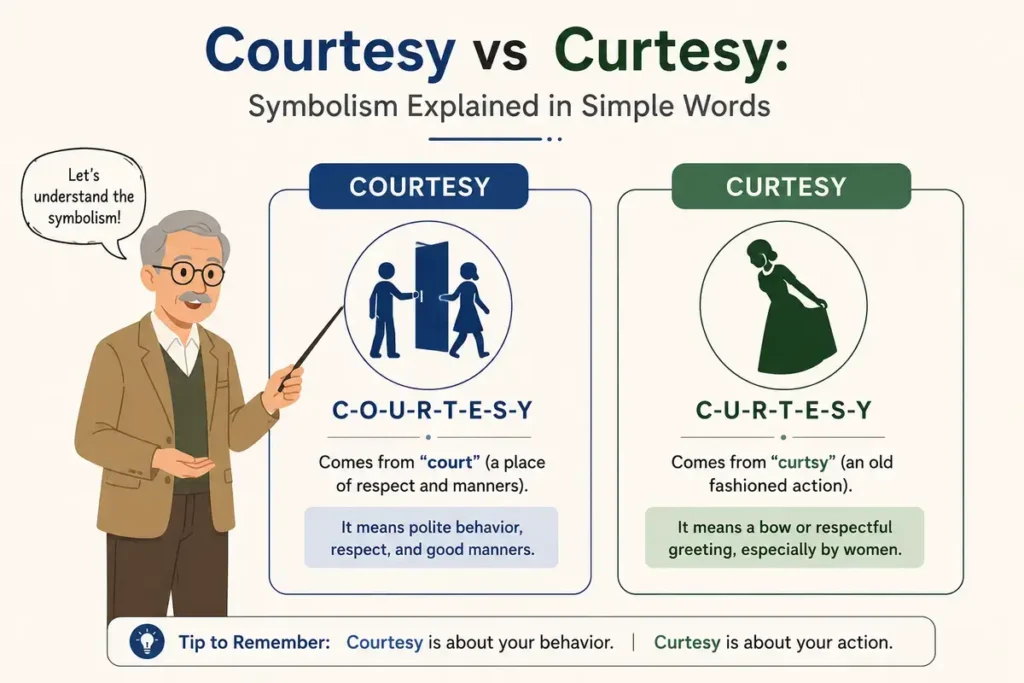
Courtesy vs Curtesy: Symbolism Explained in Simple Words
Words sometimes make us think about certain ideas. The meanings behind are completely different.
Courtesy vs Curtesy: What One Version Represents
Courtesy represents:
- Kindness.
- Respect.
- Good manners.
- Friendship.
- Thoughtfulness.
- Caring about other people.
When someone shows courtesy, they make others feel welcome and respected. That is why this word has such a positive meaning.
Courtesy vs Curtesy: What the Other Version Represents
Curtesy represents:
- Old legal traditions.
- Property rights.
- Historical laws.
- English legal history.
It does not represent kindness or polite behavior. Instead, it reminds us of how property rules worked hundreds of years ago. This is one of the easiest ways to remember the difference.
Courtesy vs Curtesy: Related Words You Should Know
Learning similar words helps you remember the correct meaning.
Politeness
Showing good manners and respect to others.
Respect
Treating people kindly because they matter.
Kindness
Doing helpful and caring things for others.
Manners
The polite way people behave every day.
Etiquette
The accepted rules for polite behavior in different situations.
Respectful
Showing care and consideration for others.
Civil
Being polite even when you disagree with someone.
Consideration
Thinking about another person’s feelings before acting. These words are closely connected with courtesy, not curtesy.
Courtesy vs Curtesy: How People Actually Use It in Daily English
Most people use courtesy every day without even thinking about it. Here are some natural examples.
- Thank you for your courtesy today.
- She always treats visitors with courtesy.
- Please show courtesy to everyone in the meeting.
- It was a courtesy call before the event.
- The staff welcomed us with great courtesy.
- He smiled as a courtesy.
- Basic courtesy makes every workplace better.
- They thanked us for our courtesy.
- Showing courtesy costs nothing but means a lot.
- Good courtesy helps people trust you.
Notice something important. None of these everyday examples use curtesy because it almost never appears in normal conversations.
Courtesy vs Curtesy: Common Mistakes People Make
Many writers make small mistakes. Here are the most common ones.
Mistake 1: Using Curtesy Instead of Courtesy
❌ Thank you for your curtesy.
✅ Thank you for your courtesy.
This is the most common mistake.
Mistake 2: Thinking Both Spellings Mean Good Manners
Many people believe they are simply two spellings of the same word. They are not. Only courtesy means politeness.
Mistake 3: Trusting Spell Check Too Much
Since curtesy is a real English word, some spelling tools do not mark it as wrong. Always check the meaning, not only the spelling.
Mistake 4: Guessing Based on Pronunciation
These words sound similar. That makes many people choose the wrong spelling. The safest choice is to remember:
Courtesy = polite behavior.
Curtesy = old legal history.
Mistake 5: Using Curtesy in Business Writing
Business emails should always use courtesy when talking about kindness or respect. For example:
✅ Thank you for your courtesy and support.
Never replace it with curtesy unless you are discussing legal history.
Courtesy vs Curtesy: Final Teacher Explanation
Imagine I am standing in front of a classroom. A student asks,
“Teacher, which word should I use?”
My answer would be very simple.
Use courtesy almost every time.
If you are thanking someone, talking about kindness, discussing good manners, writing an email, speaking to customers, or talking with friends, the correct word is courtesy.
Only use curtesy when reading or writing about old English property laws.
That is a very rare situation. Here is the easiest memory trick.
Courtesy begins with “court,” where people were expected to behave politely.
Curtesy belongs to old courts of law.
One word is about people being kind. The other is about historical legal rights. If you remember that simple idea, you will probably never confuse again.
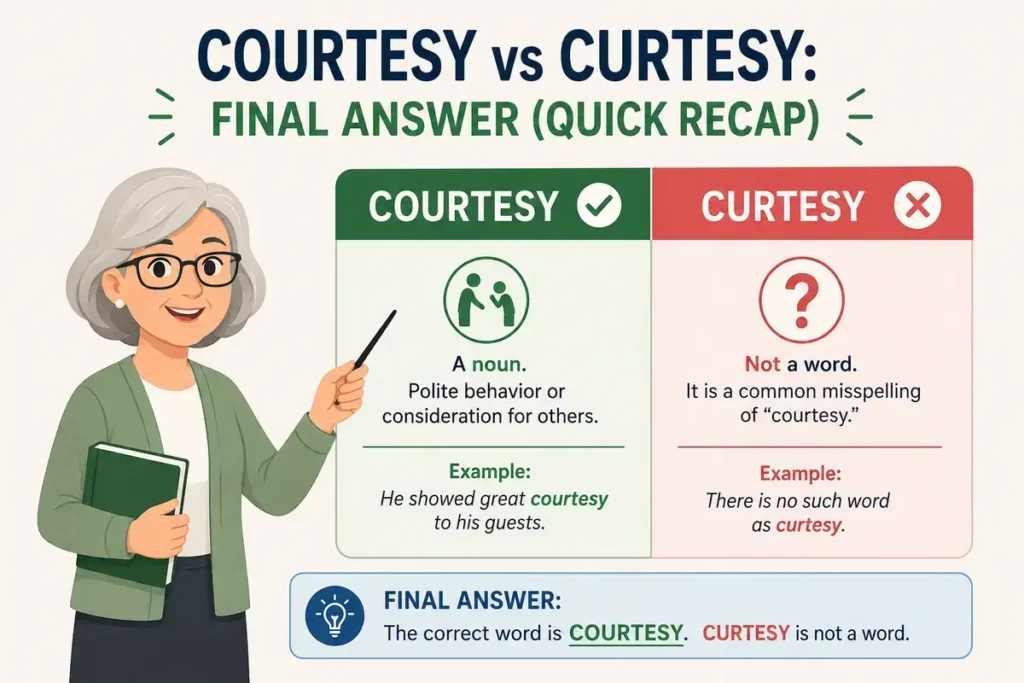
Courtesy vs Curtesy: Final Answer (Quick Recap)
The difference between courtesy vs curtesy is easy once you know the meaning.
Courtesy means kindness, respect, and good manners. It is the correct word for almost every everyday situation.
Curtesy is an old legal term about a husband’s property rights under historical English law. Most people never need to use it.
Remember this simple rule:
For polite behavior, always choose courtesy.
You may also want to read Mentioned vs Mentionned: Easy Guide With Examples.
Conclusion
Understanding courtesy vs curtesy is much easier than it first seems. Although the two words look almost identical, they have completely different meanings. Courtesy is the word you should use when talking about politeness, respect, and kind behavior. Curtesy is an old legal term that is rarely used outside historical discussions. If you remember that courtesy belongs to everyday English and curtesy belongs to legal history, you will choose the correct word with confidence every time.
Frequently Asked Questions (FAQs)
What does courtesy mean in simple words?
Courtesy means being polite, respectful, and kind to other people.
What does curtesy mean?
Curtesy is an old legal word about a husband’s property rights after his wife’s death under historical English law.
Which is correct, courtesy or curtesy?
For everyday English, courtesy is correct. Curtesy is only used in old legal or historical writing.
Why do people confuse?
The words look and sound very similar, so many people think they are different spellings of the same word.
Can I use curtesy in everyday writing?
No. Unless you are writing about legal history, you should use courtesy.
Is courtesy a noun?
Yes. Courtesy is a noun that means polite behavior or kindness.
Does curtesy still exist in modern law?
In most places, the old legal rule has been removed or replaced, so the word is mainly used when discussing history.
How can I easily remember?
Remember this simple rule:
Courtesy = kindness and good manners.
Curtesy = old legal history.
