
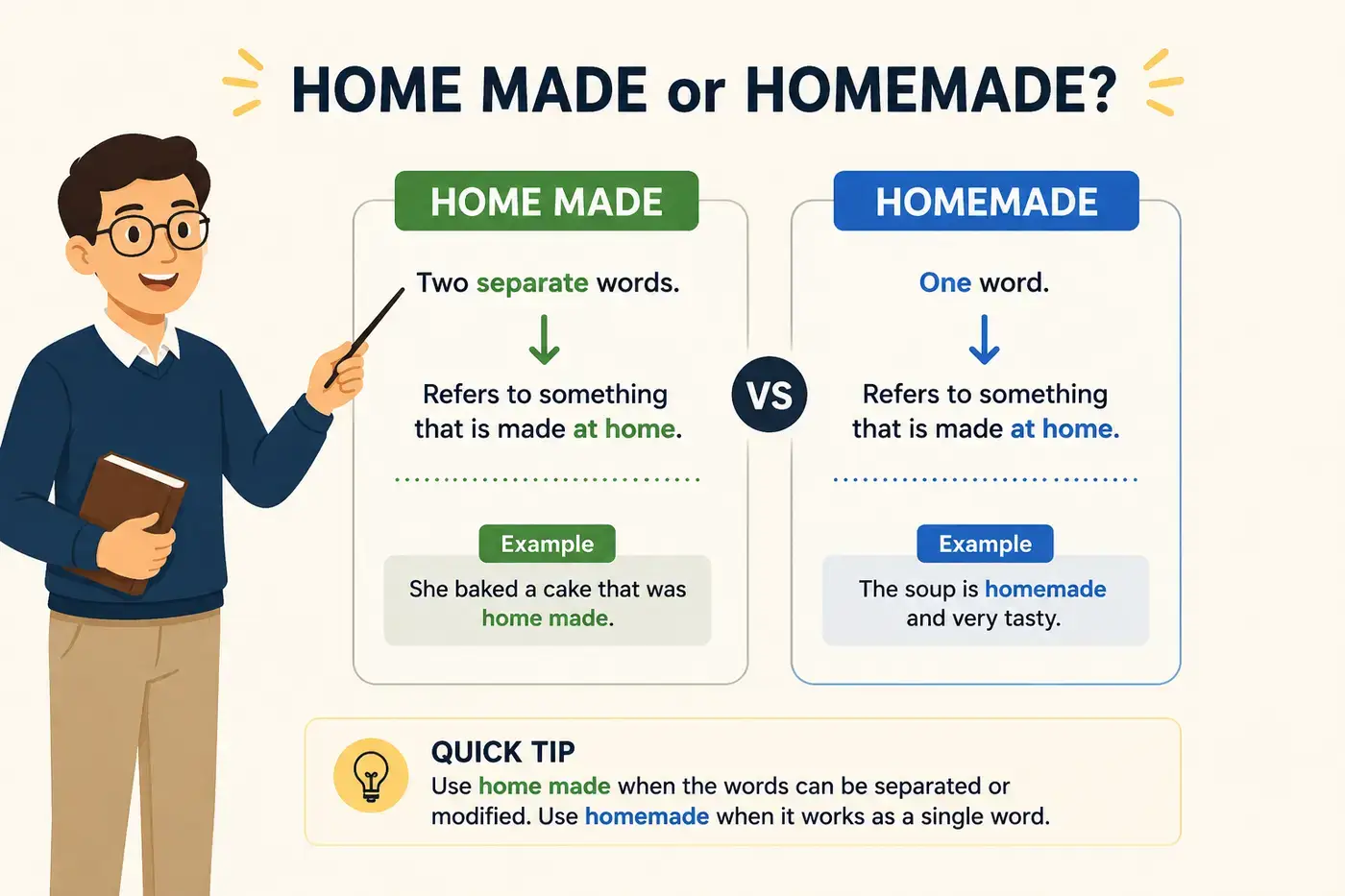
Many English learners get confused about home made or homemade. Both forms look similar. Both seem to mean the same thing. Because of that, people often wonder which one is correct.
If you have searched for the short answer is simple. In modern English, homemade is usually the correct and preferred spelling. It is written as one word when describing something made at home.
You will see homemade in recipes, advertisements, menus, books, and everyday writing. Understanding the difference will help you write more naturally and avoid common mistakes.
You may also want to read Anyway vs Anyways: Which Is Correct and How to Use(2026).
Home Made or Homemade: Simple Answer in One Look
Homemade is the standard spelling in modern English.
Home made is usually considered an older or less common form.
For most writing, use homemade as one word.
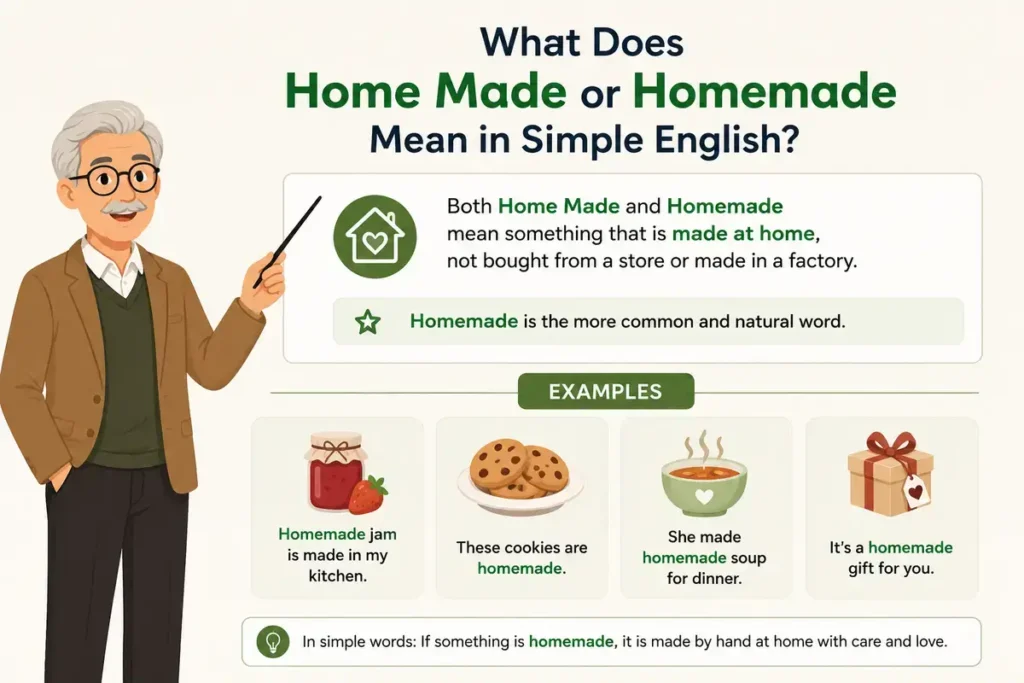
What Does Home Made or Homemade Mean in Simple English?
The word homemade means something that was made at home instead of being produced in a factory or purchased ready-made. People often use this word for food, gifts, decorations, clothing, and crafts. When something is homemade, it usually feels personal and special because a person made it by hand. For example:
- Homemade cookies.
- Homemade soup.
- Homemade birthday cards.
- Homemade decorations.
In all these examples, the items were created at home.
Homemade Often Suggests Care
When people hear the word homemade, they often think about effort and care. A homemade meal usually feels warmer and more personal than a meal from a package. For example:
“My grandmother made homemade bread.”
This tells us the bread was made at home and not bought from a store.
Homemade Does Not Always Mean Perfect
Something homemade may not look perfect. The cake may be uneven. The card may have small mistakes. The decoration may not look professional. But many people like homemade things because they feel real and personal.
Why Do People Mix These Words Home Made or Homemade?
The confusion happens because the phrase originally came from two separate words. People see:
- Home
- Made
Since both words have their own meaning, some writers naturally separate them. For example:
- home made cookies
- home made soup
At first glance, this looks reasonable. However, English often combines words over time. When a combination becomes common enough, it turns into a single word. That is what happened with homemade.
Many Compound Words Follow This Pattern
English has many words that started as separate words. Examples include:
- Bedroom
- Notebook
- Football
- Sunlight
Over time, people began writing them as one word because they were used together so often. The same thing happened with homemade.
The Two Versions Look Similar about Home Made or Homemade
Another reason people get confused is that both forms seem understandable. Compare these:
- homemade cookies
- home made cookies
Most readers can understand both. Because the meaning is clear either way, some people do not realize that one form is preferred.
Home Made or Homemade: Clear Difference Explained Simply
The biggest difference is not the meaning. The difference is the spelling.
Quick Comparison
| Feature | Home Made | Homemade |
|---|---|---|
| Meaning | Made at home | Made at home |
| Modern standard spelling | No | Yes |
| Common in current writing | Rare | Very common |
| Seen in recipes and menus | Rarely | Often |
| Recommended for most writers | No | Yes |
Easy Way to Remember Home Made or Homemade
Think of homemade as one complete idea. The item was made at home. Because the idea works together, the words stay together.
Homemade = one word.
Visual Example
Correct:
- Homemade pizza.
- Homemade cake.
- Homemade jam.
Less common:
- Home made pizza.
- Home made cake.
- Home made jam.
Most editors and teachers will choose the first version.
Home Made or Homemade: Which Form Should You Use?
You should use homemade in almost all situations. This is the spelling that appears in:
- School writing.
- Business writing.
- Cookbooks.
- Recipes.
- Newspapers.
- Websites.
- Magazines.
Using homemade helps your writing look natural and modern.
When Might You See Home Made?
You may still find home made in:
- Older books.
- Historical documents.
- Old advertisements.
- Personal writing styles.
Even though it appears sometimes, it is not the form most writers choose today.
The Simple Rule for Home Made or Homemade
Use this easy rule:
If you mean made at home, write homemade as one word.
This rule works almost every time.
Why Modern Writers Prefer Homemade
Readers recognize it immediately. It follows current dictionary style. It matches what people expect to see. That makes communication easier.
Home Made or Homemade in Everyday Life
The word homemade appears in many situations. You probably hear it often without noticing.
Food
Food is the most common example. People say:
- Homemade cookies.
- Homemade pizza.
- Homemade pasta.
- Homemade soup.
These foods were prepared at home.
Gifts
People also make homemade gifts. Examples include:
- Homemade candles.
- Homemade cards.
- Homemade photo frames.
These gifts often feel more personal because someone spent time creating them.
Decorations
Many families make homemade decorations for holidays and parties. Examples include:
- Homemade ornaments.
- Homemade banners.
- Homemade centerpieces.
School Projects
Students often create homemade models and displays. For example:
- A homemade volcano.
- A homemade solar system project.
- A homemade science experiment.
Why People Like Homemade Things
Many people prefer homemade items because they feel special.
A homemade gift shows effort.
A homemade meal shows care.
People often connect homemade items with family, comfort, and tradition.
Homemade Can Save Money
Making things at home can sometimes cost less. Instead of buying something from a store, people create it themselves. Examples include:
- Homemade bread.
- Homemade decorations.
- Homemade snacks.
Homemade Can Be Healthier
Many people prepare homemade meals because they can choose the ingredients. They know exactly what goes into the food. This gives them more control over taste and nutrition.
Easy Real-Life Sentences You Can Use for Home Made or Homemade
Here are some simple examples.
- My mother made homemade cookies.
- We enjoyed homemade pizza for dinner.
- She gave me a homemade birthday card.
- The restaurant is famous for its homemade soup.
- I brought homemade bread to the picnic.
- They decorated the room with homemade banners.
- He likes homemade lemonade in the summer.
- We made homemade gifts for our friends.
Everyday Spoken Examples of Home Made or Homemade
You might hear people say:
- Is this homemade?
- I love homemade food.
- These cookies taste homemade.
- She makes homemade jam every year.
- We brought homemade desserts.
These are very common in daily conversation.
Common Mistakes With Home Made or Homemade
Many learners make small mistakes when using this word.
Mistake 1: Writing Two Words
Incorrect:
- Home made cookies are delicious.
Preferred:
- Homemade cookies are delicious.
Mistake 2: Using a Hyphen Unnecessarily
Sometimes people write:
- Home-made cookies.
This form appears occasionally, but most modern style guides prefer:
- Homemade cookies.
Mistake 3: Separating the Word in Formal Writing
In school essays, business writing, and professional content, keeping the word together is usually the safest choice.
Write:
- Homemade.
Not:
- Home made.
Where Does Home Made or Homemade Come From? (Simple History)
The word comes from two simple English words:
- Home
- Made
Long ago, people often wrote them separately. As the phrase became more common, English speakers started treating it as one idea. Over time, dictionaries and publishers adopted the combined form:
Homemade
This process happens with many English words. Words often begin as separate terms and later become a single word.
Why the One-Word Form Won
The combined spelling is shorter. It is easier to read. It clearly expresses one idea. Because of these advantages, homemade became the standard form.
A Word That Shows Tradition
The word homemade has been connected with family life for many years. People use it when talking about cooking, baking, crafting, and creating things at home. Because of that history, the word often brings feelings of comfort and care.
Is Homemade Always About Food?
No.
Many people think homemade only refers to food. That is not true. It can describe almost anything made at home. Examples:
- Homemade furniture.
- Homemade soap.
- Homemade jewelry.
- Homemade toys.
- Homemade decorations.
As long as the item was created at home rather than manufactured commercially, the word homemade can usually be used.
You may also want to read Fair vs Good: Differences,Meaning and Examples (2026).
Transition to Deeper Meaning and Usage
Now that you understand the basic difference the next section will go deeper. We will look at how homemade is viewed in culture, traditions, symbolism, daily life, and common expressions so you can fully understand why this simple word carries such a warm and meaningful feeling.
How Home Made or Homemade Is Understood in Culture and Stories
When people hear the word homemade, they often think about family, care, and comfort. A homemade meal is not just food. It often reminds people of parents, grandparents, holidays, and special memories. In many cultures, homemade items are connected to love and effort. For example:
- A homemade birthday cake shows care.
- A homemade gift shows thoughtfulness.
- A homemade meal brings people together.
Stories, movies, and books often use homemade items to show kindness and family connections. A character who bakes homemade cookies is usually seen as caring and friendly. A family sharing a homemade dinner often represents warmth and togetherness. This is why the word homemade has a positive feeling in many cultures.
Why Homemade Feels Special
People know that homemade things take time.
Someone planned it.
Someone worked on it.
That extra effort often makes homemade items feel more valuable than store-bought items.
Even when a homemade item is not perfect, people often appreciate it more because it came from the heart.
Biblical and Mythological Meaning of Home Made or Homemade
The words does not have a direct biblical meaning. However, the ideas behind homemade items appear in many religious and traditional stories. In the Bible, people often prepared food, clothing, and household items by hand. These handmade and homemade things supported families and communities. The focus was often on:
- Hard work.
- Sharing.
- Hospitality.
- Caring for others.
Many biblical stories show people preparing meals for guests and helping others with what they had. The word homemade fits naturally with those ideas.
Homemade in Traditional Stories
Many old stories from different cultures include:
- Homemade bread.
- Homemade clothing.
- Homemade tools.
- Homemade gifts.
Long ago, most things people used were homemade because stores and factories were limited. Because of this history, homemade items often symbolize self-reliance and family care.
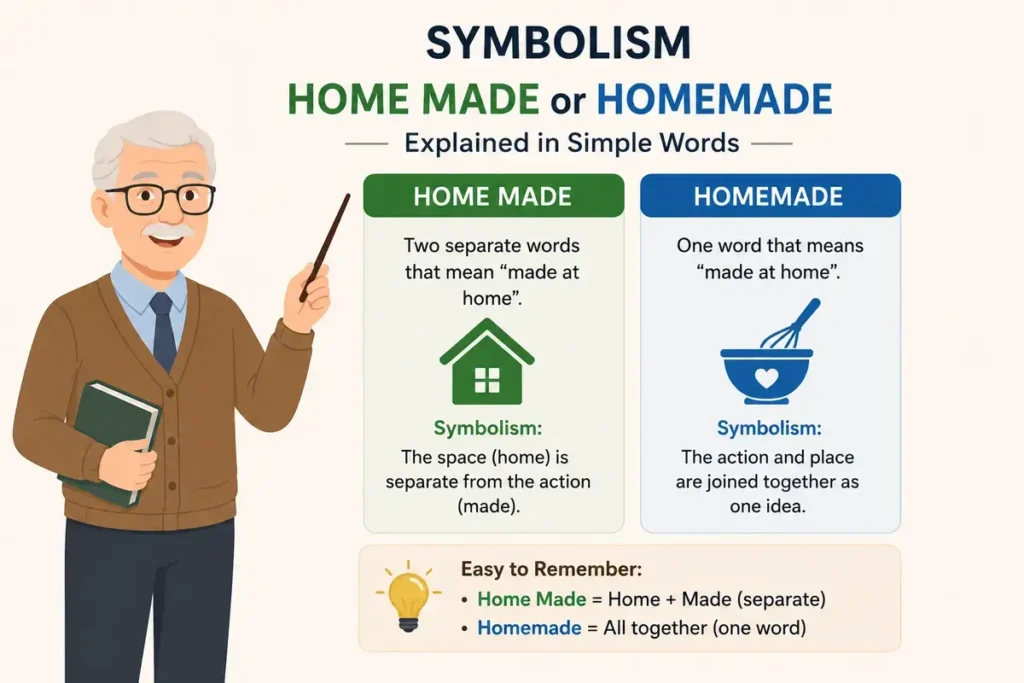
Symbolism Home Made or Homemade Explained in Simple Words
What Home Made Represents
When written as home made, people usually see the two separate words. This can place extra attention on the idea that something was made at home. Symbolically, it may suggest:
- Family effort.
- Personal work.
- Traditional skills.
- Handmade quality.
Even though this spelling is less common today, the meaning remains positive.
What Homemade Represents
The spelling homemade has become the modern standard. It often symbolizes:
- Comfort.
- Warm memories.
- Family traditions.
- Care and love.
- Personal attention.
When people hear “homemade cookies” or “homemade soup,” they often imagine something warm and welcoming. That emotional connection is one reason the word remains popular.
Simple Comparison
| Form | Meaning | Symbolic Feeling |
|---|---|---|
| Home Made | Made at home | Traditional, personal effort |
| Homemade | Made at home | Comfort, care, family warmth |
The meaning is the same. The difference is mostly in spelling style and modern usage.
Related Words You Should Know About Home Made or Homemade
Learning related words can make your English stronger.
Handmade
Made by hand instead of a machine. Example:
“She sells handmade jewelry.”
Homegrown
Grown at home, usually in a garden. Example:
“We ate homegrown tomatoes.”
Self-Made
Someone who became successful through their own effort. Example:
“He is a self-made business owner.”
Crafted
Made carefully using skill. Example:
“The table was carefully crafted.”
Artisan
A person who creates things by hand. Example:
“The artisan made beautiful pottery.”
Freshly Made
Made recently, often food. Example:
“The bread is freshly made.”
Traditional
Something connected to long-standing customs. Example:
“They use traditional recipes.”
DIY (Do It Yourself)
Making or repairing something yourself. Example:
“I watched a DIY video to build a shelf.”
These words are often used in similar situations as homemade.
How People Actually Use Home Made or Homemade in Daily English
Most people use homemade in everyday conversations. Here are some natural examples.
Talking About Food
“These homemade cookies taste amazing.”
“My grandmother makes homemade soup every weekend.”
“We had homemade pizza last night.”
Talking About Gifts
“I gave her a homemade card.”
“He made a homemade photo frame.”
“The children created homemade decorations.”
Talking About School Projects
“My son built a homemade volcano.”
“We made a homemade model for science class.”
“The teacher loved our homemade project.”
Talking About Hobbies
“I enjoy making homemade candles.”
“She sells homemade soaps online.”
“They create homemade crafts for local markets.”
Talking About Family Traditions
“We always bring homemade desserts to family gatherings.”
“My grandfather still makes homemade jam.”
“Our family recipe creates homemade bread every holiday.”
These examples show how often the word appears in normal conversation.
Common Mistakes People Make With Home Made or Homemade
Many learners make small mistakes with this word. The good news is that they are easy to fix.
Mistake 1: Using Home Made in Modern Writing
Less Preferred:
“She brought home made cookies.”
Better:
“She brought homemade cookies.”
Modern English usually prefers one word.
Mistake 2: Thinking They Have Different Meanings
Some people believe:
- Home made = one meaning.
- Homemade = another meaning.
This is incorrect. Both forms mean the same thing.
Mistake 3: Adding Extra Spaces
Incorrect:
“Home made cake”
Correct:
“Homemade cake”
Always keep the modern form together as one word.
Mistake 4: Using a Hyphen Without Need
Sometimes people write:
“Home-made cookies”
While this may appear occasionally, most modern writing prefers:
“Homemade cookies”
Mistake 5: Avoiding the Word Entirely
Some learners worry so much about the spelling that they stop using the word. There is no need for that. Just remember the simple rule:
Use homemade in most situations.
In Modern English
Language changes over time. Many words that were once written separately are now written together. Homemade is one example. Today, dictionaries, publishers, teachers, and editors usually prefer:
Homemade
This spelling looks cleaner and matches modern English usage. That is why you see it on:
- Food labels.
- Restaurant menus.
- Recipe websites.
- Cookbooks.
- School materials.
If your goal is natural English, homemade is the safest choice.
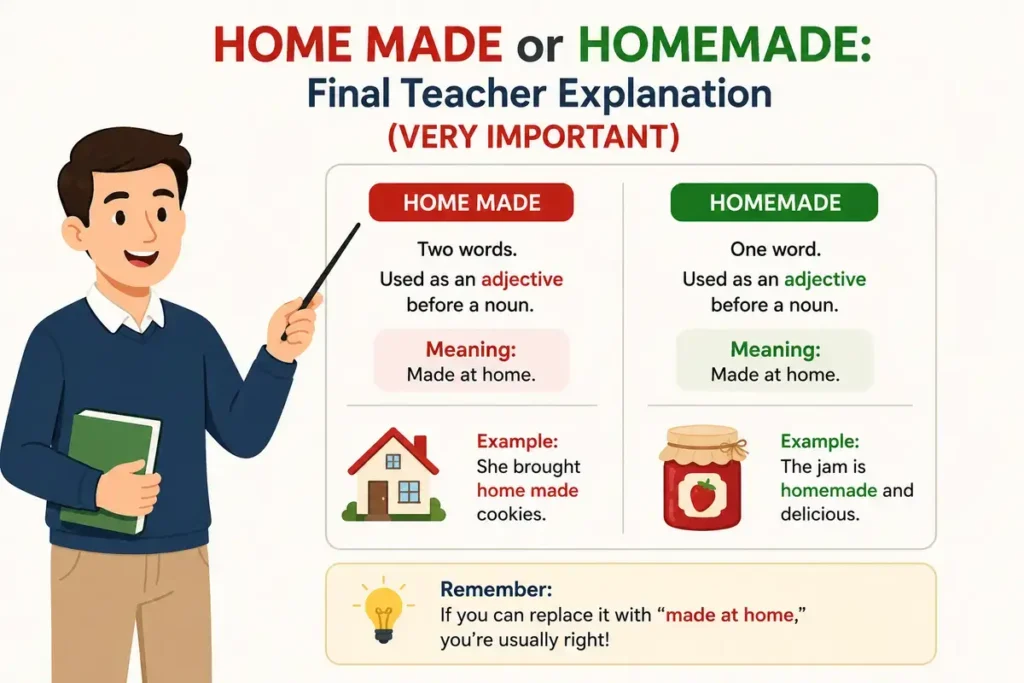
Home Made or Homemade: Final Teacher Explanation (Very Important)
Imagine you are sitting in my classroom and asking:
“Should I write?”
My answer would be simple. Both forms carry the same meaning. They describe something made at home. However, modern English strongly prefers homemade as one word. If you use homemade in school assignments, work documents, blog posts, recipes, or everyday writing, you will almost always be correct. The easiest rule to remember is this: When something is made at home, write homemade as one word. That simple rule will help you avoid confusion every time.
Final Answer (Quick Recap) about Home Made or Homemade
Use homemade as one word in modern English.
Both forms mean “made at home,” but homemade is the standard and most common spelling.
If you are writing for school, work, or online content, choose homemade.
You may also want to read Contractor vs contracter: Correct Spelling and Meaning (2026).
Conclusion
The discussion about home made or homemade is mostly a spelling question. Both forms mean something created at home rather than bought from a factory or store. However, homemade is the standard spelling used in modern English. It appears in recipes, books, websites, menus, advertisements, and everyday conversation. If you are unsure which version to choose, use homemade. It is the form most readers expect and the one that looks natural in modern writing.
Frequently Asked Questions (FAQs)
Is homemade one word or two words?
Homemade is usually written as one word in modern English.
Which is correct?
Both can be understood, but homemade is the preferred modern spelling.
What does homemade mean?
It means something was made at home rather than in a factory or store.
Why do people get confused?
Because the word originally came from two separate words: home and made.
Can I use home made in writing?
You can, but homemade is usually the better choice.
Is homemade only used for food?
No. It can describe gifts, crafts, decorations, furniture, and many other things made at home.
Is homemade a positive word?
Yes. It often suggests care, effort, warmth, and personal attention.
How can I remember the correct spelling?
Remember this simple rule: if something was made at home, write homemade as one word.
