
Many people get confused about sentence or sentance because the two words look very similar. You may have seen both spellings online, in schoolwork, or in everyday writing. That often makes people wonder which one is correct.
The simple answer is that sentence is the correct spelling. The word sentance is a common spelling mistake. If you want to write standard English, you should always use sentence.
Understanding the difference is easy once you know the correct form. In this guide, you will learn what the word means, why people misspell it, and how to use it correctly in everyday writing.
Need another quick comparison? Read Sleave or Sleeve: Which Word Is Correct?.
Simple Answer in One Look: Sentence or Sentance
Sentence is correct.
Sentance is incorrect.
If you are writing English, always use sentence.
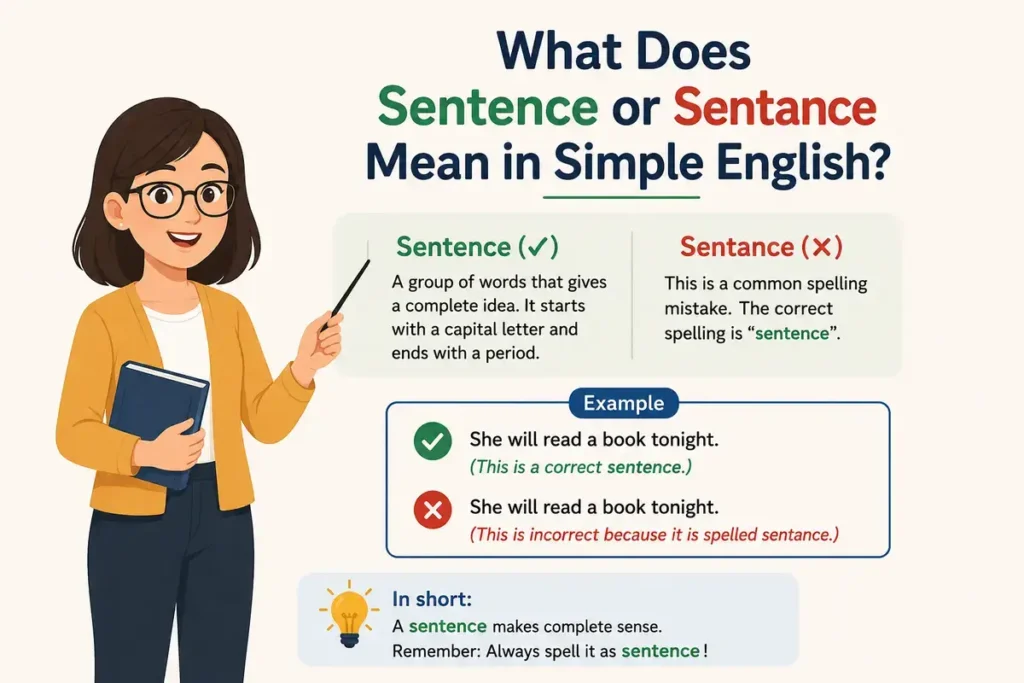
What Does Sentence or Sentance Mean in Simple English?
Before learning the spelling, it helps to understand what the word means.
A sentence is a group of words that shares a complete thought.
A sentence tells the reader something.
It can make a statement, ask a question, give a command, or show a feeling. For example:
- I like pizza.
- Where is my book?
- Please close the door.
- What a beautiful day!
Each example is a complete sentence because it shares a full idea.
What Is a Sentence?
Think of a sentence as a complete message. If someone says:
“Running in the park.”
You may wonder:
Who is running? Why are they running? The thought feels unfinished. Now look at this:
“John is running in the park.”
This gives a complete idea. That is a sentence.
Why Sentences Matter
Sentences help people communicate clearly. Without sentences, writing becomes confusing. Imagine reading a story written like this:
“Dog park happy ball running”
You would struggle to understand it. Now read this:
“The dog is happy because it is running in the park with a ball.”
The meaning is clear. That is the power of a sentence.
Why Do People Mix Sentence or Sentance?
Many English learners spellings. This mistake happens for several reasons.
The Words Sound Similar
When people hear the word, they often focus on the sound. The middle part of sentence sounds close to “ance” for some speakers. Because of that, they write:
- sentance
instead of:
- sentence
This is a very common spelling mistake.
English Spelling Is Not Always Predictable
English has many words that do not match their sounds perfectly. For example:
- difference
- silence
- absence
- sentence
Some words use “ence.”
Others use “ance.”
This can make spelling difficult.
Fast Typing Causes Errors
Sometimes people know the correct spelling but type too quickly. Their fingers accidentally create:
- sentance
instead of:
- sentence
This happens often in emails, text messages, and social media posts.
Spell Check Is Not Always Used
Many people rely on memory when writing. If they do not double-check their spelling, mistakes can stay in the final text. That is one reason the incorrect spelling appears online.
Clear Difference Between Sentence or Sentance Explained Simply
The difference is very easy.
| Word | Correct? | Meaning |
|---|---|---|
| Sentence | Yes | A complete group of words that expresses a thought |
| Sentance | No | Misspelling of sentence |
Quick Comparison
Sentence
- Correct spelling
- Used in schools
- Used in books
- Used in exams
- Used in professional writing
Sentance
- Incorrect spelling
- Considered a spelling error
- Should be avoided in formal writing
Easy Trick to Remember
Look at the ending. Sentence ends with:
“E-N-C-E”
Think about these words:
- fence
- science
- confidence
Sentence follows a similar spelling pattern. The correct ending is:
ENCE
Not:
ANCE
Visual Memory Tip
Imagine the word broken into parts:
Sen + tence
Notice the “ence” ending.
The more you see the correct spelling, the easier it becomes to remember.
Sentence or Sentance: Which Form Should You Use?
The answer is simple. Always use sentence. There are no situations where sentance is considered the standard spelling.
In School Writing
Teachers expect the correct spelling. Example:
“Write five sentences about your favorite animal.”
This instruction uses the correct form.
In Business Writing
Professional writing requires correct spelling. Example:
“Please rewrite the last sentence.”
Using sentance may make the writing look careless.
In Online Content
Blogs, articles, and websites also use sentence. Readers expect proper spelling. Using the wrong form can reduce trust in the content.
In Exams
Always write sentence. Spelling mistakes can cost marks in some tests.
Simple Rule to Remember
If you are choosing pick sentence every time. That rule will never fail.
Sentence or Sentance in Everyday Writing
You probably use sentences every day without thinking about them. You use them when:
- Sending text messages
- Writing emails
- Posting on social media
- Doing homework
- Writing stories
Every complete thought you write is usually a sentence.
Examples From Daily Life
Text message:
“I will be there at six.”
Email:
“Thank you for your help.”
School assignment:
“The Earth moves around the Sun.”
Shopping note:
“We need milk and bread.”
These are all sentences.
Easy Real-Life Sentences You Can Use
Here are some simple examples.
- This sentence is easy to understand.
- Can you read this sentence aloud?
- My teacher asked me to write a sentence.
- That sentence made me laugh.
- Please check the last sentence again.
- Every sentence needs a complete idea.
- I wrote three sentences for homework.
- Her sentence was short but clear.
Common Phrases With Sentence
You may hear these often:
- Complete sentence
- Simple sentence
- Write a sentence
- Finish the sentence
- Read the sentence
- Correct the sentence
These phrases are very common in schools and everyday English.
Common Mistakes Related to Sentence or Sentance
People often make similar spelling mistakes. Examples include:
- sentance instead of sentence
- sentenses instead of sentences
These mistakes happen because English spelling can be tricky. The best solution is practice. Reading more books and articles helps you become familiar with correct spelling.
How to Avoid the Mistake
Try these simple tips:
- Remember the ending is ENCE.
- Read your work before submitting it.
- Use spell check when possible.
- Practice writing the word several times.
- Notice the correct spelling when reading.
Small habits can make a big difference.
Where Does the Word Sentence Come From? (Simple History)
The word sentence has a long history. It comes from an old Latin word that was connected to thoughts, opinions, and meanings. Over time, the word entered other languages and eventually became part of English. The meaning slowly developed into the idea we use today. Now, a sentence means a complete thought expressed through words.
How the Meaning Changed
Hundreds of years ago, the word was connected more closely to ideas and opinions. As English grew, people started using sentence to describe a complete statement in writing and speech. That meaning became the standard meaning taught in schools around the world.
Why the Spelling Stayed the Same
The spelling sentence has existed for a very long time. Because it became established early, dictionaries and grammar books continued using the same spelling. That is why sentence remains correct today while sentance is considered an error.
Is Sentence More Common Than Sentance?
Yes. Sentence is the standard spelling used everywhere. You will find it in:
- Books
- Newspapers
- School textbooks
- Dictionaries
- Websites
- Academic writing
Sentance appears mostly because of spelling mistakes. That is why learning the correct form is so useful.
What Dictionaries Say
Modern dictionaries recognize sentence as the correct spelling. They do not list sentance as a standard English word. Instead, it is treated as a misspelling. This makes the choice very easy.
Use sentence.
Avoid sentance.
Many readers also check Transferred or Transfered: Simple Guide to Spelling and Meaning.
Sentence or Sentance: Quick Recap
Before moving on, remember these key points:
- Sentence is correct.
- Sentance is incorrect.
- A sentence expresses a complete thought.
- The correct ending is ENCE.
- Use sentence in school, work, and everyday writing.
- Dictionaries recognize sentence as the standard spelling.
If you remember these points, you will rarely make this spelling mistake again.
Transition to Deeper Meaning and Usage
Now that you understand the basic difference between sentence or sentance, the next section will go deeper. We will look at how sentences shape communication, how they appear in literature and culture, what they symbolize, and why they are one of the most important parts of everyday language.
How Is Sentence or Sentance Understood in Culture and Stories?
When people think about language, they often think about words. However, sentences are what help those words tell a story. Every book, movie, speech, and conversation depends on sentences. Stories would be impossible without them. A sentence helps people share:
- Ideas
- Feelings
- Dreams
- Lessons
- Experiences
For example, a story may begin with a simple sentence:
“The boy opened the old door.”
That one sentence starts a picture in the reader’s mind. Throughout history, people have used sentences to pass knowledge from one generation to another. Parents teach children through sentences. Teachers teach students through sentences. Writers share stories through sentences. Even short sayings and famous quotes are made of sentences. This shows how important sentences are in culture and daily life.
Sentence or Sentance in Communication
The correct word, sentence, represents clear communication. When people use complete sentences, others can understand them more easily. That is why schools spend so much time teaching sentence writing. Good sentences help ideas travel from one person to another.
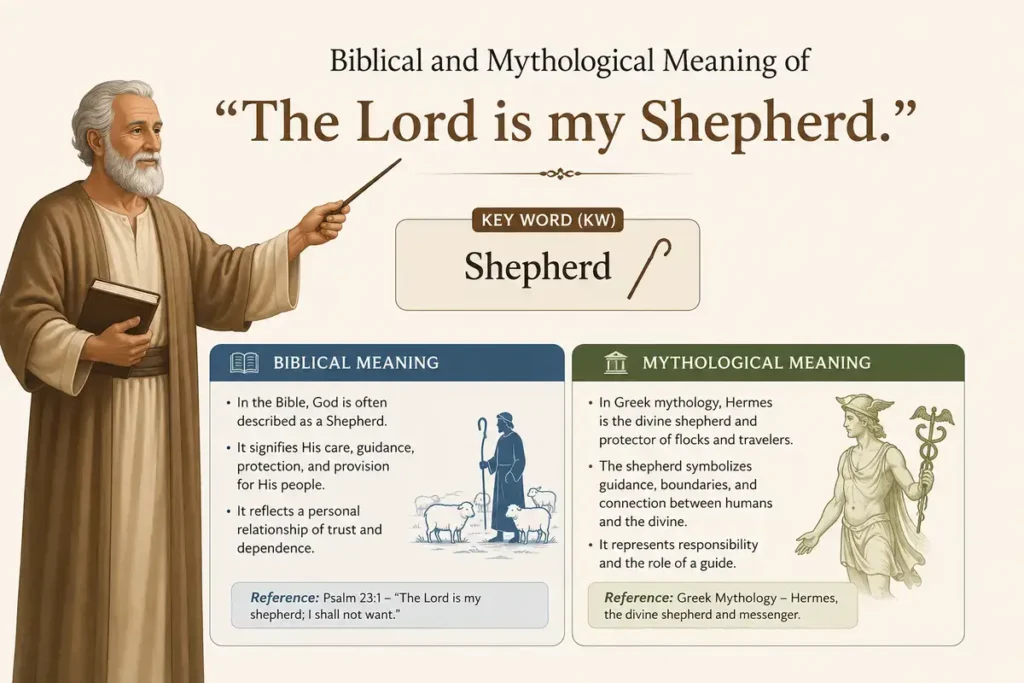
Biblical and Mythological Meaning of Sentence or Sentance
The word sentence itself does not have a special biblical meaning. However, sentences are used throughout religious writings. Sacred books contain thousands of sentences that teach lessons, share history, and explain beliefs. For example, many well-known teachings are written as complete sentences.
These sentences help readers understand important messages. In mythology, stories were often passed down by speaking sentences aloud before they were written in books. People used sentences to tell stories about heroes, gods, and adventures. So while sentence is not a religious symbol, it plays an important role in sharing religious and mythological stories.
Symbolism Explained in Simple Words
Words often carry symbolic meaning. The comparison can symbolize something deeper about learning and communication.
What Sentence Represents
Sentence represents:
- Clear communication
- Correct learning
- Good writing habits
- Education
- Understanding
A correct sentence helps people share ideas successfully. It symbolizes clarity and confidence. When readers see the word sentence, they recognize it immediately.
What Sentance Represents
Sentance represents:
- A common spelling mistake
- Learning in progress
- Confusion about spelling
- Beginner writing errors
This does not mean someone is a bad writer. Everyone makes spelling mistakes while learning. Many people write sentance before learning the correct spelling.
Sentence or Sentance Symbolism Comparison
Sentence:
- Correct
- Clear
- Trusted
- Professional
Sentance:
- Incorrect
- Confusing
- Temporary mistake
- Learning opportunity
This comparison reminds us that mistakes are part of learning. The goal is not perfection. The goal is improvement.
Related Words You Should Know About Sentence or Sentance
Learning related words can help you understand sentence better.
Phrase
A group of words that does not express a complete thought. Example:
“Under the table”
Statement
A sentence that gives information. Example:
“The weather is nice today.”
Question
A sentence that asks something. Example:
“Where are my keys?”
Command
A sentence that tells someone to do something. Example:
“Please sit down.”
Exclamation
A sentence that shows strong feeling. Example:
“What a wonderful surprise!”
Paragraph
A group of related sentences about one topic.
Word
The smallest unit of language that carries meaning. Sentences are made from words.
Grammar
The rules that help people build clear sentences.
Writing
The act of expressing ideas through words and sentences.
How Do People Actually Use Sentence or Sentance in Daily English?
People use the word sentence every day, especially in school, work, and conversation. Here are some natural examples.
- Can you read the first sentence?
- This sentence sounds strange.
- My teacher asked us to write five sentences.
- I forgot to finish the last sentence.
- That sentence made me laugh.
- Your sentence is very clear.
- Please correct this sentence.
- I used the word twice in the same sentence.
- That sentence explains everything perfectly.
- The sentence is short but meaningful.
Sentence or Sentance in School
Teachers often say:
- Write a complete sentence.
- Start the sentence with a capital letter.
- End the sentence with a period.
Students hear these instructions almost every day.
Sentence or Sentance at Work
Professionals also use the word sentence often. Examples:
- This sentence needs editing.
- Please shorten the sentence.
- The sentence sounds unclear.
Good writing matters in many jobs.
Common Mistakes People Make With Sentence or Sentance
Many mistakes happen because the words sound similar.
Mistake 1: Writing Sentance
Incorrect:
“Please write one sentance.”
Correct:
“Please write one sentence.”
Remember the ending:
ENCE
Not:
ANCE
Mistake 2: Writing Sentense
Incorrect:
“That sentense is too long.”
Correct:
“That sentence is too long.”
The middle spelling matters.
Mistake 3: Forgetting the Plural Form
Incorrect:
“I wrote three sentence.”
Correct:
“I wrote three sentences.”
More than one requires:
sentences
Mistake 4: Writing Fragments Instead of Sentences
Incorrect:
“Because I was tired.”
Correct:
“I went to bed early because I was tired.”
The second example shares a complete thought.
Mistake 5: Forgetting Punctuation
Incorrect:
“I like soccer”
Correct:
“I like soccer.”
The period helps complete the sentence.
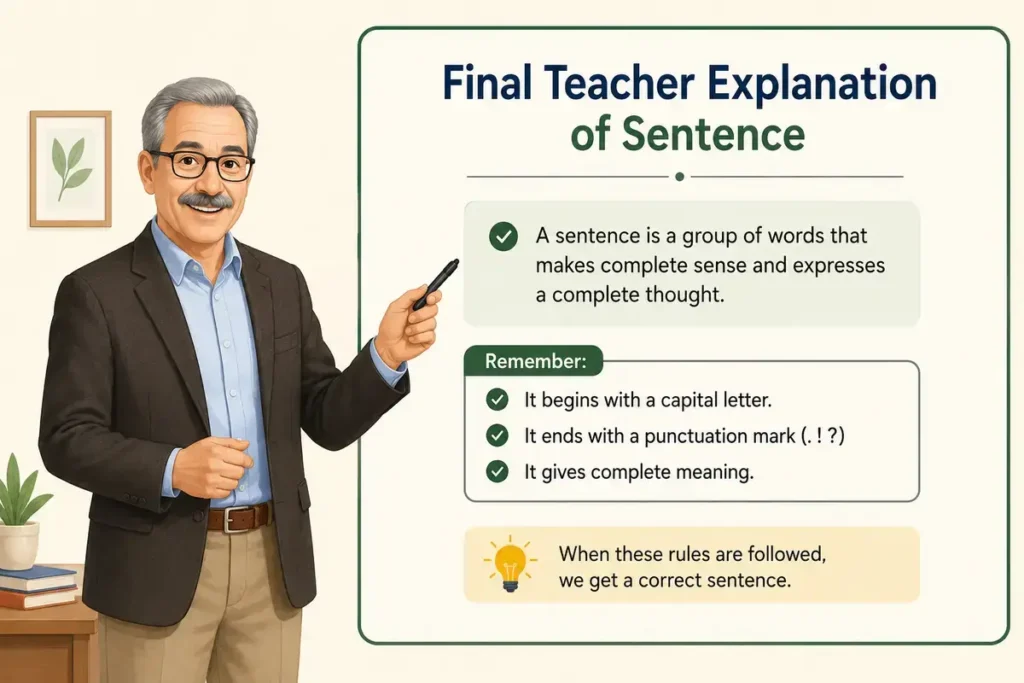
Final Teacher Explanation of Sentence or Sentance
Imagine you are sitting in my classroom. A student raises a hand and asks:
“Should I write?”
My answer would be simple. Always write sentence.
Sentence is the correct English spelling.
Sentance is a spelling mistake.
A sentence is a complete thought written with words. We use sentences every day when we:
- Talk
- Write
- Text
- Learn
- Teach
- Tell stories
Without sentences, communication becomes difficult. The easiest way to remember the correct spelling is to focus on the ending:
Sentence
It ends with:
ENCE
Whenever you are unsure, think of the correct pattern and choose sentence. That choice will always be accepted in standard English.
Final Answer: Sentence or Sentance
Sentence is the correct spelling.
Sentance is incorrect and considered a spelling mistake.
If you are choosing between sentence or sentance, always use sentence in writing, schoolwork, and professional communication.
Many readers also check Flatform vs Platform: Meaning Usage And Simple Differences.
Conclusion
Understanding the difference between sentence or sentance is actually very simple. Sentence is the correct spelling used in schools, books, dictionaries, workplaces, and everyday writing. Sentance is a common misspelling that should be avoided.
A sentence is more than just a word. It is one of the basic building blocks of communication. Every story, email, text message, article, and conversation depends on sentences. If you remember one thing from this guide, remember this: Always use sentence. That simple rule will help you write more clearly and confidently.
Frequently Asked Questions (FAQs)
What is the correct spelling?
Sentence is correct. Sentance is a spelling mistake.
Why do people write sentance instead of sentence?
Many people spell it based on how it sounds. English spelling can sometimes be confusing.
Can I use sentance in formal writing?
No. Standard English uses sentence.
What does sentence mean?
A sentence is a group of words that expresses a complete thought.
Is sentance a real English word?
No. Dictionaries recognize sentence as the correct word.
How can I remember the correct spelling?
Remember that sentence ends with ENCE, not ANCE.
Do teachers mark sentance as wrong?
Yes. Most teachers treat sentance as a spelling error.
Is sentence used in everyday English?
Yes. People use the word sentence every day in speaking, reading, and writing.
